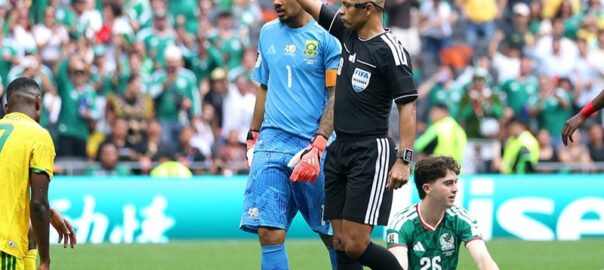
The opening days of the 2026 World Cup have been shaped not only by the football on the pitch but also by a number of new FIFA regulations that have quickly become a major topic of conversation. Confusion among supporters, questions about officiating, and several high-profile incidents have drawn attention to the latest adjustments introduced before the tournament.
Among the most discussed changes is the broader role of VAR. For the first time at a major international competition, video officials are permitted to review certain corner-kick decisions, incorrect second yellow cards, and situations involving mistaken identity. They may also intervene when an infringement takes place before a set piece and later has a direct influence on a goal, penalty, or disciplinary ruling.
The addition of corner-kick reviews has surprised many fans because VAR has traditionally been limited to goals, penalties, straight red cards, and mistaken identity cases. FIFA believes the expanded authority will allow officials to correct clear errors before play resumes.
As a result, the use of technology has become one of the central talking points of the tournament’s opening week, with supporters still adapting to the revised interpretation of video review powers.
New substitution process targets time wasting
FIFA has also introduced a stricter procedure for substitutions in an effort to reduce delays during matches. Once the replacement process begins, a player leaving the field is given only 10 seconds to exit the pitch.
If the player does not leave within that period without a valid reason, the incoming substitute is prevented from entering immediately. Instead, the replacement must wait for the next stoppage in play, and at least one minute must pass before the change can be completed.
The measure is designed to discourage teams from slowing the game down, particularly during the closing stages of matches. However, the new approach caught many spectators off guard during the first round of fixtures.
The unfamiliar process led to confusion in stadiums and among television audiences as supporters tried to understand why some substitutions were delayed.
Stricter disciplinary approach under scrutiny
Behaviour towards match officials has become another focus of FIFA’s updated regulations. Under the new rules, a player who covers their mouth, arm, or shirt while confronting an opponent can be shown a red card.
The change was introduced to assist officials when investigating allegations of abuse or misconduct that could otherwise be concealed from cameras. FIFA has also taken a tougher stance against players and team staff who leave the field to protest refereeing decisions, with dismissal now a possible consequence.
Attention on the disciplinary framework intensified immediately when three red cards were shown during the tournament’s opening match. Although not every sending-off was linked directly to the new offences, the stricter enforcement of conduct regulations quickly became a major discussion point.
Debate among supporters and commentators has continued as the competition progresses, with many assessing the impact of FIFA’s tougher position on player behaviour.
Measures introduced to keep matches moving
Several additional adjustments have been implemented to increase the pace of games. Referees are now permitted to use visible countdowns to prevent delays during throw-ins and goal kicks.
Changes have also been made regarding injuries. In most cases, outfield players who receive treatment must remain off the field for at least one minute after play restarts before they can return.
FIFA hopes these measures will reduce tactical stoppages and limit opportunities for teams to interrupt the flow of matches. The governing body believes the changes will help create a faster and more continuous spectacle.
Whether fans ultimately welcome the new regulations remains uncertain. What is already evident, however, is that the revised laws have ensured officiating and rule enforcement are attracting almost as much attention as the football itself during the early stages of the World Cup.