Category Archives: 2026 FIFA World Cup

World Cup draw changes help highest-ranked teams reach last four

For the first time since the introduction of FIFA’s world rankings, the four highest-ranked national teams have all progressed to the semi-finals of a World Cup. Spain, Argentina, France, and England each topped their respective groups, allowing the tournament bracket to unfold exactly as designed.

The structure introduced for the 2026 edition ensured that the leading four teams in the rankings were placed in separate sections of the knockout draw. As a result, none of them could face one another before the last four, provided they finished first in their groups.

That sequence of results has produced two heavyweight semi-final encounters. France will meet Spain on Tuesday, while England is set to play Argentina on Wednesday.

The new draw format shapes the knockout bracket

The revised system also guaranteed that Spain and Argentina could only meet in the final if both continued winning. England and France, meanwhile, were positioned on opposite sides of the knockout stage, leaving each on course for a possible semi-final against either Spain or Argentina.

Fifa said the adjustment was made to maintain “competitive balance” by creating two independent routes to the semi-finals. The governing body publicly explained the change before the tournament, making clear that its aim was to avoid the leading-ranked nations eliminating one another too early.

Comparable seeding principles are used in other major competitions, including Wimbledon and the revamped Champions League, where top seeds are deliberately separated in the draw.

Why FIFA introduced the adjustment

Under the previous 32-team World Cup format, group winners were already protected from meeting in the round of 16. Encounters between the world’s top four-ranked sides before the semi-finals were therefore uncommon, with the 2010 quarter-final between the Netherlands and Brazil standing as the most recent example.

The expansion to a 48-team competition introduced an additional knockout round, making clashes between group winners much more likely in the early stages. During this tournament’s last 16, the United States played Belgium, England faced Mexico, and Switzerland took on Colombia.

Because of that expanded format, Fifa decided an alteration was necessary to reduce the possibility of marquee fixtures taking place before the semi-finals and to lessen the risk of one of the four highest-ranked teams being eliminated earlier than intended.

Previous tournaments followed a different pattern

Although FIFA rankings were launched in 1994, they were not used for that year’s World Cup. In later tournaments, several nations ranked among the world’s top four failed to even progress beyond the group stage.

Belgium in 2022, Germany in 2018, Spain in 2014, Italy in 2010, and France in 2002 all exited the competition before the knockout rounds despite being inside the top four of the rankings.

The governing body’s approach had already been applied during last year’s Club World Cup, where only one of the four leading seeds, Real Madrid, reached the semi-finals. At this World Cup, however, the revised draw has produced the outcome FIFA had intended.

FIFA to review 64-team World Cup proposal after 2026 finals

FIFA president Gianni Infantino has confirmed that the governing body will evaluate the possibility of expanding the men’s World Cup to 64 teams once the 2026 tournament has concluded. The idea emerged last year, and Infantino believes the first edition featuring 48 nations has demonstrated that larger competitions deserve further consideration.

Speaking to Swiss broadcaster Blue Sport, Infantino said any future decisions would be examined after the upcoming World Cup. He stressed that the competition should represent the entire football community rather than being focused primarily on Europe and South America, arguing that every country should have the opportunity to dream of reaching the finals.

According to Infantino, football standards continue to improve across the globe. He suggested that increasing access to the World Cup would encourage developing nations to keep progressing, while limiting places could reduce motivation for countries still striving to compete at the highest level.

Expanded competition praised after 48-team introduction

Infantino described the upcoming 48-team World Cup as a major success before it has even concluded, pointing to the performances of African nations. He highlighted that nine of the 10 African representatives progressed to the knockout rounds, contrasting that with previous editions when the continent had only five participants.

He argued that the increase in qualification places has already demonstrated its value by creating more opportunities for countries that were previously underrepresented. In his view, broader participation allows more teams to experience football’s biggest stage while strengthening the global development of the sport.

The decision to increase the World Cup from 32 to 48 teams was approved by the FIFA Council in 2017, with the expanded format taking effect for the 2026 tournament.

Proposal divides football leaders

An official request to enlarge the 2030 World Cup to 64 teams was submitted by South American governing body Conmebol in April 2025, although no final ruling has been made. FIFA has maintained that it is obliged to consider proposals presented by members of its council and will continue discussions with relevant stakeholders before reaching any conclusion.

The 2030 tournament is scheduled to be jointly staged by Spain, Portugal, and Morocco, while Argentina, Uruguay, and Paraguay will host the opening fixtures as part of celebrations marking 100 years since the first World Cup, which was held in Uruguay in 1930.

Not everyone supports further expansion. UEFA president Aleksander Ceferin has labelled the idea a bad one for both the finals and the qualifying campaign. Asian Football Confederation president Sheikh Salman bin Ibrahim Al Khalifa warned that another increase in participating teams could create chaos, while Concacaf president Victor Montagliani said the proposal does not feel appropriate and believes it could negatively affect the wider football landscape.

Meanwhile, Andrew Giuliani, executive director of the White House’s World Cup task force, said the United States could consider bidding to host the 2038 World Cup and would be capable of staging the event even if it featured 64 nations.

A larger tournament would create new challenges

When Infantino first ran for the FIFA presidency in 2016, his manifesto proposed expanding the World Cup from 32 to 40 teams. Within a year, that plan evolved into the 48-team format that will debut in 2026, while speculation over additional growth has continued ever since.

Hosting an increasingly larger competition also presents significant logistical questions. Plans to introduce 48 teams for the 2022 tournament were explored, but Qatar was ultimately unable to stage an event of that scale on its own. The 2026 edition will instead be shared across three countries, while the 2030 finals will stretch across six host nations.

Questions also remain about how Saudi Arabia would manage a 64-team World Cup with 128 matches when it hosts the 2034 tournament. At the same time, a larger field would allow almost one-third of FIFA’s 211 member associations to qualify, while generating additional revenue that could be distributed among those associations.

Although the FIFA Council would make the final decision on any expansion, there is currently no indication that such a move is expected in the immediate future.

France vs Spain Official Lineups, Tuesday, 14 July 2026, World Cup Semifinal

France vs Spain Official Lineups, Tuesday, 14 July 2026, World Cup Semifinal

Here are the official starting lineups for France vs Spain in the FIFA World Cup 2026 Semifinals on Tuesday, July 14, 2026. The match is set to begin at 3:00 p.m. ET (12:00 p.m. PT) at Dallas Stadium in Arlington, Texas, USA.

14-07-2026 19:00
Semi-final
✅       FIFA Ranking

France holds the top position in the FIFA Men’s World Rankings with 1,925.86 points, while Spain is close behind in 3rd place with 1,892.28 points.


✅       How did they reach the World Cup Semifinals?

🇫🇷      France has been undefeated throughout the tournament, showcasing their strength with a solid 2-0 victory over Morocco in the Quarterfinals. In the Knockout Stage, they displayed patience and tactical flexibility, overcoming teams like Paraguay in the Round of 16.

Who are the key players?   Captain Kylian Mbappé leads the offensive charge, supported by a talented group including Michael Olise, Ousmane Dembélé, and Bradley Barcola.


🇪🇸     Spain’s journey to the Semifinal has been marked by an impressive unbeaten streak, characterized by their signature possession-based and relentless style of play under coach Luis de la Fuente.

Quarterfinal: They secured their first World Cup semifinal appearance since 2010 with a 2-1 win against Belgium at SoFi Stadium. The match was tightly contested after Fabian Ruiz’s initial goal was equalized by Belgium, but Mikel Merino netted the decisive goal in the 88th minute.

Who are the key players?   Lamine Yamal has emerged as a key figure, complemented by the contributions of midfield playmaker Fabián Ruiz and Mikel Merino.


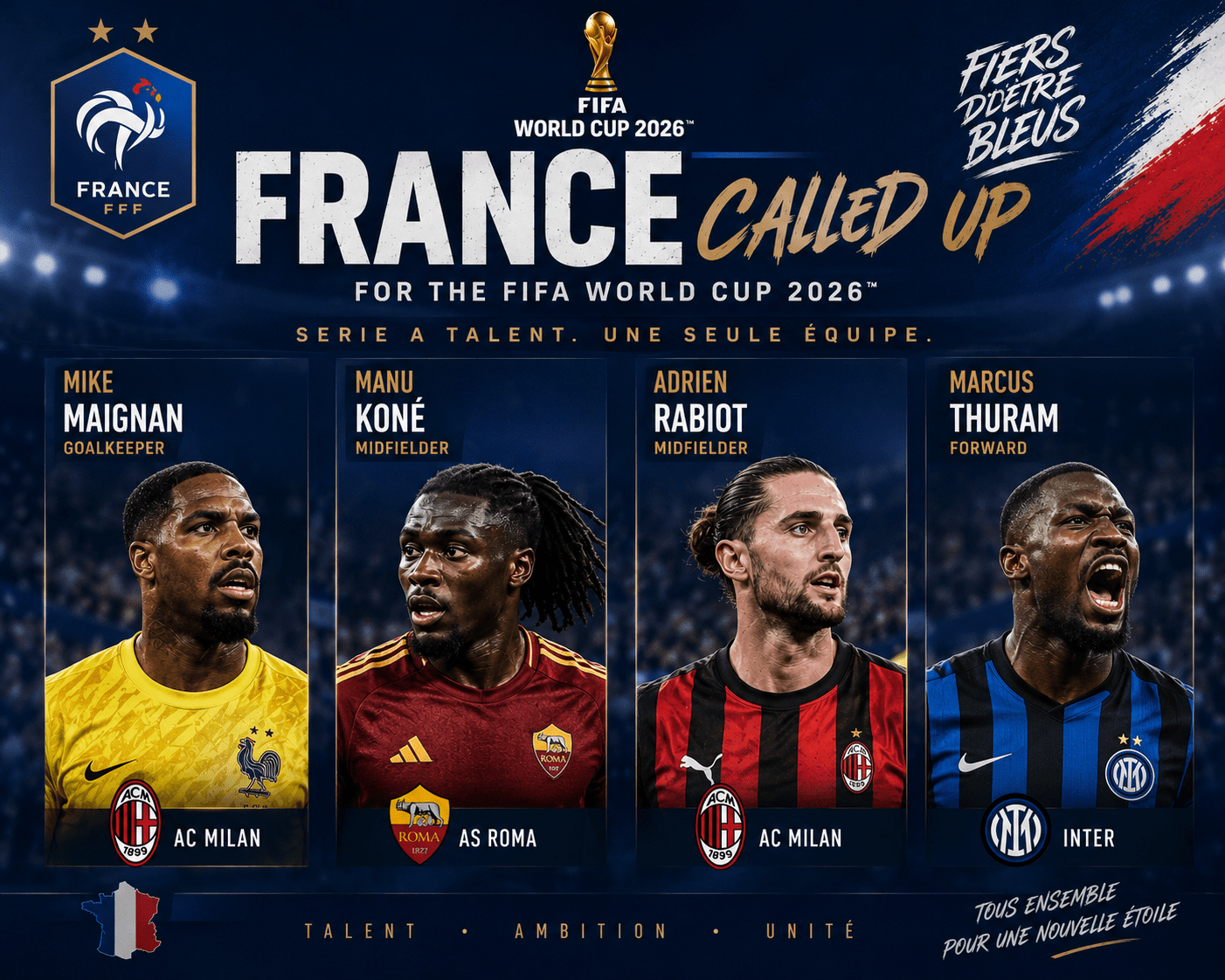
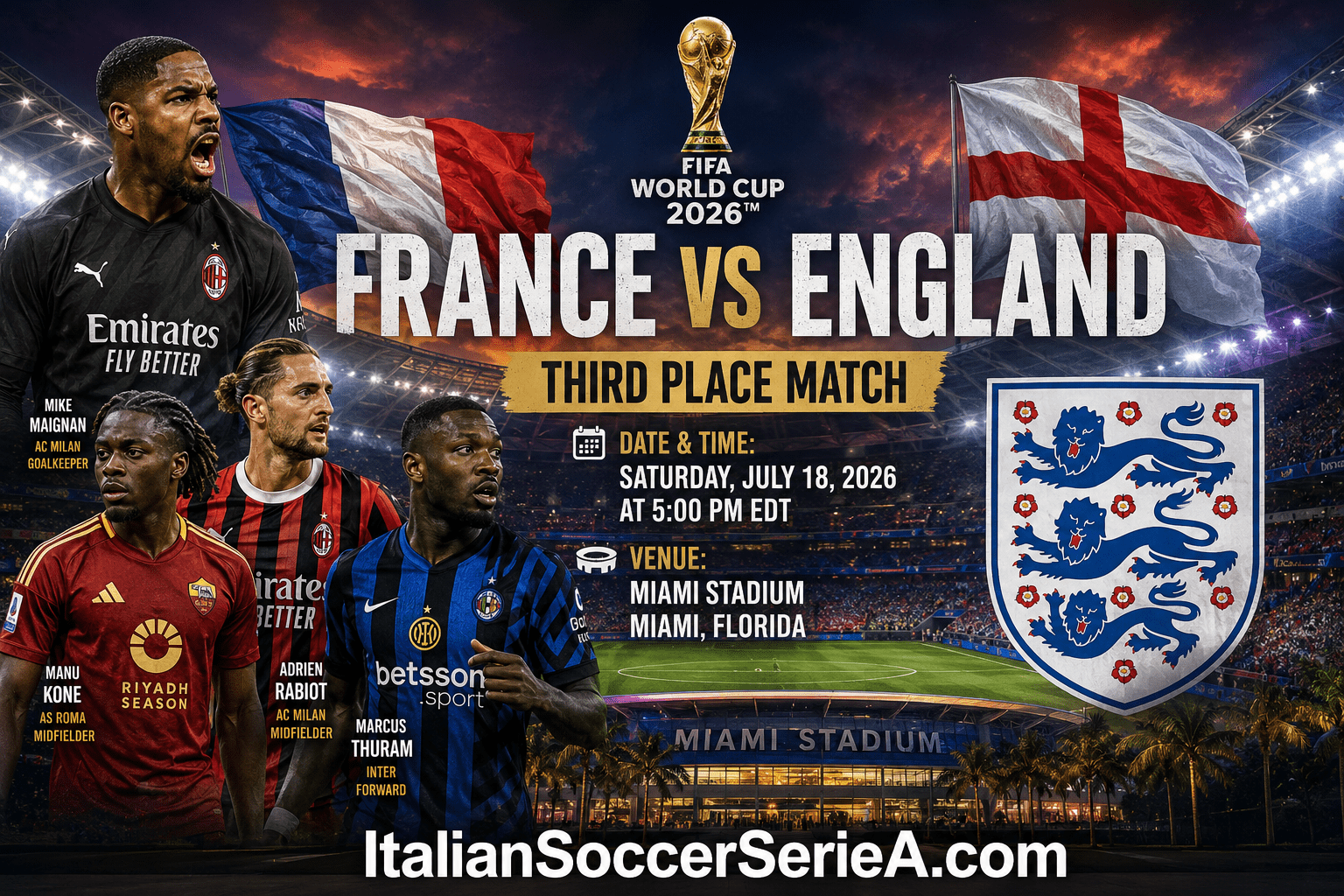
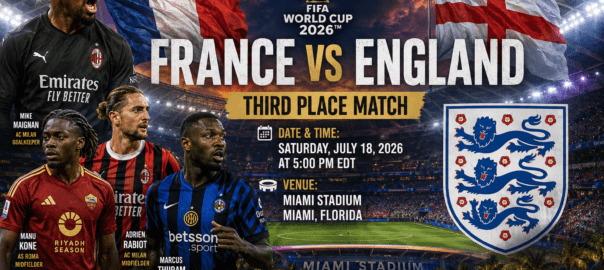
✅    Serie A players called up for   🇫🇷    the France National team World Cup Squad:
  • AC Milan goalkeeper Mike Maignan
  •  AS Roma midfielder Manu Kone
  • AC Milan midfielder Adrien Rabiot
  • Inter forward Marcus Thuram
👉   No Serie A players called up for the Spain National team.

👉   Click here for  Full 2026 World Cup Squad Lists – Confirmed rosters for all 48 teams.

👉  Click here for  2026 World Cup Group Stage Standings.


🇫🇷     France starting lineup (4-2-3-1): Mike Maignan; Jules Koundé, Dayot Upamecano, William Saliba, Lucas Digne; Adrien Rabiot, Aurélien Tchouaméni; Ousmane Dembélé, Michael Olise, Bradley Barcola; Kylian Mbappé.

Substitutes: N’Golo Kanté, Désiré Doué, Jean-Philippe Mateta, Manu Koné, Rayan Cherki, Marcus Thuram, Brice Samba, Malo Gusto, Warren Zaïre-Emery, Maxence Lacroix, Robin Risser, Lucas Hernández, Maghnes Akliouche, Ibrahima Konaté, Théo Hernández

🇪🇸   Spain starting lineup (4-2-3-1): Unai Simón; Pedro Porro, Pau Cubarsí, Aymeric Laporte, Marc Cucurella; Rodri, Fabián Ruiz; Lamine Yamal, Dani Olmo, Álex Baena; Mikel Oyarzabal

Substitutes: Alejandro Grimaldo, Borja Iglesias, Joan García, Eric García, Yéremy Pino, Nico Williams, Víctor Muñoz, Gavi, David Raya, Pedri, Mikel Merino, Martín Zubimendi, Marc Pubill, Ferran Torres, Marcos Llorente

France
Spain

Starting lineups

16
Goalkeeper
4
Defender
5
Defender
3
Defender
72'
17
Defender
30'
14
Midfielder
46'
8
11
Midfielder
72'
12
Attacker
57'
10
Attacker
7
23
Goalkeeper
14
Defender
24
Defender
22
Defender
12
Defender
84'
15
Midfielder
84'
8
Midfielder
78'
16
Midfielder
10
Attacker
78'
19
Attacker
21
Attacker
74'

Substitutes

19
Defender
9
Attacker
15
Defender
2
Defender
21
Defender
18
Midfielder
22
7
Midfielder
1
Goalkeeper
23
Goalkeeper
26
Defender
30'
6
Midfielder
46'
20
Midfielder
57'
24
Attacker
72'
25
Midfielder
72'
1
Goalkeeper
4
Defender
9
Midfielder
18
Midfielder
3
13
Goalkeeper
2
Defender
26
Attacker
11
Attacker
25
Attacker
7
Attacker
74'
6
Midfielder
78'
20
Midfielder
78'
5
Midfielder
84'
17
Attacker
84'


France   France World Cup 2026 Squad:
  • Goalkeepers: Mike Maignan (AC Milan), Robin Risser (Lens), Brice Samba (Rennes).
  • Defenders: Lucas Digne (Aston Villa), Malo Gusto (Chelsea), Lucas Hernandez (Paris St-Germain), Theo Hernandez (Al Hilal), Ibrahima Konate (Liverpool), Maxence Lacroix (Crystal Palace), Jules Kounde (Barcelona), William Saliba (Arsenal), Dayot Upamecano (Bayern Munich).
  • Midfielders: N’Golo Kante (Fenerbache), Manu Kone (Roma), Adrien Rabiot (AC Milan), Aurelien Tchouameni (Real Madrid), Warren Zaire-Emery (Paris St-Germain).
  • Forwards: Maghnes Akliouche (Monaco), Bradley Barcola (Paris St-Germain), Rayan Cherki (Man City), Ousmane Dembele (Paris St-Germain), Desire Doue (Paris St-Germain), Michael Olise (Bayern Munich), Kylian Mbappe (Real Madrid), Jean-Phillipe Mateta (Crystal Palace), Marcus Thuram (Inter). 


Spain   Spain World Cup Squad:
  • Goalkeepers: Unai Simon (Athletic Bilbao), David Raya (Arsenal), Joan Garcia (Barcelona).
  • Defenders: Marc Cucurella (Chelsea), Alejandro Grimaldo (Bayer Leverkusen), Pau Cubarsi (Barcelona), Aymeric Laporte (Athletic Bilbao), Marc Pubill (Atletico Madrid), Eric Garcia (Barcelona), Marcos Llorente (Atletico Madrid), Pedro Porro (Tottenham Hotspur).
  • Midfielders: Pedri (Barcelona), Fabian Ruiz (PSG), Martin Zubimendi (Arsenal), Gavi (Barcelona), Rodri (Manchester City), Alex Baena (Atletico Madrid), Mikel Merino (Spain).
  • Forwards: Mikel Oyarzabal (Real Sociedad), Dani Olmo (Barcelona), Nico Williams (Athletic Bilbao), Yeremy Pino (Crystal Palace), Ferran Torres (Barcelona), Borja Iglesias (Celta de Vigo), Víctor Muñoz (Osasuna), Lamine Yamal (Barcelona)
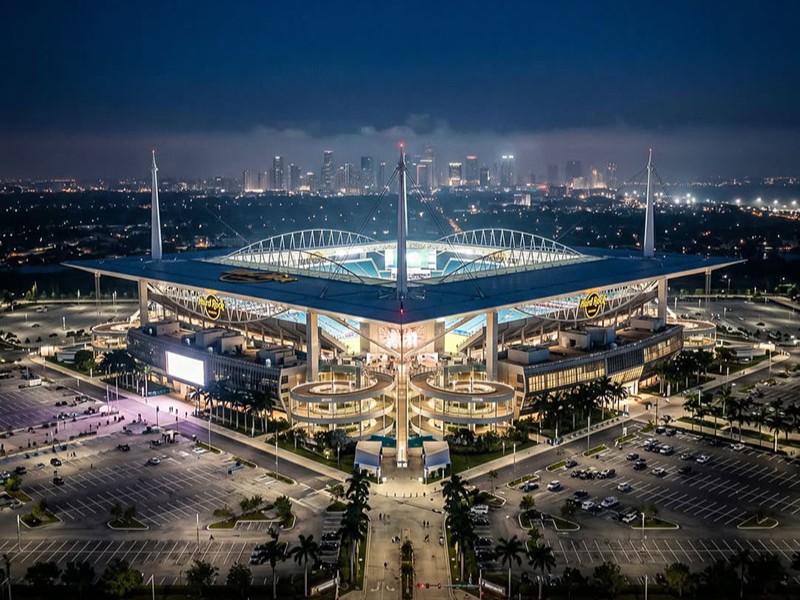
The Dallas Stadium is ready for France vs Spain

Image

Credit via x.com/EspanaHQ


Image


Image


France’s official starting lineup against Spain


Spain’s official starting lineup against France


Image


Image


Happy Bastille’s Day

Image


Image


Buy FIFA World Cup Tickets
Sports, Football, Soccer, FIFA World Cup Tickets

Sports Events 365 2026 FIFA World Cup Semifinals

🇫🇷   France vs Spain   🇪🇸

Date: Tuesday, 14 July 2026
Time: 3:00 p.m. ET / 12:00 p.m. PT
Venue: Dallas Stadium
Arlington, Texas.

Referee: Ivan Barton SLV
Assistant Referee 1: David Moran SLV
Assistant Referee 2: Antonio Pupiro NCA
Fourth Official: Glenn Nyberg SWE
Reserve AR: Mahbod Beigi SWE
Video Assistant Referee: Tomasz Kwiatkowski POL
Assistant Video Assistant Referee 1 :Dennis Johan Higler NED
Assistant Video Assistant Referee 2 : Guillermo Pacheco MEX
Standby Video Assistant Referee: : Leodan Gonzalez URU
Standby Assistant Video Assistant Referee: Ivan Bebek CRO

Messi prepares for long-awaited first clash with England

Lionel Messi has achieved almost everything possible during his remarkable career, yet Wednesday’s World Cup semi-final against England in Atlanta will present something entirely unfamiliar. The Argentina captain has represented his country more than 200 times and scored 125 international goals, but he has never previously faced the Three Lions.

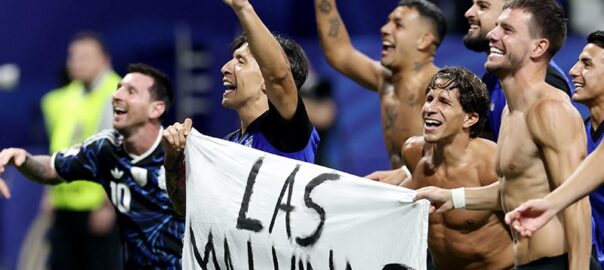
For a period during Argentina’s quarter-final against Switzerland, it appeared that opportunity might slip away as the Europeans threatened an upset. Instead, the defending champions found a way through, claiming a 3-1 extra-time victory to secure their place in the last four.

Although Messi did not score in that match, ending his scoring streak at the tournament, he still shares top spot in the Golden Boot standings with France’s Kylian Mbappe on eight goals. He also remains the World Cup’s all-time leading goalscorer.

Former England defender Micah Richards believes Messi’s presence alone changes the dynamic of the contest. He said Argentina builds their game around the Inter Miami forward, whose movement into small pockets of space, exceptional technique, and awareness make him almost impossible to contain. Richards also compared Messi’s personality and presence to Jude Bellingham’s, adding that the Argentine possesses an aura unmatched by any other footballer.

England aware of the threat despite Argentina’s flaws

Chris Sutton believes England will welcome the challenge of facing the current Argentina side, suggesting this version of the South Americans is not among their greatest despite repeatedly finding ways to progress through difficult situations.

Wayne Rooney also pointed to Messi’s unique qualities, explaining that while the veteran contributes little when Argentina are defending, he remains capable of deciding matches through his judgement and quality at decisive moments. According to Rooney, concentration and constant communication between England’s defenders will be essential if they hope to limit his influence.

South American football specialist Tim Vickery described this semi-final as the fixture Argentina had hoped for. He noted that it would have been difficult to imagine Messi ending an international career spanning more than 200 appearances without finally playing against the nation many Argentina supporters regard as their greatest football rivals.

Vickery also recalled the atmosphere during Argentina’s quarter-final victory, when supporters repeatedly sang songs directed at England, suggesting those chants will become even louder before the semi-final showdown.

Rivalry renewed after more than two decades

Meetings between England and Argentina have regularly produced unforgettable moments, helping establish one of international football’s most intense rivalries. Encounters between the two countries have included Diego Maradona’s famous ‘Hand of God’ goal at the 1986 World Cup and David Beckham’s dismissal during the 1998 tournament.

Despite that history, Wednesday’s contest will be the nations’ first meeting for almost 21 years. Since Messi made his Argentina debut as an 18-year-old, England and Argentina have crossed paths only once.

That friendly in Geneva took place just a few months after Messi’s senior debut, but the young forward was unavailable because he was serving a suspension. He had been sent off only 30 seconds into his first international appearance against Hungary after reacting to a challenge from Vilmos Vanczak, with referee Markus Merk producing a straight red card.

Without Messi, Argentina twice moved ahead in Geneva before Michael Owen scored two late goals to give Sven-Goran Eriksson’s England a dramatic 3-2 victory.

The opponents Messi has enjoyed facing most

Messi has strengthened his legendary status with Argentina over the years, becoming both the country’s record appearance-maker and leading scorer before captaining his nation to World Cup glory in 2022.

His scoring record shows remarkable consistency against a wide range of opponents. Bolivia have conceded more goals to him than any other nation, with Messi finding the net 11 times in 12 meetings.

He has also scored seven goals against Venezuela and another seven against Ecuador, while Uruguay and Brazil have each been regular victims as well. European teams have struggled to contain him too, with three goals apiece against Croatia, Switzerland, and France. His three strikes against the French came in only three matches, including a memorable double in the 2022 World Cup final.

Among every country he has faced on more than one occasion, only Qatar has prevented Messi from scoring, despite meeting him twice.

England chasing results while Tuchel searches for a better performance

England reached the World Cup semi-finals after overcoming Norway, yet Thomas Tuchel made it clear that the result alone did not satisfy him. The England boss praised the determination, belief, and togetherness shown by his players but admitted he expected a much higher standard with the ball. In his view, too many technical errors, inconsistent passages of play, and a lack of rhythm made the contest unnecessarily difficult.

Although pleased by the resilience his squad displayed, Tuchel stressed that the team is capable of producing far stronger football. He pointed to repeated momentum swings during the match and suggested England were too slow in possession, failing to repeat the patterns that are central to his tactical approach.

The contrast between England’s continued progress and the manager’s critical assessment has become one of the main talking points of the tournament. Despite winning matches, Tuchel believes improved performances are essential if his side are to keep advancing.

The style Tuchel is trying to build

Squad selection before the World Cup reflected the manager’s commitment to a clearly defined system, with players chosen according to specific tactical responsibilities. Competition for certain positions, including the attacking midfield role, highlighted how carefully each player had to fit the overall structure.

The framework is based on controlling possession, pressing opponents aggressively and circulating the ball with purpose to invite pressure before quickly attacking the space left behind. Against deeper defensive blocks, England are expected to create openings through the flanks by combining movement, rotations, and numerical superiority in wide areas.

Those concepts have appeared at different moments throughout the tournament, but Tuchel believes they have not been implemented consistently enough. His criticism after the Norway match focused almost entirely on England’s attacking play rather than their defensive work.

Why Norway caused frustration

Norway defended in a compact 4-5-1 formation, while England organised themselves in a 3-2-5 shape whenever they had possession. Marc Guehi, John Stones, and Ezri Konsa formed the first line, with Declan Rice and Elliot Anderson positioned ahead of them, while Nico O’Reilly advanced into the attacking unit to provide an extra option against Norway’s defence.

When Tuchel said his team was “not repetitive enough”, he was most likely referring to the lack of sustained passing sequences designed to tempt Norway out of shape. His preferred method is to recycle possession patiently before accelerating the attack into newly created spaces either down the wings or beyond the defensive line.

That approach had already been evident earlier in the tournament against Ghana, when Tuchel instructed his players to keep exchanging short passes before switching play quickly. England briefly reproduced that pattern against Norway, drawing defenders towards one side before Anderson attempted to release Noni Madueke into space on the opposite flank. However, those situations became increasingly rare as the game progressed, with England’s possession dropping from 68% before the break to 44% after half-time.

Wide areas offered opportunities England rarely used

The movement within England’s wide triangles was intended to become one of the team’s main attacking weapons during the competition. Norway’s defensive organisation created favourable conditions for those combinations because their wide midfielders stayed alongside the central midfielders while the back four remained narrow.

This structure regularly left space on the outside. As Anthony Gordon moved inside, either O’Reilly or Anderson could attack the vacant channel behind Alexander Sorloth. Because Norway defended zones rather than following individual runners, England could have found free players by moving the ball into those areas more quickly.

Tuchel’s frustration stemmed from England’s inability to recognise and exploit those openings often enough. Similar patterns had previously troubled Norway against Iraq and France, yet England struggled to reproduce them with the same consistency.

One sequence summed up the manager’s concerns. Instead of moving the ball rapidly towards the unoccupied flank, Guehi carried possession at a slow tempo before forcing a pass through the centre, which was intercepted in a dangerous position. That example reflected Tuchel’s description of his side as “sloppy”.

Assistant coach Anthony Barry had expressed similar concerns earlier in the tournament after the Croatia match, saying England were not finding passes through the gaps or increasing the tempo as intended, instead slipping back into cautious habits. Five matches later, those observations still appeared relevant.

Individual quality continues to deliver

Although England did not fully exploit Norway’s defensive structure, they still found decisive moments through the players’ natural instincts. Their opening goal came after Orjan Nyland’s long goal kick reached Anderson, leaving Norway temporarily disorganised as they prepared for an aerial contest.

Anderson drove forward powerfully, forcing Julian Ryerson to commit before releasing Gordon into space on the left. As Kristoffer Ajer shifted across to cover, Sander Berge dropped into the defensive line, creating an opening for Jude Bellingham, who arrived unmarked and finished confidently.

England’s first goal against Mexico had followed a similar pattern. After regaining possession against an unsettled defence, Rice carried the ball directly at the full-back, delaying his movement and allowing Bukayo Saka to receive wide before Bellingham again timed his run into space created by Harry Kane’s movement.

The winning goal against Norway also arrived while the opposition was reorganising after defending a corner. Morgan Rogers’ powerful strike forced Nyland into a save, and Bellingham reacted quickest to convert the rebound. His anticipation once again proved decisive.

After the match, Bellingham highlighted the psychological side of tournament football, saying success depends on handling adversity as much as technical or tactical qualities. England have repeatedly shown they can thrive in chaotic situations through individual talent and mental strength, but Tuchel remains convinced that stronger collective performances will provide a more reliable path to victory.

With Argentina waiting in the semi-finals and having shown weaknesses in wide areas, the England manager is expected to continue searching for the attacking fluency he believes his team can achieve.