Category Archives: 2026 FIFA World Cup

The king returns: Messi delivers when Argentina need him most

Four years after lifting the World Cup in what many believed was his final appearance at the tournament, Lionel Messi has once again reached football’s biggest stage. At 39, the Argentina captain produced another decisive performance, helping his team overturn England’s lead and secure a place in a second consecutive World Cup final.

The forward provided two assists in the 2-1 victory, taking his tally at the 2026 tournament to four assists and eight goals. That puts him among the leading scorers and also makes him one of the competition’s most creative players.

Argentina will now face Spain in the final in New Jersey, a meeting that carries extra meaning given Messi’s long connection with Spanish football. Argentina manager Lionel Scaloni again praised his captain, saying there was little left for him to prove after everything he has achieved.

Former England international Micah Richards also highlighted the difference made by Messi’s presence, saying that the biggest moments belong to players of his quality.

England unable to contain the Argentina captain

Messi had never previously faced England in his career, but Thomas Tuchel’s side will not want to repeat the experience. The veteran forward spent much of the first half operating through the middle, showing flashes of quality before the match changed after Anthony Gordon gave England the lead in the 55th minute.

As England moved deeper and introduced more defensive players, Argentina began controlling possession. During the following 37 minutes, they dominated the ball, and Messi became increasingly influential after moving towards the right side.

Goalkeeper Emiliano Martinez later explained that using Messi on the wing became a key part of Argentina’s comeback. The forward completed nine successful dribbles and created two goals, becoming the first player since records began in 1966 to achieve that combination in a World Cup knockout match.

His impact was greater than England’s entire team in several attacking categories. Messi recorded seven touches inside the opposition penalty area, matching the total number achieved by every English player combined, while also creating four chances and delivering nine crosses.

The decisive moments came late. First, he helped create the equaliser when Enzo Fernandez struck from outside the box in the 85th minute. Then, in stoppage time, his delivery allowed Lautaro Martinez to score the winning goal with a header.

Richards described Messi as a player who can appear quiet for long periods before suddenly changing a match, while Joe Hart said England’s defensive approach gave the Argentine star the freedom to decide the game.

England captain Harry Kane admitted his team handled Messi for much of the contest but acknowledged that the world’s greatest players only need one opportunity to make the difference.

The Golden Boot battle remains open

Messi has continued rewriting his World Cup record during this tournament, reaching 21 goals across his World Cup appearances and adding to his overall Argentina scoring total. A large part of that World Cup tally has come after he turned 35.

The eight goals he has scored in 2026 have already surpassed his previous tournament total from 2022. He is now level with Kylian Mbappe in the Golden Boot race, with the France forward still having a third-place play-off match against England to play.

Jude Bellingham and Kane remain close behind with six goals each. If players finish with the same number of goals, assists become the deciding factor, and Messi currently leads that comparison with four assists compared with Mbappe’s three.

The Argentina captain could also finish as the tournament’s leading creator, sitting just one assist behind France’s Michael Olise. Former England goalkeeper Paul Robinson praised his influence, describing him as a player who has delivered both goals and moments of inspiration throughout the competition.

The question of another world cup appearance

Messi’s international career has already included several dramatic changes. In 2016, after losing a World Cup final and three Copa America finals, he stepped away from Argentina duty before returning later.

Since then, he has added two Copa America titles and finally won the World Cup in 2022. At that time, many believed the final missing achievement of his career had been completed.

His move away from European football in 2023 appeared to suggest that he was entering the final stage of his career, and even his participation in this summer’s tournament was not always considered certain. Instead, Messi has remained one of Argentina’s most important players.

His style has evolved, with the forward covering less ground than many teammates but continuing to influence matches through his vision and decision-making. Spanish journalist Guillem Balague has noted that Messi has repeatedly adapted his role throughout his career.

The Argentina star has now contributed a goal or assist in 13 straight matches for club and country. Another decisive contribution in the final against Spain would match a personal record from 2011.

A victory on Sunday would also see Messi become only the second player after Cafu to appear in three World Cup finals. Although another World Cup appearance in 2030 seems unlikely with Messi turning 43, his latest performances have shown that predictions about his future are becoming increasingly difficult.
From doubters to contenders: De la Fuente’s Spain march into World Cup final

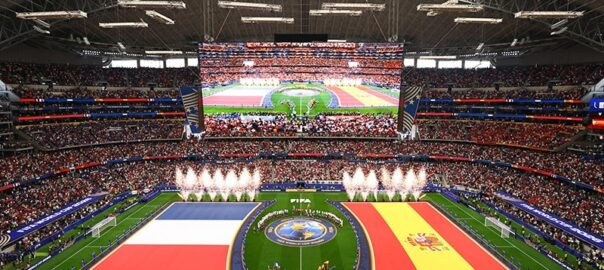
Spain delivered one of their finest performances of the tournament to book a place in only their second World Cup final, stunning a France side that had entered the semi-final as one of the competition’s strongest teams.

Les Bleus arrived with huge attacking expectations, relying on the individual quality of players such as Kylian Mbappe, Ousmane Dembele, and Michael Olise. However, Spain showed that a perfectly organised team can overcome even the most talented group of individuals, claiming a convincing 2-0 victory.

Luis de la Fuente’s side reminded the football world why they are European champions and why they have matched the international unbeaten record of 37 games. After quietly progressing through the tournament, Spain now look ready for Sunday’s final against either Argentina or England.

France, meanwhile, was unable to find solutions against Spain’s control and tactical discipline. Despite their attacking options, they managed only three shots on target and struggled to break through a defence that has been among the strongest at the World Cup.

Former Premier League champion Chris Sutton described Spain’s display as a complete domination, saying they had “flattened” France and shown superiority in both physical and tactical areas.

Roy Keane also highlighted the contrast between the two teams, explaining that France were a collection of outstanding players who failed to operate as a unit, while Spain showed the value of collective football.

De la Fuente proves his critics wrong

Spain’s journey under Luis de la Fuente has become one of the biggest stories of the tournament. When he was appointed head coach in December 2022, some questioned whether he was the right person to lead a nation accustomed to famous managers.

Unlike previous Spain coaches with global reputations, De la Fuente arrived after working with the country’s youth teams, including the under-19, under-21, and under-23 sides. His appointment was initially viewed as a quieter choice, but his results have provided a clear response.

After winning the Nations League in 2023 and lifting the European Championship trophy in 2024, the 65-year-old has now taken Spain to the biggest match in world football.

The coach believes the team’s success comes from commitment, sacrifice, and constant improvement. He said Spain had rediscovered the spirit of the 2010 World Cup-winning generation and praised the mentality of players who continued training after the semi-final despite not featuring.

A tactical masterclass built on control

Spain’s victory was another example of the football identity they have developed over many years. Their possession-based approach, aggressive pressing after losing the ball, midfield dominance, and quick combinations caused France problems throughout the match.

The trio of Fabian Ruiz, Rodri, and Dani Olmo controlled the centre of the pitch against France’s midfield setup. Olmo’s movement from the number 10 role created constant difficulties, as he regularly dropped deeper and gave Spain an extra passing option.

France attempted to deal with Olmo’s influence by allowing a centre-back to follow him, but the Spanish midfielder repeatedly escaped pressure and connected with nearby teammates to create attacking opportunities.

Spain’s second goal showed another area where they found success. The French defensive structure left space around the full-backs, allowing Spain’s wide players and defenders to overload those areas.

France defended in a passive 4-4-1-1 shape, focusing more on zones than individual marking. Spain took advantage by sending their full-backs forward, forcing French defenders into difficult situations where they had to cover multiple opponents.

For the decisive second goal, Pedro Porro exploited that space. After playing the ball, he continued his run, received the return pass, and finished after France failed to track his movement.

Spain’s numbers underline a historic campaign

Spain’s statistics show just how impressive their tournament has been. They have now equalled Italy’s record for the longest unbeaten run in international football, reaching 37 matches without defeat.

They have also achieved a defensive milestone by becoming the first team in World Cup history to record six clean sheets in a single edition of the competition.

Lamine Yamal has been another symbol of Spain’s success. The teenager has never lost a match while representing his country and has won all 12 of his World Cup and European Championship starts.

Spain’s defensive strength was also evident against France, who produced only 0.3 expected goals — the lowest figure recorded by a team in a World Cup semi-final since Brazil against Sweden in 1994.

Despite a difficult start, including a goalless draw against debutants Cape Verde, Spain has improved as the tournament has progressed. They needed late goals against Portugal and Belgium earlier in the knockout stages, but against France they controlled the match from the beginning.

A united group chasing another title

Spain’s success has been built on a long-term connection between De la Fuente and many of his players. Several members of the squad worked with him during their youth careers, creating a strong sense of unity inside the team.

Mikel Oyarzabal, Dani Olmo, Rodri, and Unai Simon are among the players who began this journey under De la Fuente years ago, forming a group that has grown together through youth tournaments and now stands on the edge of World Cup glory.

After the victory, De la Fuente received a phone call from King Felipe VI as celebrations spread across Spain. The coach insisted there was no preferred opponent for the final, saying both England and Argentina would provide a major challenge.

Spanish football expert Guillem Balague believes Spain have raised the standard at the tournament and that their performance against France showed the qualities of a potential champion.

He pointed out that Spain’s consistency and tactical clarity separate them from other contenders while describing their semi-final display as the type of performance that belongs in football schools.

Enrique Macaya Márquez: the voice of 18 World Cups who still sees football with humility

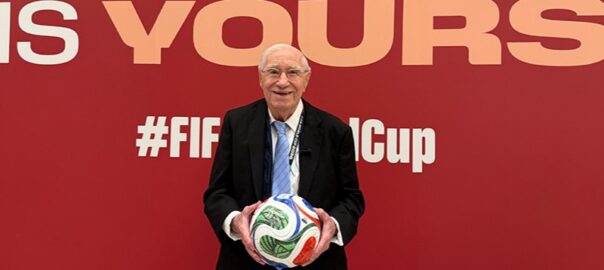
Few people in football history have witnessed as much as Enrique Macaya Márquez. The Argentine broadcaster, known simply as Macaya, has built a career that stretches across almost seven decades and includes coverage of 18 consecutive World Cups — a record that reflects his extraordinary connection with the game.

His journey began at the 1958 tournament in Sweden, when he was only 24 years old. Among the stars of that competition was a 17-year-old Pelé, but Macaya’s first major memory from the tournament came from Argentina’s painful 6-1 defeat against Czechoslovakia, a match later remembered as the “Disaster of Sweden”.

“We knew almost nothing about Czechoslovakia. We had no information, no data, and they surprised us,” Macaya recalled, describing a defeat that has stayed with him throughout his career.

Since then, he has watched football change dramatically. He has reported on legends such as Pelé, Diego Maradona, and Lionel Messi, while witnessing the sport move from traditional television coverage to the digital era, with instant statistics and increasingly global tournaments.

Despite all those changes, one principle has remained constant for Macaya: the importance of avoiding quick conclusions. For him, understanding a person and their journey must come before making any judgement.

Scaloni’s rise and the importance of patience

That belief influenced his reaction when Lionel Scaloni was appointed Argentina manager in 2018. At the time, Macaya admitted he was uncertain about the decision because he did not know much about the coach.

“I didn’t have high hopes. I didn’t know him,” he said.

Scaloni eventually transformed doubts into admiration, guiding Argentina to success in the Copa América, Finalissima, and World Cup. What initially appeared to be a risky choice became one of football’s most successful stories in recent years.

For Macaya, Scaloni’s achievements proved why patience and deeper understanding are essential before judging anyone. He believes that a person’s qualities cannot be evaluated without knowing their background, character, and complete story.

Argentina have once again reached the semi-finals of the World Cup and are preparing to face England, with Macaya convinced that the team has the ability to lift the trophy again.

“Of course they can,” he said. “If we’re talking about what is possible, about the future, I believe Argentina is capable of winning.”

Messi, Maradona and the impossible comparisons

When asked about his favourite Argentine player, Macaya’s answer was immediate.

“Clearly, it’s Messi,” he said.

However, when the conversation turned to the greatest player of all time, the veteran broadcaster refused to provide a definitive answer. In his view, comparing footballers from different eras is almost impossible because the game itself has constantly evolved.

“There’s no way to measure players throughout history,” Macaya explained. “Times have changed. Opponents have changed. Every player is unique.”

The same approach applies when discussing Messi and Maradona. Although both wore Argentina’s famous number 10 shirt and became symbols of their generation, Macaya believes their careers cannot be judged through a simple comparison.

“The opponents were different. The needs were different. The support from their teammates was different. Each had their own life and their own history,” he said.

He also rejects comparisons between Pelé’s Brazil team of 1970 and Maradona’s Argentina side from 1986, insisting that the different styles and circumstances make such debates impossible to settle.

A career built on memories and respect

For Macaya, football history is not defined only by victories. While World Cup triumphs naturally hold a special place in his memories, he believes defeats are also an important part of the story.

“There are many memorable matches. Negative results are also part of that memory,” he said.

Among the moments that stand out most for him are Argentina’s World Cup successes. He believes the 1986 triumph was especially significant for Maradona, as the trophy fulfilled the dream of becoming a world champion.

After nearly 70 years documenting football’s greatest moments, Macaya knows that retirement is approaching. Yet even when discussing the end of his career, he keeps the same relaxed attitude that has defined his work.

“I’m going to retire at some point,” he joked.

For a journalist who has spent a lifetime recording the evolution of football, his farewell may eventually come — but his influence on the sport’s history will remain unforgettable.

Match preview: England vs Argentina

England and Argentina meet once again in one of international football’s most celebrated rivalries, with Wednesday’s World Cup semi-final at Atlanta Stadium offering both nations the chance to move within one victory of lifting the trophy. Across the decades, meetings between the sides have carried enormous significance, both on and off the pitch, helping build one of the game’s most enduring contests.

The rivalry has often been shaped by memorable World Cup encounters. Argentina claimed a famous 2-1 victory in the 1986 quarter-finals, a match remembered for Diego Maradona’s ‘Hand of God’ and his remarkable solo effort soon afterwards. Twelve years later, England’s campaign ended in a penalty shootout against the South Americans after David Beckham’s dismissal, before Beckham found redemption in 2002 by converting the decisive penalty in a 1-0 group-stage success.

That 2002 encounter remains the most recent World Cup meeting between the countries. Although relations between the nations have softened over time, highlighted by Beckham and Diego Simeone sharing a friendly moment during Argentina’s last-16 victory over Cape Verde, the competitive edge between the teams remains as strong as ever whenever they face each other.

Date: Wednesday, July 15, 2026
Kick-off Time: 15:00 Atlanta local time (UTC-4)
Venue: Atlanta Stadium, Atlanta, Georgia
Venue Capacity: 75,000
Opponents: England vs. Argentina (Semi-final)
England holds a slight edge in their historic World Cup meetings, with three victories to Argentina’s two. The highly competitive nature of the fixture has meant they often meet in crucial knockout stages, with both nations famously going on to win the tournament in the same years they eliminated each other (England in 1966 and Argentina in 1986)

England chasing another breakthrough

England secured their place in the last four after recovering to defeat Norway 2-1 following extra time in difficult conditions in Miami. Jude Bellingham produced both goals, continuing an exceptional tournament in which he has scored two goals in each of his last two appearances. Among England players, only Harry Kane and Gary Lineker have recorded more World Cup matches with multiple goals, while Peru’s Téofilo Cubillas remains the only midfielder in tournament history with more such games than Bellingham.

Bellingham and Kane have each collected six goals during the competition, making England the first nation to have two players score at least six times in the same World Cup. Kane is also set to earn his 121st international appearance if selected, moving clear as England’s most-capped outfield player, with only Peter Shilton having represented the national team more often.

England’s latest victory also means they have now reached the semi-finals of four major tournaments since 2018, matching the number they had achieved before that period. Thomas Tuchel is attempting to guide the Three Lions to their first major title in six decades while aiming to become only the fourth coach to reach a World Cup final with a nation other than his own.

Anthony Gordon played a major attacking role against Norway by attempting 10 dribbles, becoming the first England player to reach double figures in that category at a World Cup since Darius Vassell in 2002. Bukayo Saka, whose workload has been carefully managed because of fitness concerns, has also made a significant creative contribution, averaging 1.01 assists per 90 minutes, a figure surpassed only by Norway’s Andreas Schjelderup among players with at least 200 tournament minutes.

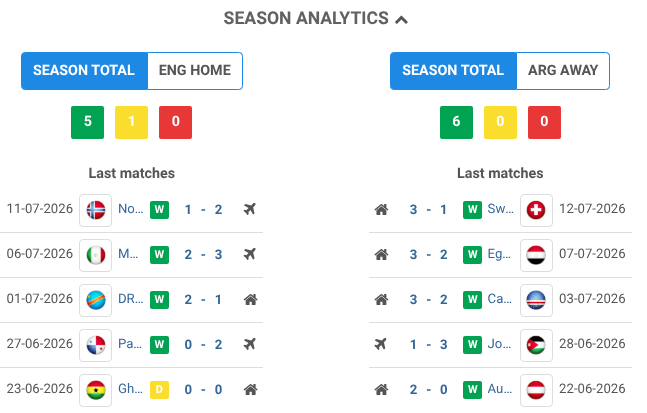
Last 5 England matches stats

FIFA World Cup

FIFA World Cup

FIFA World Cup

FIFA World Cup

FIFA World Cup

Norway 1 – 2 England

Mexico 2 – 3 England

England 2 – 1 DR Congo

Panama 0 – 2 England

England 0 – 0 Ghana

2026/07/12

2026/07/06

2026/07/01

2026/06/28

2026/06/23

Argentina aiming for another final

Argentina arrive in Atlanta carrying impressive momentum after winning all six of their matches at the 2026 World Cup, the longest winning sequence in their tournament history. Lionel Scaloni’s side have scored exactly three goals in each of their previous four fixtures and could become only the second team to register at least three goals in five consecutive World Cup matches.

Their attacking output has been unmatched throughout the tournament. Argentina has produced 17 goals, more than any other nation, leaving them just one short of equalling their highest total from a single World Cup, set during the inaugural edition in 1930. The reigning champions, who lifted the trophy in Qatar four years ago after overcoming France on penalties, are now pursuing another appearance in the final.

Scaloni is seeking to become only the seventh coach to oversee two World Cup finals and just the second Argentine manager to achieve that feat after Carlos Salvador Bilardo. Argentina have also maintained a flawless record in World Cup semi-finals, progressing from each of their previous five appearances at this stage.

Lionel Messi continues to lead the attack with eight goals, matching Kylian Mbappé for the tournament lead. Although he did not score in the 3-1 extra-time quarterfinal victory over Switzerland, the Inter Miami forward supplied the assist for Alexis Mac Allister’s opening goal, becoming only the second player since 1966 to record at least 10 goal involvements in multiple World Cups alongside Mbappé.

Last 5 Argentina matches stats

FIFA World Cup

FIFA World Cup

FIFA World Cup

FIFA World Cup

FIFA World Cup

Argentina 3 – 1 Switzerland

Argentina 3 – 2 Egypt

Argentina 3 – 2 Cabo Verde

Jordan 1 – 3 Argentina

Argentina 2 – 0 Austria

2026/07/12

2026/07/07

2026/07/04

2026/06/28

2026/06/22

Rivalry, records and head-to-head

Despite the magnitude of this rivalry, England have lost only two of their 14 meetings with Argentina, recording six victories and six draws. One of those drawn contests ended in Argentina’s favour via penalties at the 1998 World Cup, while England’s last defeat in normal time against the South Americans came during the famous 1986 quarter-final.

The Three Lions have avoided defeat across 90 minutes in each of their last five meetings with Argentina and have won the previous two encounters. The latest came in a 3-2 friendly success in 2005, when Michael Owen scored twice and Wayne Rooney also found the net.

This semi-final represents the sixth World Cup meeting between the countries. Argentina has only faced Germany more often in the competition, while they have also met the Netherlands six times. Among opponents they have encountered at least three times at the World Cup, Argentina owns a lower win percentage only against Italy, Germany, and the Netherlands than it does against England.

Past H2H Results

International friendlies

FIFA World Cup

FIFA World Cup

Argentina 2 – 3 England

Argentina 0 – 1 England

Argentina 2 – 2 England

2005/11/12

2002/06/07

1998/06/30

Prediction and expected outcome

England and Argentina arrive in the semi-final in outstanding form, making this one of the most evenly balanced matches of the tournament. England have shown resilience by overcoming difficult knockout tests, while Jude Bellingham and Harry Kane have provided a consistent goal threat throughout the competition. Argentina, meanwhile, have been the tournament’s highest-scoring side and carry the confidence of a six-match winning streak, with Lionel Messi continuing to influence games through both goals and assists. The match is likely to be decided by fine margins, with England aiming to impose themselves physically and Argentina relying on their technical quality and attacking fluency. Extra time cannot be ruled out, but Argentina’s experience in the latter stages of major tournaments could prove decisive in another tightly contested encounter.

Prediction: England 1-2 Argentina (after extra time)

Expected outcome: A closely fought semi-final featuring long spells of tactical discipline and few clear-cut opportunities before individual quality separates the sides. England have every chance of reaching the final, but Argentina’s attacking momentum and experience in high-pressure World Cup matches give them a slight advantage. Regardless of the result, the contest is expected to be one of the standout matches of the tournament.

England vs Argentina Official Lineups, Wednesday, 15 July 2026, World Cup Semifinals

England vs Argentina Official Lineups, Wednesday, 15 July 2026, World Cup Semifinals

Here are England vs Argentina official starting lineups in the FIFA World Cup 2026 Semifinals on Wednesday, July 15, at 3:00 PM ET (12:00 PM PT). This eagerly awaited historic matchup will be held at Atlanta Stadium in Atlanta, Georgia.


15-07-2026 19:00
Semi-final


FIFA Rankings

Argentina holds the #2 spot in the world with 1913.71 points, while England is ranked #4 with 1850.97 points.


How did they make it to the Semifinals?

England made a comeback to win against Norway 2-1 in Miami. Norway’s Andreas Schjelderup scored first, but Jude Bellingham equalized before halftime and netted the dramatic winner in extra time. Before this match, England had triumphed over Mexico 3-2 in the Round of 16 and DR Congo 2-1 in the Round of 32.

Image


Argentina, the reigning world champions, achieved a 3-1 victory over Switzerland in extra time. Alexis Mac Allister put Argentina ahead early, but Dan Ndoye equalized for Switzerland. After a red card for Embolo due to simulation in extra time, Argentina took advantage with goals from Julián Alvarez and Lautaro Martínez to secure their spot. Earlier, Argentina had defeated Cabo Verde 3-2 in the Round of 32 and Egypt 3-1 in the Round of 16.

Image


👉   Click here for  Full 2026 World Cup Squad Lists – Confirmed rosters for all 48 teams.

👉  Click here for  2026 World Cup Group Stage Standings.


👉   Serie A players called up for  🇦🇷    the Argentina National team:
  • Inter forward Lautaro Martinez.
  • Como forward Nico Paz.


✅   No Serie A players called up for the England National team

England starting lineup (4-2-3-1): Jordan Pickford, John Stones, Reece James, Djed Spence, Marc Guéhi, Jude Bellingham, Elliot Anderson, Morgan Rogers, Declan Rice, Anthony Gordon, Harry Kane.

Substitutes: Bukayo Saka, James Trafford, Nico O’Reilly, Dan Burn, Noni Madueke, Marcus Rashford, Trevoh Chalobah, Eberechi Eze, Ezri Konsa, Dean Henderson, Jordan Henderson, Ivan Toney, Kobbie Mainoo, Ollie Watkins.

Argentina starting lineup (4-4-2): Emiliano Martínez, Nicolás Tagliafico, Nahuel Molina, Lisandro Martínez, Cristian Romero, Alexis Mac Allister, Enzo Fernández, Leandro Paredes, Giuliano Simeone, Lionel Messi, Julián Alvarez.

Substitutes: Facundo Medina, Thiago Almada, Nicolás Otamendi, Rodrigo De Paul, Giovani Lo Celso, Exequiel Palacios, Juan Musso, Gonzalo Montiel, Nico González, Nico Paz, Marcos Senesi, Gerónimo Rulli, Valentín Barco, Lautaro Martínez, José Manuel López.

England
Argentina

Starting lineups

1
Jordan Pickford
Goalkeeper
25
Djed Spence
Defender
90'
5
John Stones
Defender
90'
6
Marc Guehi
Defender
24
Reece James
Defender
82'
4
Declan Rice
Midfielder
82'
8
Elliot Anderson
Midfielder
10
Jude Bellingham
Midfielder
18
Anthony Gordon
Attacker
72'
9
Harry Kane
Attacker
17
Morgan Rogers
Attacker
23
Emiliano Martínez
Goalkeeper
13
Cristian Romero
Defender
6
Lisandro Martínez
72'
26
Nahuel Molina
Defender
72'
3
Nicolás Tagliafico
81'
20
Alexis Mac Allister
Midfielder
24
Enzo Fernández
Midfielder
5
Leandro Paredes
Midfielder
64'
17
Giuliano Simeone
Attacker
72'
9
Julián Álvarez
Attacker
10
Lionel Messi
Attacker

Substitutes

20
Noni Madueke
Attacker
7
Bukayo Saka
Attacker
12
Trevoh Chalobah
Defender
16
Kobbie Mainoo
Midfielder
14
Jordan Henderson
Midfielder
19
Ollie Watkins
Attacker
23
James Trafford
Goalkeeper
21
Eberechi Eze
Attacker
13
Dean Henderson
Goalkeeper
2
Ezri Konsa
Defender
72'
3
Nico O’Reilly
Defender
82'
15
Dan Burn
Defender
82'
11
Marcus Rashford
Attacker
90'
22
Ivan Toney
Attacker
90'
1
Juan Musso
Goalkeeper
18
Nico Paz
Midfielder
11
Giovani Lo Celso
Midfielder
14
Exequiel Palacios
Midfielder
16
Thiago Almada
Midfielder
12
Gerónimo Rulli
Goalkeeper
25
Facundo Medina
Defender
8
Valentín Barco
Defender
21
José Manuel López
2
Marcos Senesi
Defender
15
Nico González
Attacker
64'
7
Rodrigo de Paul
Midfielder
72'
19
Nicolás Otamendi
72'
4
Gonzalo Montiel
Defender
72'
22
Lautaro Martínez
81'
Argentina   Argentina World Cup 2026 Squad:
  • Goalkeepers: Juan Musso (Atletico Madrid), Geronimo Rulli (Marseille), Emiliano Martinez (Aston Villa).
  • Defenders: Leonardo Balerdi (Marseille), Nicolas Tagliafico (Lyon), Gonzalo Montiel (River Plate), Lisandro Martinez (Manchester United), Cristian Romero (Tottenham), Nicolas Otamendi (Benfica), Facundo Medina (Marseille), Nahuel Molina (Atletico Madrid).
  • Midfielders: Leandro Paredes (Boca Juniors), Rodrigo de Paul (Inter Miami), Valentin Barco (Strasbourg), Giovani lo Celso (Real Betis), Ezequiel Palacios (Bayer Leverkusen), Alexis Mac Allister (Liverpool), Enzo Fernandez (Chelsea).
  • Forwards: Julian Alvarez (Atletico Madrid), Lionel Messi (Inter Miami), Nicolas Gonzalez (Atletico Madrid), Thiago Almada (Atletico Madrid), Giuliano Simeone (Atletico Madrid), Nico Paz (Como), Jose Manuel Lopez (Palmeiras), Lautaro Martinez (Inter)
England   England World Cup 2026 Squad:
  • Goalkeepers: Jordan Pickford (Everton), Dean Henderson (Crystal Palace), James Trafford (Manchester City).
  • Defenders: Reece James (Chelsea), Tino Livramento (Newcastle), Marc Guehi (Manchester City), Ezri Konsa (Aston Villa), John Stones (Manchester City), Jarell Quansah (Bayer Leverkusen), Nico O’Reilly (Manchester City), Dan Burn (Newcastle), Djed Spence (Tottenham Hotspur).
  • Midfielders: Declan Rice (Arsenal), Elliot Anderson (Nottingham Forest), Jude Bellingham (Real Madrid), Jordan Henderson (Brentford), Morgan Rogers (Aston Villa), Kobbie Mainoo (Manchester United), Eberechi Eze (Arsenal).
  • Forwards: Harry Kane (Bayern Munich), Ivan Toney (Al-Ahli), Ollie Watkins (Aston Villa), Bukayo Saka (Arsenal), Noni Madueke (Arsenal), Marcus Rashford (Barcelona), Anthony Gordon (Newcastle).


The Mercedes Benz Stadium is set for Norway vs England

Image

Photo via x.com/world_tourists_


Harry Kane’s England Captain

Harry Kane's shirt hanging up in the dressing room with the captain's armband ahead of England's FIFA World Cup semi-final against Argentina.


England’s official starting lineup against Argentina

England: 1 Jordan Pickford, 4 Declan Rice, 5 John Stones, 6 Marc Guéhi, 8 Elliot Anderson, 9 Harry Kane (c), 10 Jude Bellingham, 17 Morgan Rogers, 18 Anthony Gordon, 24 Reece James, 25 Djed Spence Substitutes: 2 Ezri Konsa, 3 Nico O'Reilly, 7 Bukayo Saka, 11 Marcus Rashford, 12 Trevoh Chalobah, 13 Dean Henderson, 14 Jordan Henderson, 15 Dan Burn, 16 Kobbie Mainoo, 19 Ollie Watkins, 20 Noni Madueke, 21 Eberechi Eze, 22 Ivan Toney, 23 James Trafford


Argentina’s official starting lineup against England

Image


The England XI line up for a team photo


Image


Image


Buy FIFA World Cup Tickets
Sports, Football, Soccer, FIFA World Cup Tickets

Sports Events 365World Cup Semifinals

🏴󠁧󠁢󠁥󠁮󠁧󠁿   England – Argentina   🇦🇷

Date: Wednesday, July 15, 2026.
Venue: Mercedes-Benz Stadium
Atlanta, Georgia
Kick-off at 3:00 PM EDT (20:00 BST / 16:00 Local Argentine Time).

Referee: Ismail Elfath USA
Assistant Referee 1: Corey Parker USA
Assistant Referee 2: Kyle Atkins USA
Fourth Official: Maurizio Mariani ITA
Reserve AR: Daniele Bindoni ITA