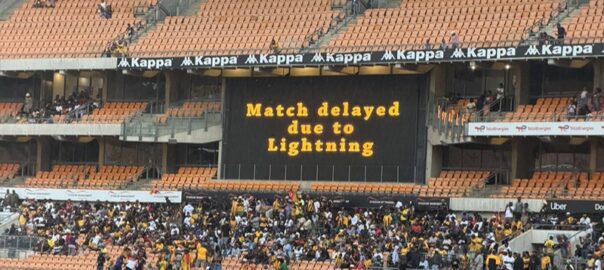
The 2026 World Cup is staged across the United States, Canada, and Mexico, and it is set to take place during the height of storm season in several regions involved in hosting duties. This timing raises the possibility that matches could be affected by severe weather, particularly thunderstorms and electrical activity.
Certain areas, especially within the United States, are already known for strict procedures related to lightning safety, which adds another layer of disruption risk for teams and organisers. Weather-related interruptions have already been observed during preparatory fixtures, highlighting how conditions could impact the tournament itself.
England’s friendly against Costa Rica in Orlando was held up by around an hour due to heavy rain combined with the possibility of lightning activity in the surrounding area. In addition, New York City experienced intense heat reaching the mid-30s Celsius, followed by heavy rainfall, thunder, and lightning less than a day before Brazil was due to meet Morocco in New Jersey.
Lightning safety rules and match suspension protocol
FIFA operates in line with guidance issued by local authorities during the tournament, meaning lightning safety procedures will follow established national standards. In the United States, the National Oceanic and Atmospheric Administration (NOAA) specifies that any detected lightning strike within an eight-mile radius of a stadium requires immediate suspension of play.
Once a strike is identified within that distance, a 30-minute waiting period begins before play can resume. If another strike occurs within that window, the countdown is reset, potentially extending interruptions significantly depending on weather persistence.
These measures are designed to prioritise safety, but they also create conditions where matches could be paused for prolonged periods, especially in regions prone to repeated storm activity.
Real cases of weather interruptions in recent competitions
Similar disruptions have already been witnessed in major tournaments held in the United States. During a previous Club World Cup edition, six matches were temporarily stopped due to electrical storms moving through host cities.
One of the most notable examples involved Chelsea and Benfica in Charlotte, North Carolina, where kick-off began at 4:38 pm local time, but the match was not completed until four hours and 38 minutes later due to repeated weather stoppages.
These incidents demonstrate how quickly storms can interrupt play and how extended delays can develop when lightning activity remains within close proximity of stadium venues.
Scheduling challenges and match completion rules
Stadiums located in the Gulf Coast region and the southeastern United States are considered most vulnerable to thunderstorm disruption. FIFA is expected to assess each affected fixture individually if play is halted, depending on the severity and timing of the weather conditions.
One additional complication involves group-stage scheduling, where final-round matches in each group are played simultaneously to prevent teams gaining an advantage from knowing other results. Extended delays could disrupt this structure and create logistical challenges for organisers.
If a match cannot be completed due to unsafe conditions, tournament regulations state that it would be rescheduled and resumed later from the exact minute it was stopped, rather than restarted in full.