Category Archives: History and facts 2026

World Cup managers removed during tournaments: a rare but growing trend

Andy Beattie (1954)

Andy Beattie’s case in 1954 was not a direct dismissal, as he stepped down after the Scottish FA restricted his World Cup squad selection to just 13 players for Scotland’s debut tournament. The limited preparation and selection constraints framed a difficult situation from the start, shaping expectations around their performances.

Scotland’s opening match ended in a 1-0 defeat to Austria, a result described in context as respectable given Austria’s strength at the time. The team then suffered a heavy 7-0 loss to Uruguay, a match played in extreme heat while wearing heavy woollen shirts, adding to the difficulty of the occasion.

These results formed part of a broader picture of early Scottish World Cup struggles, with future appearances described as continuing in similarly chaotic fashion. Beattie’s departure closed a short and turbulent tournament experience.

Carlos Alberto (1998)

Carlos Alberto’s tenure with Saudi Arabia at the 1998 World Cup ended after two matches, following a defeat-heavy start to the tournament. Their opening game was a 1-0 loss to Denmark in Lens, played in cold conditions and marked by a lack of quality in performance.

A second match brought a heavy defeat against the host nation, which proved decisive in the decision to remove him from his role. The early elimination highlighted a clear drop in performance compared to their previous tournament showing in 1994.

After his exit, Saudi Arabia managed to earn a 2-2 draw against South Africa in their final group match, a game that included goals from Sami Al-Jaber and Shaun Bartlett. Carlos Alberto’s tournament ended after having managed across multiple World Cups before this final setback.

Cha Bum-kun (1998)

Cha Bum-kun’s spell as South Korea’s manager in 1998 ended after two defeats that resulted in early elimination from the tournament. The team conceded eight goals across losses to Mexico and the Netherlands, which sealed their fate before the final group game.

South Korea had entered the competition still searching for their first World Cup win, and their status at the time reflected limited experience at this level. Following the defeats, the federation decided to replace Cha Bum-kun.

His successor oversaw a final group match against Belgium, which ended in a 1-1 draw and prevented their opponents from progressing. Cha Bum-kun’s tenure is also noted for later claims attributed to him regarding off-field issues in domestic football, as recorded in the original account.

Henryk Kasperczak (1998)

Henryk Kasperczak’s time in charge of Tunisia at the 1998 World Cup ended after two matches, following early elimination from the group stage. Their campaign began with a 2-0 defeat to England in Marseille, a match also remembered for pre-match crowd trouble.

Their second game was a narrow and closely contested defeat against Colombia, a match described as chaotic but low scoring. Despite competitive moments, Tunisia was unable to secure results in either fixture.

After these outcomes, the decision was taken to dismiss Kasperczak. Tunisia then finished their tournament with a 1-1 draw against Romania, which provided a small measure of consolation before the end of their campaign.

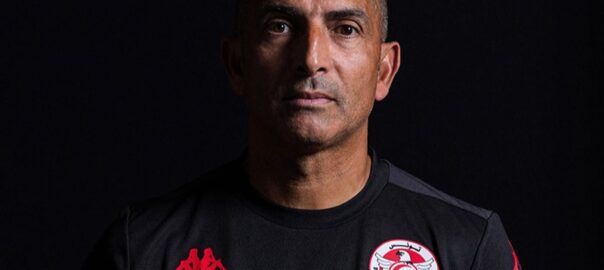
Sabri Lamouchi (2026)

Sabri Lamouchi’s departure in 2026 came after just one match, making it an unusually early managerial change in World Cup history. Tunisia suffered a 5-1 defeat to Sweden in their opening group game, a result described as a significant shock given expectations.

The performance contrasted with Tunisia’s recent tournament pattern of narrow results and draws, making the margin of defeat stand out. Sweden was acknowledged as a strong opponent despite a difficult qualification period.

Following the loss, Lamouchi was replaced by Hervé Renard for the remaining group matches against Japan and the Netherlands. The appointment continued a familiar trend of Tunisia turning to experienced figures during major tournaments.
FIFA rule changes dominate early World Cup discussion

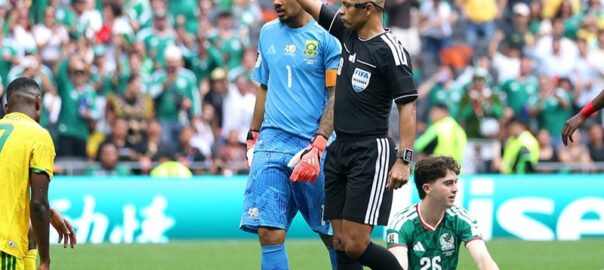
The opening days of the 2026 World Cup have been shaped not only by the football on the pitch but also by a number of new FIFA regulations that have quickly become a major topic of conversation. Confusion among supporters, questions about officiating, and several high-profile incidents have drawn attention to the latest adjustments introduced before the tournament.

Among the most discussed changes is the broader role of VAR. For the first time at a major international competition, video officials are permitted to review certain corner-kick decisions, incorrect second yellow cards, and situations involving mistaken identity. They may also intervene when an infringement takes place before a set piece and later has a direct influence on a goal, penalty, or disciplinary ruling.

The addition of corner-kick reviews has surprised many fans because VAR has traditionally been limited to goals, penalties, straight red cards, and mistaken identity cases. FIFA believes the expanded authority will allow officials to correct clear errors before play resumes.

As a result, the use of technology has become one of the central talking points of the tournament’s opening week, with supporters still adapting to the revised interpretation of video review powers.

New substitution process targets time wasting

FIFA has also introduced a stricter procedure for substitutions in an effort to reduce delays during matches. Once the replacement process begins, a player leaving the field is given only 10 seconds to exit the pitch.

If the player does not leave within that period without a valid reason, the incoming substitute is prevented from entering immediately. Instead, the replacement must wait for the next stoppage in play, and at least one minute must pass before the change can be completed.

The measure is designed to discourage teams from slowing the game down, particularly during the closing stages of matches. However, the new approach caught many spectators off guard during the first round of fixtures.

The unfamiliar process led to confusion in stadiums and among television audiences as supporters tried to understand why some substitutions were delayed.

Stricter disciplinary approach under scrutiny

Behaviour towards match officials has become another focus of FIFA’s updated regulations. Under the new rules, a player who covers their mouth, arm, or shirt while confronting an opponent can be shown a red card.

The change was introduced to assist officials when investigating allegations of abuse or misconduct that could otherwise be concealed from cameras. FIFA has also taken a tougher stance against players and team staff who leave the field to protest refereeing decisions, with dismissal now a possible consequence.

Attention on the disciplinary framework intensified immediately when three red cards were shown during the tournament’s opening match. Although not every sending-off was linked directly to the new offences, the stricter enforcement of conduct regulations quickly became a major discussion point.

Debate among supporters and commentators has continued as the competition progresses, with many assessing the impact of FIFA’s tougher position on player behaviour.

Measures introduced to keep matches moving

Several additional adjustments have been implemented to increase the pace of games. Referees are now permitted to use visible countdowns to prevent delays during throw-ins and goal kicks.

Changes have also been made regarding injuries. In most cases, outfield players who receive treatment must remain off the field for at least one minute after play restarts before they can return.

FIFA hopes these measures will reduce tactical stoppages and limit opportunities for teams to interrupt the flow of matches. The governing body believes the changes will help create a faster and more continuous spectacle.

Whether fans ultimately welcome the new regulations remains uncertain. What is already evident, however, is that the revised laws have ensured officiating and rule enforcement are attracting almost as much attention as the football itself during the early stages of the World Cup.

Experienced icons preparing for another World Cup appearance

The 2026 FIFA World Cup is expected to bring together a group of footballers still performing at an advanced age, with several already in their forties. Until now, only former Cameroon attacker Roger Milla has appeared at a World Cup after turning 40, doing so in 1994 and even finding the net during that tournament.

That long-standing benchmark is now set to be equalled, as multiple experienced names are preparing to take part in the upcoming edition. The event will also mark sixth World Cup appearances for both Cristiano Ronaldo and Lionel Messi, highlighting the unusual longevity among this group of players.

Among those expected to feature are well-known figures such as Guillermo Ochoa, Edin Džeko, Craig Gordon, Manuel Neuer, Vozinha, Fernando Muslera, and Luka Modrić, each bringing extensive international experience into the tournament.

Experienced goalkeepers leading their nations

Several goalkeepers in their forties are set to play important roles for their national teams. Mexico’s Guillermo Ochoa is included in the co-host squad and could make history by appearing at a record sixth World Cup, having first taken part in 2006.

Scotland’s Craig Gordon, who recently turned 43, is the oldest player selected for the tournament and could become the second-oldest player ever to feature at a World Cup if he plays. Uruguay’s Fernando Muslera, meanwhile, is due to turn 40 during the competition and has already accumulated 134 international appearances, returning to the squad after reversing his international retirement.

Cape Verde’s Vozinha also adds veteran presence, with 81 caps to his name and club experience in Portugal’s second tier, as his nation prepares for its World Cup debut.

Germany’s Manuel Neuer has also returned from international retirement. After stepping away following Euro 2024, he rejoined the national setup following a strong domestic season in which he won a league and cup double.

Outfield legends chasing final glory

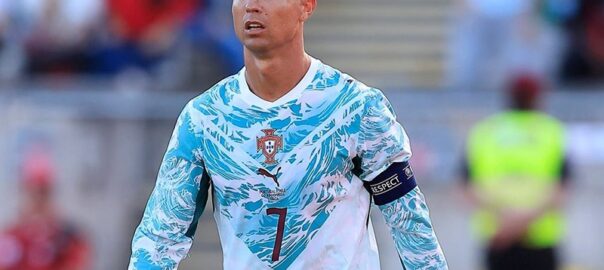
Among outfield players, Cristiano Ronaldo stands out as the oldest and will take part in his sixth World Cup. Despite a career filled with international records for appearances and goals, the World Cup title is still missing from his achievements.

Croatia’s Luka Modrić is also set for another major tournament and is expected to surpass 200 international caps during the competition. He remains a central figure for his country and is noted for his performances at club level with AC Milan during the latest season.

Bosnia and Herzegovina captain Edin Džeko continues to lead his national side, holding a record 73 international goals in 148 matches. He arrives at the tournament after contributing goals following a January move to Schalke, where he helped the club achieve Bundesliga promotion.

Records, returns and historic milestones

The upcoming World Cup will also see several record-related storylines unfold, with multiple players set to reach or extend long-standing international achievements. Guillermo Ochoa and Cristiano Ronaldo are both preparing for a sixth appearance at the tournament, placing them among the most experienced participants in World Cup history.

Muslera’s inclusion marks a significant milestone as he becomes the first player from Uruguay to be selected for five World Cup squads after reversing his international retirement. At the same time, Manuel Neuer’s return adds another chapter to his international career after previously stepping away from the national team.

Across the squad lists, the presence of these veteran players underlines how experience continues to shape national team selections, with several countries relying on long-serving figures as they head into the competition.

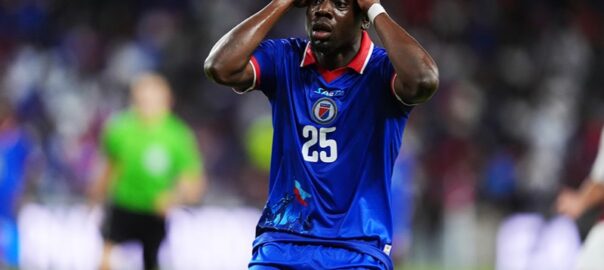
Haiti forced to change World Cup kit after FIFA objection

Haiti has been required to modify their World Cup 2026 kit after FIFA ruled that certain visual elements did not comply with its regulations on non-sport messaging. The decision came shortly before the team’s opening match in Group C against Scotland in Boston on Saturday.

The governing body concluded that the design could be interpreted in a way that breaches its rules banning political, religious, or personal statements on playing uniforms.

Historical reference behind the removed design

The original shirt featured an illustration linked to a battle scene from Haiti’s struggle for independence, specifically the 1803 Battle of Vertières. That victory was a defining moment in securing the country’s independence.

The design had already appeared during pre-tournament matches against New Zealand and Peru. It was described as intended to reflect pride, resilience, and the spirit of the Haitian people, though FIFA raised objections to its inclusion.

Manufacturer statement and design revision

Kit supplier Saeta confirmed that changes were made at short notice after working alongside the Haitian Football Federation. The company said it cooperated with FIFA’s requirements following the review process.

Saeta added that while their interpretation of the design differed from FIFA’s view, they accepted the ruling and implemented the requested adjustments to the shirt.

Tournament background and team outlook

Haiti will compete at a World Cup for the first time in 52 years, with their only previous appearance dating back to 1974, when they lost all three group-stage matches and conceded 14 goals.

They arrive in the tournament after a 4–0 win over New Zealand and a 2–1 defeat to Peru. Haiti is placed in a group alongside Scotland, Morocco, and Brazil.

World Cup records that could fall in 2026

All-time top scorer chase

The long-standing World Cup scoring record held by Miroslav Klose is under serious pressure heading into 2026. He sits on 16 goals, with several modern attackers closing in as the expanded format offers more matches than before.

Lionel Messi is among the closest challengers, currently just three goals behind Klose, and will again lead Argentina’s defence of their title. One goal further back is Kylian Mbappe, who has already scored 12 World Cup goals across the last two editions and is still only 27, making the record increasingly reachable.

Multiple Golden Boot history in reach

A separate milestone that could be rewritten in 2026 is the possibility of a first-ever two-time Golden Boot winner. Across the entire history of the tournament, no player has managed to finish as top scorer in more than one edition.

Kylian Mbappe returns after leading the 2022 tournament in goals and will captain a strong France side. England captain Harry Kane also arrives with major momentum after a 61-goal club season and is aiming for a second Golden Boot following his 2018 success. Colombia’s James Rodriguez is also part of the conversation, returning to the tournament after previously winning the award in 2014.

Six tournament appearances milestone

The 2026 edition could also see history made through longevity, with several iconic players potentially appearing in a sixth World Cup. Cristiano Ronaldo, Lionel Messi, and Guillermo Ochoa have each taken part in every tournament since 2006 and could extend that run.

If they feature again, it would mark an unprecedented sixth appearance at the competition for all three players, setting a new benchmark for World Cup participation longevity.

Coaching milestones and historic debuts

Several managerial and team-based records are also in reach. No foreign coach has ever won the World Cup, although a number of high-profile national teams are currently led by overseas managers, including England under Thomas Tuchel, Brazil under Carlo Ancelotti, and Portugal under Roberto Martinez.

On the records side, France manager Didier Deschamps is closing in on Helmut Schön’s mark of 16 World Cup wins and has already reached 14 victories, with a total of 19 matches managed at the tournament so far.

The 2026 World Cup will also see debutants Curaçao become the smallest nation ever to feature at the finals, with a population under 150,000, surpassing the previous record held by Iceland. At the other end of the spectrum, their coach Dick Advocaat is set to become the oldest manager in World Cup history at 78, overtaking Otto Rehhagel’s previous record.