Category Archives: History and facts 2026

5 million requests flood 2026 World Cup ticket sales amid price backlash

FIFA reports that since the latest ticketing phase began on Thursday, more than five million requests have been submitted for the 2026 World Cup. Fans from more than 200 nations have expressed interest, with the group-stage fixture between Colombia and Portugal in Miami on 27 June emerging as the most popular match.

Despite the high demand, the tournament’s ticket prices have drawn criticism. The Football Supporters’ Association (FSA) described the pricing as “scandalous,” highlighting that group-stage tickets can cost up to three times more than they did for the 2022 World Cup in Qatar.

For the final, the most affordable ticket will be £3,119, prompting concerns that fans may be priced out of the event. The FSA has joined Football Supporters Europe (FSE) in calling for a pause in ticket sales to allow fan groups to negotiate with FIFA over the cost structure.

Associations urged to challenge pricing

The FSA has called on national football associations to speak up on behalf of their supporters. “We call on all national associations to stand up for your supporters, without whom there would be no professional game,” the group stated. The Football Association (FA) will engage with FIFA to convey the concerns of England fans.

FIFA has not responded publicly to the criticism. Both the FA and the Scottish FA have yet to comment directly on ticket costs. The FA is reportedly aware of the anger among fans and intends to raise these concerns at upcoming discussions with FIFA.

FA chair Debbie Hewitt is expected to attend a FIFA Council meeting in Doha next week. Hewitt has previously opposed dynamic ticket pricing and confirmed it will not be implemented at Euro 2028, which the UK and Ireland will co-host.

Rising prices and popular matches

Ticket prices for next year’s World Cup have seen significant increases. Group-stage tickets for matches such as England v Croatia and Scotland v Brazil now cost around £198, £373, or £523, compared with Qatar 2022 prices of £68.50, £164.50, or £219. The cost for later stages rises sharply, with quarter-final tickets ranging from £507 to £1,073 and semi-finals from £686 to £2,363.

The cheapest final ticket will cost £3,119, more than seven times the lowest price in Qatar. There are no discounts for children or other groups, according to the official allocation.

FIFA insiders maintain that prices reflect the US market and are intended to fund football development worldwide. President Gianni Infantino has also pledged record revenues, with the event expected to be the most financially lucrative sports tournament ever.

So far, the matches attracting the most ticket requests after Colombia v Portugal include Brazil v Morocco (New Jersey, 13 June), Mexico v South Korea (Guadalajara, 18 June), Ecuador v Germany (New Jersey, 25 June), and Scotland v Brazil (Miami, 24 June). FIFA says the bulk of requests have come from host nations, followed by Colombia, England, Ecuador, Brazil, Argentina, Scotland, Germany, Australia, France, and Panama.

FIFA launches main ticket lottery for the 2026 World Cup

The main ticket lottery for the 2026 World Cup in North America is set to begin on Thursday. This will be the first chance for supporters to purchase tickets following the draw and the full release of the match schedule last week.

Fans can apply for tickets via FIFA’s official website from 16:00 GMT on Thursday. Each household is allowed to request up to four tickets per match, with a maximum of 40 tickets across all games.

The application period continues until 13 January 2026. There is no benefit to submitting requests early, as all matches remain open for selection throughout the period.

After the window closes, FIFA will conduct a lottery to determine successful applicants. Those selected will be notified by email in February and will be automatically charged for their tickets.

Ticket pricing and previous sale phase

FIFA has confirmed that dynamic or variable pricing will not be used during the main ballot. Prices for the tickets applied for at the start will remain the same until the end of the ballot.

Ticket costs are influenced by demand, with high-profile games expected to be more expensive. While no official price lists have been published, previous sales provide a rough guide: Category 1 tickets for group-stage matches hosted by the tournament’s countries ranged from £394 to £2,054, while the cheapest Category 4 tickets started at £45. Prices rise significantly for the knockout rounds, with final tickets reaching up to £5,915.

FIFA promotes Category 4 seating as a more accessible option. However, stadium maps indicate that such tickets are very limited, and Football Supporters Europe has expressed caution regarding their availability. The majority of seating in most venues falls under the higher-priced Category 1 and 2 sections.

Alternative ways to secure tickets

Supporters have several other routes to obtain tickets beyond the main ballot. Each nation receives an allocation of 8% of tickets for its matches. In England and Scotland, these are distributed through the England Supporters Travel Club and the Scotland Supporters Club. Members apply from 15 December to 13 January, with allocations weighted toward those with the highest loyalty points. Prices generally align with the main ballot, and resale is not permitted.

FIFA also operates an official marketplace where previously purchased tickets can be resold. Sellers set their own prices, with FIFA taking a 15% fee from both parties. Supporters are warned against using unofficial resale platforms, as tickets purchased elsewhere may be canceled without notice. On the unofficial market, tickets for England and Scotland’s group games are already listed above £450.

For those seeking guaranteed access regardless of cost, official hospitality packages are available. These often include premium seating, lounge access, and upscale dining. The top-tier Platinum Access package has undisclosed pricing and includes exclusive perks, including a private jet in promotional material.

Any remaining tickets will be released closer to the tournament on a first-come, first-served basis. Dynamic pricing is expected in this phase, but prices will be manually adjusted by FIFA rather than automatically by an algorithm.

Travel requirements for ticket holders

Purchasing a ticket does not guarantee entry into the host countries of the tournament. Fans visiting the United States need either a Visa Waiver Program authorization (ESTA) or a Visitor Visa (B1/B2), depending on nationality. UK citizens are usually eligible for an ESTA.

Travel to Canada requires a visa or an Electronic Travel Authorization (eTA), while Mexico allows visa-free entry for many nationalities, including UK visitors.

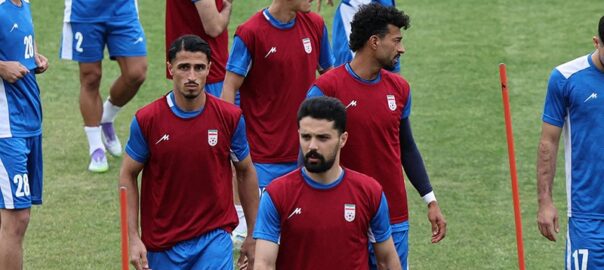
US embassies are prioritizing appointments for World Cup ticket holders, but applicants are still advised to apply as early as possible. Entry remains uncertain for citizens from countries with travel restrictions to the US, as seen recently when several Iranian delegation members were denied entry for the World Cup draw.

FIFA to implement three-minute pauses in all World Cup games

The 2026 World Cup will see a three-minute hydration pause in each half of every match. FIFA announced the initiative, emphasizing that it is designed to protect players’ well-being. These pauses will take place regardless of the weather to maintain consistent conditions for all teams.

Referees will pause play 22 minutes into each half to allow players time to rehydrate. This decision comes ahead of a summer tournament across the United States, Canada, and Mexico, where high temperatures and extreme weather events such as wildfires or hurricanes could affect participants and spectators.

Previous tournaments have implemented similar breaks only under extreme heat. However, this time, FIFA plans to standardize them for all matches, ensuring all teams benefit equally from the opportunity to recover.

Addressing extreme heat risks

A recent Pitches in Peril report, prepared by Football for the Future and Common Goal, highlighted that ten of the 16 World Cup stadiums face a very high risk of extreme heat stress. Concerns over player safety have intensified after complaints during the last Club World Cup, held in similarly hot conditions in June and July.

Chelsea midfielder Enzo Fernandez described experiencing dizziness while playing in “very dangerous” heat. Meanwhile, England manager Thomas Tuchel suggested that some substitutes might remain in the dressing room during matches to reduce exposure to the high temperatures.

FIFA’s hydration breaks are based on a simplified version of the cooling pauses used in past tournaments, and they will now be mandatory regardless of temperature or stadium conditions. Cooling breaks were previously only enforced when temperatures exceeded 32°C.

Implementation and scheduling considerations

The new breaks have also influenced match scheduling, contributing to the 13 different kickoff times planned for the tournament. Chief tournament officer Manolo Zubiria explained that each pause would last three minutes from whistle to whistle in both halves.

He also noted that if an injury stoppage occurs around the 20th or 21st minute, referees will handle it on the spot, ensuring that the hydration break is not interrupted.

This structured approach aims to prioritize player safety while maintaining the flow of the game, reflecting FIFA’s broader commitment to adapting to challenging summer conditions in North America.

FIFA World Cup 26’s official match ball unveiled: TRIONDA

FIFA World Cup 26’s official match ball unveiled: TRIONDA

The FIFA World Cup 26™ has reached a major milestone with the introduction of adidas TRIONDA, the tournament’s official match ball. Its name, TRIONDA, translates from Spanish as “three waves” and celebrates the historic collaboration of the three host countries: Canada, Mexico, and the United States.

The ball features a striking palette of red, green, and blue, representing each of the co-hosts. Its innovative four-panel structure with flowing geometry mimics the wave patterns referenced in the name. In the center, these panels form a triangular shape, symbolizing the union of the three nations for the first time in World Cup history.

Adding to its visual appeal, TRIONDA displays icons for each country: a maple leaf for Canada, an eagle for Mexico, and a star for the United States. Gold accents on the ball honor the FIFA World Cup Trophy, highlighting the significance of the competition’s global stage.

Advanced technology and performance features

TRIONDA incorporates several technological upgrades to enhance match performance. The deep seams within the four-panel design improve flight stability by evenly distributing drag as the ball moves through the air. This ensures more predictable trajectories during passes and shots.

Embossed icons, visible only when closely examined, enhance grip for players, especially in wet or humid conditions. The construction focuses on maintaining optimal control, allowing for precise striking, dribbling, and passing.

Connected ball technology also provides detailed tracking of each movement, assisting referees and match officials in monitoring play. This addition reflects the ongoing integration of technology into the sport to support fairness and accuracy.

Build-up to the World Cup and fan engagement

The launch of TRIONDA comes as excitement builds toward the final draw and the start of the tournament. Recent announcements have included the unveiling of the official mascots and confirmation that FIFA will donate USD 1 from each ticket sold to the FIFA Global Citizen Education Fund.

Fan engagement has been strong, with over 4.5 million supporters from 216 countries participating in the Visa Presale Draw, the first phase of ticket distribution for the highly anticipated event.

FIFA President Gianni Infantino expressed his enthusiasm, describing TRIONDA as “another iconic FIFA World Cup ball” and praising adidas for capturing the unity and passion of the host nations. He added that he looks forward to seeing the ball in action on the pitch as the tournament countdown continues.

TRIONDA is now available for purchase through official FIFA and Adidas websites, allowing fans to own a piece of the World Cup ahead of the tournament.

World Cup mascots: Maple, Zayu, and Clutch take center stage

Is a global football celebration complete without a mascot? For the 2026 edition, the answer comes in threes.

With the tournament expanding to 48 nations, the event will also feature three mascots for the three co-hosts. Each one embodies its country’s identity while playing its own special role on the pitch.

Canada is represented by a moose, Mexico by a jaguar, and the United States by a bald eagle. Together, Maple, Zayu, and Clutch aim to connect culture, tradition, and sport.

Maple the goalkeeper of Canada

Maple, wearing the number 1 shirt, is a moose symbolizing Canadian heritage. His outfit and name highlight some of the country’s most recognizable elements.

According to the description, Maple roams from coast to coast, uniting communities while reflecting the culture of the nation.

While Canada’s men’s team is better known for attack-minded players such as Alphonso Davies and Jonathan David, Maple’s antlers suggest he can cover plenty of space at the back.

Zayu the forward from Mexico

Mexico’s representative is Zayu, a jaguar in the number 9 jersey. Found mainly in the southern regions, the animal carries deep significance for ancient cultures of the country.

Zayu embodies celebration, from cuisine and dance to tradition, creating bonds that stretch beyond borders. His presence mirrors the country’s passion and pride.

Just like legendary strikers such as Javier Hernández, Cuauhtémoc Blanco, and Raúl Jiménez, Zayu leads the line with flair.

Clutch the playmaker of the United States

Clutch, a bald eagle with the number 10, fills the role of midfield organizer. The character is tied to exploration, adventure, and optimism, soaring across the vast United States while embracing different communities and games.

For American supporters, that shirt is strongly linked with Christian Pulisic, who carries the nation’s hopes heading into 2026. Clutch, too, is cast as the creative force in the middle of the field.

Looking back at past mascots

Mascots became a feature of the men’s World Cup in 1966, when England introduced World Cup Willie, a lion in a Union Jack shirt. Each edition since has created a character inspired by its host nation.

Juanito, a sombrero-wearing boy, was unveiled in Mexico in 1970, while West Germany brought Tip and Tap, two children in uniform, for 1974. Argentina presented Gauchito in 1978, a cartoon gaucho, and Spain followed with Naranjito, a cheerful orange, in 1982.

Mexico hosted again in 1986 with Pique, a jalapeño in traditional attire. Italy introduced the abstract figure Ciao in 1990, and the United States revealed Striker the dog in 1994. France continued in 1998 with Footix, a rooster in national colors.

South Korea and Japan, the first co-hosts, created Ato, Kaz, and Nik in 2002, futuristic figures known as Spheriks. Germany introduced Goleo VI and his talking football Pille in 2006. South Africa had Zakumi the leopard in 2010, and Brazil brought Fuleco the armadillo in 2014.

Russia’s choice in 2018 was Zabivaka the wolf, while Qatar presented La’eeb in 2022, a playful character resembling a traditional headpiece.