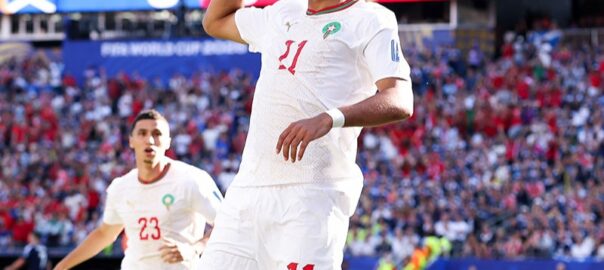
Scotland’s hopes of securing a place in the World Cup knockout stage suffered a setback after a 1-0 loss to Morocco, although qualification remains possible heading into the final group match. Steve Clarke’s side knew that even a draw would leave them in a strong position, but their evening could hardly have begun in a worse fashion.
Just 70 seconds after kick-off, defensive uncertainty allowed Ismael Saibari to break through and fire Morocco ahead. The Africa Cup of Nations holders, ranked sixth in the world, immediately seized control after Scotland’s centre-back pairing of Grant Hanley and Jack Hendry failed to deal with the danger.
The goal silenced the large Scottish support, who had arrived at Boston Stadium full of belief following the victory over Haiti. Instead of building on that momentum, Scotland found itself under pressure almost from the opening whistle.
Tactical plan disrupted by Moroccan quality
Clarke had altered his lineup from the previous match, deploying Kieran Tierney on the left side of midfield with the apparent objective of limiting the influence of Morocco captain Achraf Hakimi. However, the visitors’ swift opening strike undermined those intentions before the strategy could take effect.
Morocco demonstrated the same attacking sharpness they had shown against Brazil in their previous outing. Their movement and passing regularly caused problems, and Scotland struggled to establish any rhythm during much of the first half.
Despite Morocco’s superiority, they were unable to extend their advantage. Scotland gradually became more organised defensively and prevented their opponents from fully capitalising on their dominance.
A late first-half opportunity offered encouragement when John McGinn arrived at the back post, but the midfielder failed to direct his effort on target, leaving Morocco’s lead intact at the interval.
Scotland show greater resilience after the break
The closing stages of the first half provided Scotland with confidence, and they carried that improved energy into the second period. McGinn was involved again shortly after the restart when he appealed for a penalty, but referee Ilgiz Tantashev dismissed the claims.
Morocco continued to threaten and came close to adding a second goal. Jack Hendry produced an important block, while goalkeeper Angus Gunn reacted sharply to deny Bilal El Khannouss and keep Scotland within reach.
Further appeals for a spot kick followed when Scott McTominay went down inside the area, but once more there was no award. The decision appeared less controversial than the earlier appeal involving McGinn.
Scotland’s best efforts to find an equaliser included a deflected strike from McTominay that briefly sparked celebrations before striking the side netting. Substitute Lyndon Dykes also had an opportunity but sent a header wide of the target.
Encouragement ahead of decisive Brazil encounter
Although the result was disappointing, Scotland avoided the collapse many supporters feared after conceding so early. As the contest progressed, Clarke’s players competed with greater confidence and managed to make life more difficult for their highly rated opponents.
The introduction of Ben Gannon-Doak provided fresh energy in attack. The winger’s willingness to run directly at defenders offered Scotland a different dimension and helped stretch a Moroccan defence that had looked increasingly comfortable earlier in the match.
Questions may remain about the decision to begin with Tierney in an advanced role, particularly given the impact Gannon-Doak made from the bench. Nevertheless, Scotland finished strongly and showed considerably more attacking intent during the latter stages.
When the final whistle eventually arrived amid some confusion, Scotland’s players displayed their disappointment. Yet after recovering from an almost immediate setback and pushing for a late equaliser, they can still travel to Miami with belief as they prepare for a crucial meeting with Brazil and a chance to make history.