Category Archives: 2026 FIFA World Cup

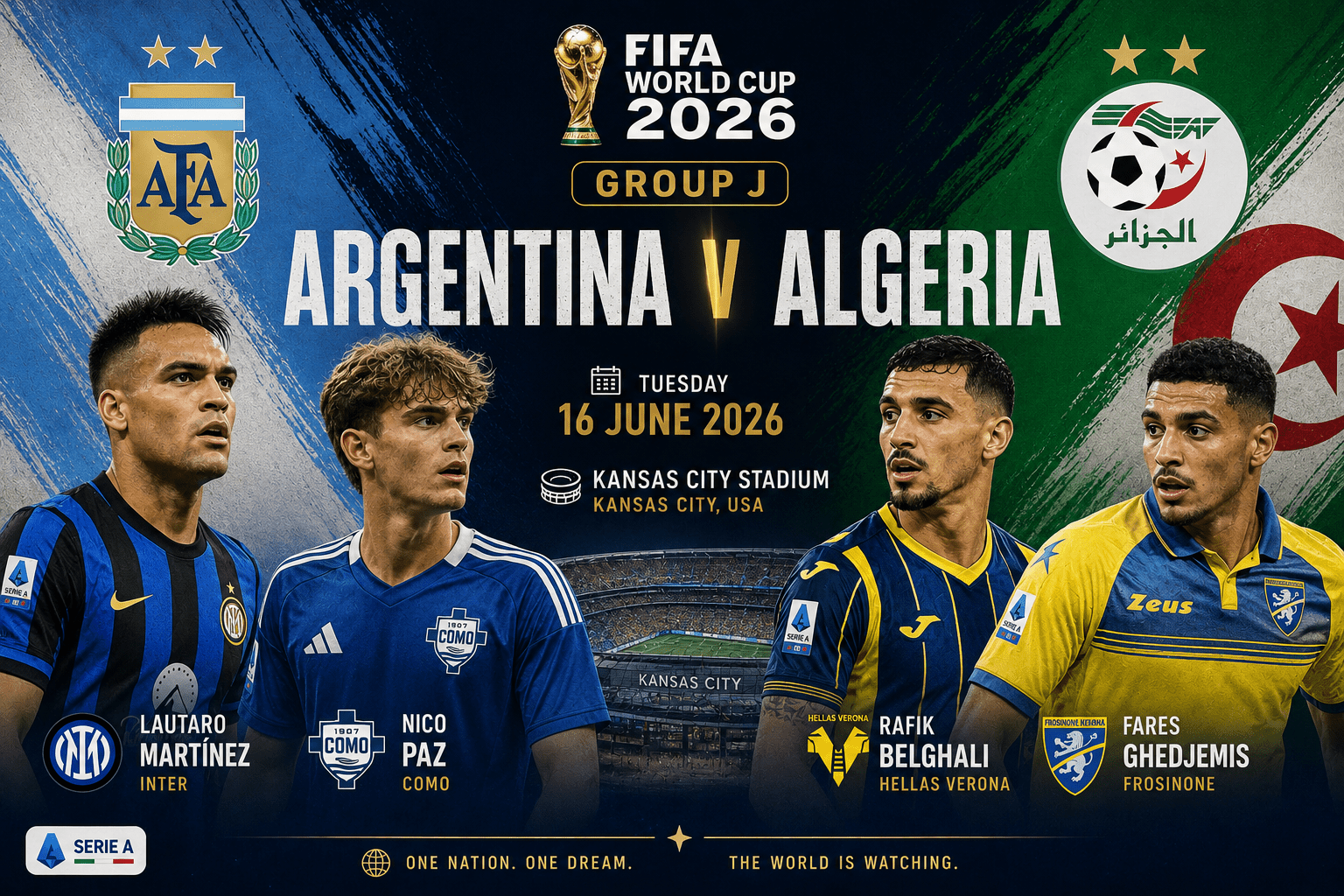
Argentina vs Algeria Official Lineups, Tuesday, 16 June 2026, World Cup Group J

Argentina vs Algeria Official Lineups, Tuesday, 16 June 2026, World Cup Group J

Here are the official starting lineups for Argentina and Algeria in the opening match of Group J at the 2026 FIFA World Cup. This eagerly awaited game is set for Tuesday, June 16, 2026, at 6:00 PM local time (CT) at the Kansas City Stadium (Arrowhead Stadium) in Kansas City. The match features a total of 3 Serie A players and 1 from Serie B.   Argentina’s lineup includes Inter Captain and forward Lautaro Martinez, who finished as the top scorer in Serie A and celebrated winning the Scudetto with Inter.

✅      FIFA RANKING

Argentina comes into the 2026 FIFA World Cup holding the No. 1 spot in the world rankings, while Algeria sits at No. 28. The most recent standings, published by FIFA in June 2026 just before the tournament kicks off, highlight a significant difference between these two Group J rivals.

👉   Serie A players called up for  🇦🇷    the Argentina National team:
  • Inter forward Lautaro Martinez
  • Como forward Nico Paz
👉   Serie A players called up for   🇩🇿    the Algeria National team:
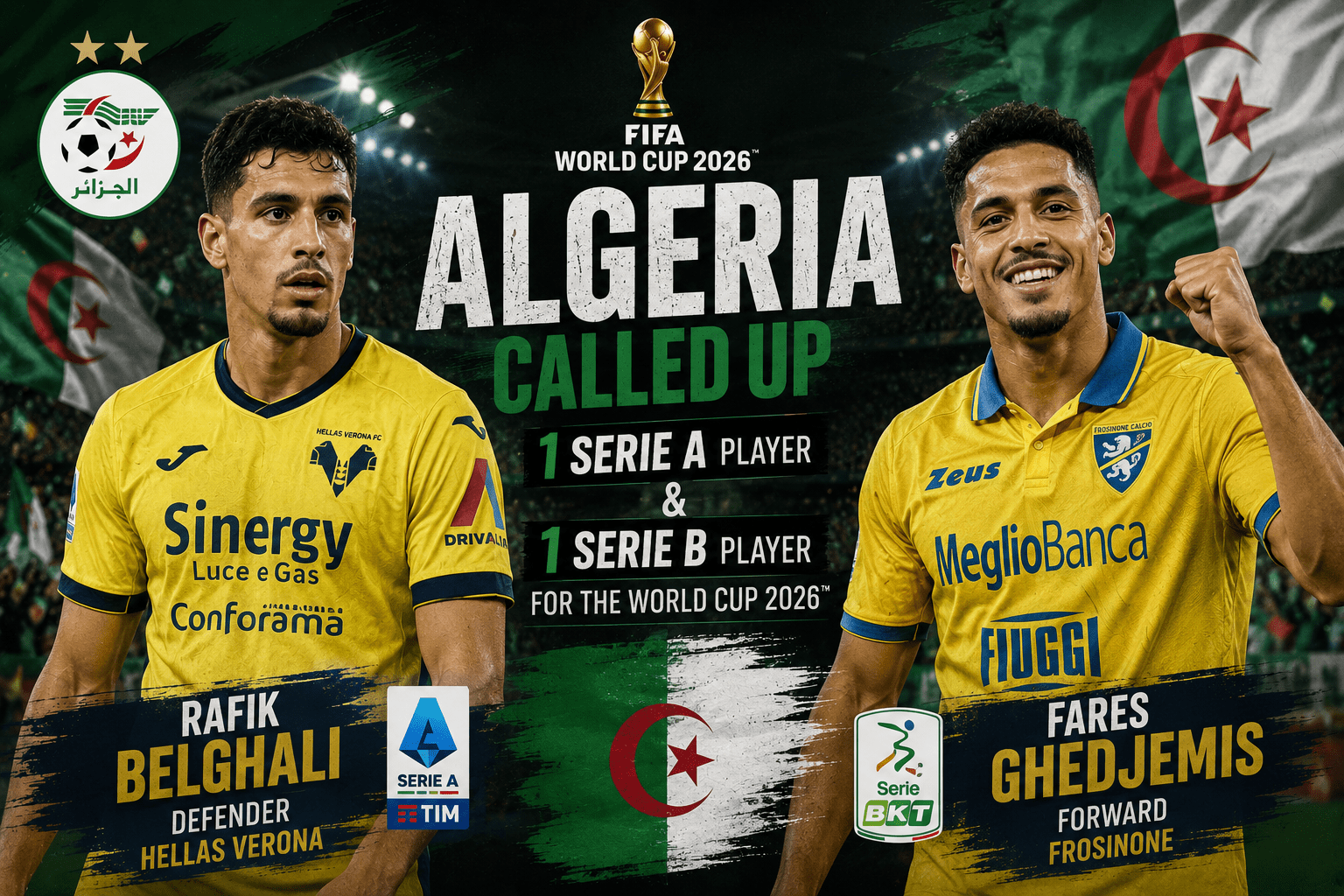
  • Hellas Verona defender Rafik Belghali
  • Frosinone forward Fares Ghedjemis

👉   Click here for  Full 2026 World Cup Squad Lists – Confirmed rosters for all 48 teams.

👉  Click here for  2026 World Cup Group Stage Standings.

17-06-2026 01:00
Matchday 1
 
Knockout
 
Possible knockout

🇦🇷     Argentina Starting XI (4-4-2): Emiliano Martínez; Gonzalo Montiel, Cristian Romero, Lisandro Martínez, Facundo Medina; Rodrigo De Paul, Enzo Fernández, Alexis Mac Allister, Thiago Almada; Lionel Messi, Lautaro Martínez

Substitutes: Gerónimo Rulli (GK)Juan Musso (GK), Nicolás Otamendi, Marcos Senesi, Nahuel Molina, Nicolás Tagliafico, Valentín Barco, Leandro Paredes, Exequiel Palacios, Giovani Lo CelsoNico Paz, Nico González, Giuliano Simeone, Julián Álvarez, José Manuel López

Head Coach: Lionel Scaloni

Algeria Starting XI (4-3-3): Luca Zidane; Rafik Belghali, Rayan Aït-Nouri, Aïssa Mandi, Jaouen Hadjam;  Nabil Bentaleb, Hicham Boudaoui, Houssem Aouar;  Amine Gouiri, Mohammed Amoura, Riyad Mahrez (C)

Argentina
Algeria

Starting lineups

23
Emiliano Martínez
Goalkeeper
13
Cristian Romero
Defender
80'
25
Facundo Medina
Defender
4
Gonzalo Montiel
Defender
46'
6
Lisandro Martínez
20
Alexis Mac Allister
Midfielder
24
Enzo Fernández
Midfielder
7
Rodrigo de Paul
Midfielder
16
Thiago Almada
Midfielder
55'
22
Lautaro Martínez
55'
10
Lionel Messi
Attacker
80'
23
Luca Zidane
Goalkeeper
2
Aïssa Mandi
Defender
17
Rafik Belghali
Defender
21
Ramy Bensebaini
Defender
15
Rayan Aït-Nouri
Defender
10
Fares Chaibi
Midfielder
14
Hicham Boudaoui
Midfielder
64'
19
Nabil Bentaleb
Midfielder
81'
9
Amine Gouiri
Attacker
64'
11
Anis Hadj Moussa
Attacker
64'
22
Ibrahim Maza
Attacker
82'

Substitutes

5
Leandro Paredes
Midfielder
1
Juan Musso
Goalkeeper
11
Giovani Lo Celso
Midfielder
17
Giuliano Simeone
Attacker
3
Nicolás Tagliafico
14
Exequiel Palacios
Midfielder
12
Gerónimo Rulli
Goalkeeper
8
Valentín Barco
Defender
21
José Manuel López
2
Marcos Senesi
Defender
26
Nahuel Molina
Defender
46'
15
Nico González
Attacker
55'
9
Julián Álvarez
Attacker
55'
18
Nico Paz
Midfielder
80'
19
Nicolás Otamendi
80'
25
Farès Ghedjemis
Attacker
13
Jaouen Hadjam
Defender
16
Oussama Benbout
Goalkeeper
1
Melvin Mastil
Goalkeeper
26
Samir Chergui
Midfielder
5
Zineddine Belaid
Defender
3
Achref Abada
Defender
24
Yacine Titraoui
Midfielder
12
Nadhir Benbouali
Attacker
8
Houssem Aouar
Midfielder
64'
7
Riyad Mahrez
Attacker
64'
18
Mohamed Amoura
Attacker
64'
6
Ramiz Zerrouki
Midfielder
81'
20
Adil Boulbina
Attacker
82'


Argentina   Argentina World Cup 2026 Squad:
  • Goalkeepers: Juan Musso (Atletico Madrid), Geronimo Rulli (Marseille), Emiliano Martinez (Aston Villa)
  • Defenders: Leonardo Balerdi (Marseille), Nicolas Tagliafico (Lyon), Gonzalo Montiel (River Plate), Lisandro Martinez (Manchester United), Cristian Romero (Tottenham), Nicolas Otamendi (Benfica), Facundo Medina (Marseille), Nahuel Molina (Atletico Madrid)
  • Midfielders: Leandro Paredes (Boca Juniors), Rodrigo de Paul (Inter Miami), Valentin Barco (Strasbourg), Giovani lo Celso (Real Betis), Ezequiel Palacios (Bayer Leverkusen), Alexis Mac Allister (Liverpool), Enzo Fernandez (Chelsea)
  • Forwards: Julian Alvarez (Atletico Madrid), Lionel Messi (Inter Miami), Nicolas Gonzalez (Atletico Madrid), Thiago Almada (Atletico Madrid), Giuliano Simeone (Atletico Madrid), Nico Paz (Como), Jose Manuel Lopez (Palmeiras), Lautaro Martinez (Inter)


Algeria   Algeria World Cup 2026 Squad:
  • Goalkeepers: Oussama Benbot (USM Alger), Melvin Masstil (Stade Nyonnaise), Luca Zidane (Granada)
  • Defenders: Achraf Abada (USM Alger), Rayan Ait-Nouri (Manchester City), Zinedine Belaid (JS Kabylie), Rafik ⁠Belghali (Verona), Ramy Bensebaini (Borussia Dortmund), Samir Chergui (Paris FC), Jaouen Hadjam (Young Boys Bern), Aissa ⁠Mandi (Lille), Mohamed Amine Tougai (Esperance)
  • Midfielders: Houssem Aouar (Al-Ittihad), Nabil Bentaleb (Lille), Hicham Boudaoui (Nice), Fares Chaibi (Eintracht Frankfurt), Ibrahim Maza (Bayer Leverkusen), Yassine ‌Titraoui (Charleroi), Ramiz Zerrouki (Twente)
  • Forwards: Mohamed Amine Amoura (Wolfsburg), Nadir Benbouali (Gyori ETO), ‌Adil Boulbina (Al-Duhail), Fares Ghedjemis (Frosinone), Amine Gouiri (Marseille), Riyad Mahrez (Al-Ahli), Anis Hadj Moussa (Feyenoord)


Argentina official starting lineup against Algeria

Image

Credit via x.com/Argentina


Algeria official starting lineup against Argentina

Image

Photo credit x.com/LesVerts


Image


Image


Image

Credit via x.com/argentina


Buy FIFA World Cup Tickets
Sports, Football, Soccer, FIFA World Cup Tickets

Sports Events 365World Cup Group I Matchday 1

🇦🇷   Argentina – Algeria  🇩🇿

Competition: 2026 FIFA World Cup, Group J (Matchday 1)
Date: Tuesday, June 16, 2026
Kick-off: 6:00 PM (CDT) / 7:00 PM (EDT)
Location: Kansas City Stadium (Arrowhead Stadium)
Kansas City, Missouri

Referee: Szymon Marciniak POL
Assistant Referee 1: Tomasz Listkiewicz POL
Assistant Referee 2: Adam Kupsik POL
Fourth Official: Campbell-Kirk Kawana-Waugh NZL
Reserve AR: Isaac Trevis NZL
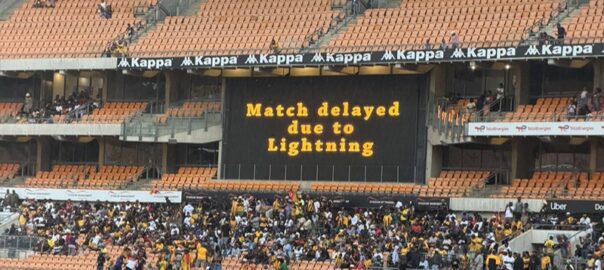

World Cup 2026 weather protocol explained amid lightning concerns

The 2026 World Cup is staged across the United States, Canada, and Mexico, and it is set to take place during the height of storm season in several regions involved in hosting duties. This timing raises the possibility that matches could be affected by severe weather, particularly thunderstorms and electrical activity.

Certain areas, especially within the United States, are already known for strict procedures related to lightning safety, which adds another layer of disruption risk for teams and organisers. Weather-related interruptions have already been observed during preparatory fixtures, highlighting how conditions could impact the tournament itself.

England’s friendly against Costa Rica in Orlando was held up by around an hour due to heavy rain combined with the possibility of lightning activity in the surrounding area. In addition, New York City experienced intense heat reaching the mid-30s Celsius, followed by heavy rainfall, thunder, and lightning less than a day before Brazil was due to meet Morocco in New Jersey.

Lightning safety rules and match suspension protocol

FIFA operates in line with guidance issued by local authorities during the tournament, meaning lightning safety procedures will follow established national standards. In the United States, the National Oceanic and Atmospheric Administration (NOAA) specifies that any detected lightning strike within an eight-mile radius of a stadium requires immediate suspension of play.

Once a strike is identified within that distance, a 30-minute waiting period begins before play can resume. If another strike occurs within that window, the countdown is reset, potentially extending interruptions significantly depending on weather persistence.

These measures are designed to prioritise safety, but they also create conditions where matches could be paused for prolonged periods, especially in regions prone to repeated storm activity.

Real cases of weather interruptions in recent competitions

Similar disruptions have already been witnessed in major tournaments held in the United States. During a previous Club World Cup edition, six matches were temporarily stopped due to electrical storms moving through host cities.

One of the most notable examples involved Chelsea and Benfica in Charlotte, North Carolina, where kick-off began at 4:38 pm local time, but the match was not completed until four hours and 38 minutes later due to repeated weather stoppages.

These incidents demonstrate how quickly storms can interrupt play and how extended delays can develop when lightning activity remains within close proximity of stadium venues.

Scheduling challenges and match completion rules

Stadiums located in the Gulf Coast region and the southeastern United States are considered most vulnerable to thunderstorm disruption. FIFA is expected to assess each affected fixture individually if play is halted, depending on the severity and timing of the weather conditions.

One additional complication involves group-stage scheduling, where final-round matches in each group are played simultaneously to prevent teams gaining an advantage from knowing other results. Extended delays could disrupt this structure and create logistical challenges for organisers.

If a match cannot be completed due to unsafe conditions, tournament regulations state that it would be rescheduled and resumed later from the exact minute it was stopped, rather than restarted in full.

Match preview: France vs Senegal

France arrives at the 2026 World Cup having finished runners-up to Argentina in Qatar and as champions in Russia in 2018, setting up a bid to join a very small group that has reached three consecutive finals. Only West Germany (1982–1990) and Brazil (1994–2002) have previously managed such a run.

Les Bleus have been one of the most consistent sides in recent history, appearing in four of the last seven World Cup finals (1998, 2006, 2018, and 2022), a total unmatched by any other nation during that span. This marks their 17th World Cup appearance and an eighth straight qualification, the longest continuous run in their history.

Their global success also includes being two-time world champions, with their 1998 triumph coming as hosts. Head coach Didier Deschamps, who captained that 1998 victory, belongs to an elite group of individuals who have lifted the trophy both as a player and a manager, alongside Mário Zagallo and Franz Beckenbauer. This match will also be his 20th World Cup game in charge, placing him just behind Helmut Schön’s record with a single national team.

Date: Tuesday, June 16, 2026
Kick-off Time: 15:00 New Jersey local time (UTC-4)
Venue: New York New Jersey Stadium, East Rutherford, New Jersey
Venue Capacity: 82,500
Opponents: France vs. Senegal (Group I)
Surprisingly, the two nations have only squared off a few times in documented international football history, and Senegal has won every single one. Along with their famous 1-0 World Cup group stage shocker, they also claimed a 2-0 victory at the 1963 African Friendship Games

Mbappé and France’s modern tournament identity

Much of France’s recent World Cup identity has been shaped by Kylian Mbappé, who starred in both the 2018 and 2022 tournaments. Over those two editions, he scored 12 goals, matching Pelé’s combined World Cup tally and sitting only four behind Miroslav Klose’s all-time record.

Among those goals was a hat-trick in the 2022 final, making him only the second player ever to achieve that feat in a World Cup final after Geoff Hurst in 1966. His performances have been central to France’s deep runs, reinforcing their status as one of the tournament’s dominant modern forces.

Last 5 France matches stats

International friendlies

International friendlies

International friendlies

International friendlies

World Cup qualification

France 3 – 1 Northern Ireland

France 1 – 2 Côte d’Ivoire

Colombia 1 – 3 France

Brazil 1 – 2 France

Azerbaijan 1 – 3 France

2026/06/08

2026/06/04

2026/03/29

2026/03/26

2025/11/16

Senegal’s history of disruption and resilience

Senegal returned to the World Cup for a fourth appearance after campaigns in 2002, 2018, and 2022. They remain part of an ongoing African record streak, qualifying for a third consecutive tournament alongside Morocco and Tunisia.

Their debut in 2002 remains one of the competition’s most famous shocks, when they defeated defending champions France 1-0. Since that tournament, Senegal have not kept another World Cup clean sheet, conceding in each of their subsequent 11 matches.

The team qualified this time by finishing unbeaten at the top of their group ahead of DR Congo. They also experienced a turbulent year in continental competition, initially winning the Africa Cup of Nations before the title was later awarded to Morocco following a controversial penalty decision in the final.

Sadio Mané remains their key attacking figure, having scored five goals in qualification and holding the record as Senegal’s all-time top scorer. This will be his second World Cup after playing every match in 2018.

Head coach Pape Thiaw enters his first World Cup as a manager but was part of the 2002 squad that stunned France, appearing as an unused substitute and later assisting in Senegal’s famous victory over Sweden in that same tournament.

Last 5 Senegal matches stats

International friendlies

International friendlies

International friendlies

International friendlies

CAF AFCON

Saudi Arabia 0 – 0 Senegal

USA 3 – 2 Senegal

Senegal 3 – 1 Gambia

Senegal 2 – 0 Peru

Senegal 0 – 3 Morocco

2026/06/10

2026/05/31

2026/03/31

2026/03/28

2026/01/18

History and key statistics

The most significant meeting between the two sides came at the 2002 World Cup, when Senegal produced a famous 1-0 victory over France in their tournament opener. Papa Bouba Diop scored the decisive goal in Seoul, and the result set the tone for a dramatic debut campaign for Senegal, who went on to reach the quarter-finals. For France, who entered the tournament as defending champions, the defeat marked the beginning of a disappointing run that ended with them exiting the group stage with just one point.

Since that historic meeting, Senegal have not kept another World Cup clean sheet, conceding in each of their 11 matches played at the tournament. France’s recent record against African opposition has also been mixed, with three defeats in their last four World Cup group-stage matches against African teams, the exception being a 2-0 win over Togo in 2006.

Past H2H Results

FIFA World Cup

France 0 – 1 Senegal

2002/05/31

Prediction and expected outcome

France enter this opening World Cup clash as clear favourites thanks to their elite tournament pedigree, recent consistency at the highest level, and a squad built around proven match-winners on the biggest stage. Didier Deschamps’ side have reached four of the last seven World Cup finals and arrive with the experience of being both reigning champions (2018) and recent runners-up (2022), underlining their ability to deliver deep tournament runs. With Kylian Mbappé continuing to define their attacking threat after scoring 12 goals across the last two World Cups, France possess the cutting edge and big-game experience to control the key moments.

Senegal, however, is exactly the type of opponent capable of making this uncomfortable. Their historic 1-0 win over France in 2002 remains one of the tournament’s most famous shocks, and their current team arrives unbeaten in qualifying and boosted by strong collective organisation. Ranked 16th in the world, they have shown they can compete with elite opposition, while Sadio Mané provides a decisive attacking focal point capable of punishing any defensive lapse. Their resilience, athleticism, and counter-attacking threat mean they are unlikely to be overwhelmed early.

The most likely scenario is a controlled but competitive match, with France expected to dominate possession and territorial play, while Senegal looks to stay compact, frustrate rhythm, and break forward quickly when opportunities appear. Over time, France’s depth of quality and experience in managing World Cup matches should allow them to create clearer chances, especially through Mbappé and their supporting attackers.

Prediction: France 2-1 Senegal

Expected outcome: A hard-fought French victory where Senegal remain competitive for long spells but ultimately fall short as France’s superior attacking quality and tournament experience prove decisive. France is a strong favourites on probability models, but Senegal’s history of causing upsets at World Cups ensures this remains a potentially tricky opener rather than a routine win.

World Cup managers removed during tournaments: a rare but growing trend

Andy Beattie (1954)

Andy Beattie’s case in 1954 was not a direct dismissal, as he stepped down after the Scottish FA restricted his World Cup squad selection to just 13 players for Scotland’s debut tournament. The limited preparation and selection constraints framed a difficult situation from the start, shaping expectations around their performances.

Scotland’s opening match ended in a 1-0 defeat to Austria, a result described in context as respectable given Austria’s strength at the time. The team then suffered a heavy 7-0 loss to Uruguay, a match played in extreme heat while wearing heavy woollen shirts, adding to the difficulty of the occasion.

These results formed part of a broader picture of early Scottish World Cup struggles, with future appearances described as continuing in similarly chaotic fashion. Beattie’s departure closed a short and turbulent tournament experience.

Carlos Alberto (1998)

Carlos Alberto’s tenure with Saudi Arabia at the 1998 World Cup ended after two matches, following a defeat-heavy start to the tournament. Their opening game was a 1-0 loss to Denmark in Lens, played in cold conditions and marked by a lack of quality in performance.

A second match brought a heavy defeat against the host nation, which proved decisive in the decision to remove him from his role. The early elimination highlighted a clear drop in performance compared to their previous tournament showing in 1994.

After his exit, Saudi Arabia managed to earn a 2-2 draw against South Africa in their final group match, a game that included goals from Sami Al-Jaber and Shaun Bartlett. Carlos Alberto’s tournament ended after having managed across multiple World Cups before this final setback.

Cha Bum-kun (1998)

Cha Bum-kun’s spell as South Korea’s manager in 1998 ended after two defeats that resulted in early elimination from the tournament. The team conceded eight goals across losses to Mexico and the Netherlands, which sealed their fate before the final group game.

South Korea had entered the competition still searching for their first World Cup win, and their status at the time reflected limited experience at this level. Following the defeats, the federation decided to replace Cha Bum-kun.

His successor oversaw a final group match against Belgium, which ended in a 1-1 draw and prevented their opponents from progressing. Cha Bum-kun’s tenure is also noted for later claims attributed to him regarding off-field issues in domestic football, as recorded in the original account.

Henryk Kasperczak (1998)

Henryk Kasperczak’s time in charge of Tunisia at the 1998 World Cup ended after two matches, following early elimination from the group stage. Their campaign began with a 2-0 defeat to England in Marseille, a match also remembered for pre-match crowd trouble.

Their second game was a narrow and closely contested defeat against Colombia, a match described as chaotic but low scoring. Despite competitive moments, Tunisia was unable to secure results in either fixture.

After these outcomes, the decision was taken to dismiss Kasperczak. Tunisia then finished their tournament with a 1-1 draw against Romania, which provided a small measure of consolation before the end of their campaign.

Sabri Lamouchi (2026)

Sabri Lamouchi’s departure in 2026 came after just one match, making it an unusually early managerial change in World Cup history. Tunisia suffered a 5-1 defeat to Sweden in their opening group game, a result described as a significant shock given expectations.

The performance contrasted with Tunisia’s recent tournament pattern of narrow results and draws, making the margin of defeat stand out. Sweden was acknowledged as a strong opponent despite a difficult qualification period.

Following the loss, Lamouchi was replaced by Hervé Renard for the remaining group matches against Japan and the Netherlands. The appointment continued a familiar trend of Tunisia turning to experienced figures during major tournaments.

Own goal costs Egypt its first World Cup win as Belgium recovers in Seattle

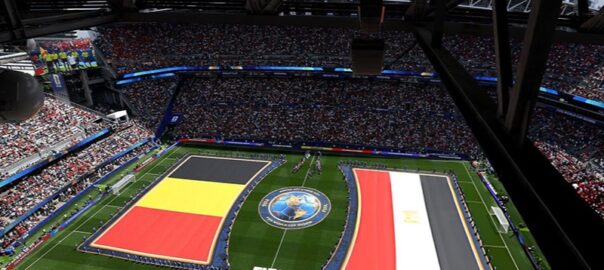
Egypt took the lead in the 21st minute when Emam Ashour unleashed a 20-yard effort that flew into the bottom corner beyond Thibaut Courtois. The goal came during a confident spell that saw the African side start brightly in their Group G opener in Seattle.

Backed by an energetic crowd on the United States’ west coast, Egypt looked determined to secure their first-ever World Cup victory, having gone eight matches without a win since their debut in 1934. The momentum continued as they pushed for a second goal before the break.

Mostafa Zico came close to extending the advantage when his driven attempt across goal was pushed away by Courtois. Mohamed Salah, captaining the side on his 34th birthday, also tested the Belgian keeper after the restart with a header that was comfortably stopped, while Ashour failed to convert the rebound.

Belgium respond after second-half pressure shift

Belgium gradually grew into the contest, with Kevin De Bruyne striking the outside of the post from a free-kick as they began to assert control. The pressure eventually told after changes from manager Rudi Garcia altered the tempo of the game.

Romelu Lukaku was introduced in the 66th minute, despite limited minutes during the 2025–26 season, and his presence immediately influenced the sequence that followed. Within moments of his arrival, Belgium found a route back into the match.

A low delivery from Thomas Meunier was diverted into his own net by Egyptian defender Mohamed Hany under pressure, with Lukaku nearby as the situation unfolded.

Own goal denies historic breakthrough

The equaliser meant Egypt were again denied a first World Cup win, extending a long wait that stretches across eight matches since their tournament debut. The result also marked only the third time they have avoided defeat at the competition.

Despite leading for much of the contest, Egypt were forced into a tense final phase as Belgium pushed forward in search of a winner. However, the North African side managed to withstand the pressure and hold on for a draw.

Late pressure and missed chances decide the contest

In the closing stages, Belgium continued to threaten but could not complete the turnaround, while Egypt focused on preserving a point. Earlier dominance had slipped away as the match tightened after the break.

The result reflected a game defined by missed opportunities and decisive moments at both ends, with Egypt unable to capitalise on their first-half superiority and Belgium rescued by a fortunate deflection in the second period.