Category Archives: 2022 FIFA World Cup

Oblak: Representing Slovenia at a World Cup would fulfil a dream

Goalkeeper Jan Oblak of Atletico de Madrid in action 

  • FIFA giving Goalkeeper of the Year award for fourth time
  • Slovenian Jan Oblak one of the nominees for 2020
  • “I’m a keeper because I copied my father as a kid.”

In any discussion about the world’s best goalkeepers, the name Jan Oblak invariably comes up. The Slovenian, now in his seventh season at Atletico Madrid, where he is captain and one of the pillars of Diego Simeone’s side, has been nominated for The Best FIFA Men’s Best Goalkeeper for 2020.

Oblak always cuts a restrained and composed figure between the sticks, even in the most difficult moments, perhaps most memorably his performance at Anfield in the last edition of the UEFA Champions League.

FIFA.com chatted with the 27-year-old who shared with us his childhood dreams, the key to those ‘miracle’ saves, and his desire to win titles with the Los Rojiblancos.

FIFA.com: Despite a population of just over two million, Slovenia has produced many elite athletes, including NBA stars, cyclists like Tadej Pogacar and Primoz Roglic, and you… What’s the secret?

Jan Oblak: It’s true that we have some very good athletes in both individual and team sports. We’ve always had great basketball players, as well as footballers who’ve excelled… I think it’s down to our real love of sport and our mentality. We don’t lose our heads easily, which is a very good asset in sport.

When did you start playing football?

As a child I practiced many different sports, but football was always my priority. My father played, though not as a pro, and he too was a goalkeeper. So, I imitated him because I wanted to be like him. That’s why I wanted to be a keeper from a young age. Initially, I played up front for a few games, but I always wanted to be in goal.

I still love other sports like basketball, tennis… I practice them and enjoy watching them too, and before I turned professional, I also skied a lot.

Did you grow up admiring any particular keeper or outfield player?

When I watched games involving Europe’s top teams, I always studied the goalkeepers. And since a player’s form can vary from season to season, one year I might like Buffon and the next year Casillas, or Schmeichel or Dida when at AC Milan… They were all keepers I admired, but my first idol was my father.

Was being the best goalkeeper in the world a childhood dream?

When I was little there wasn’t that much international football on TV, so my first dream was to play for the club where I was training. Then you progress and begin fulfilling dreams, as new ones take shape. When I realised I could become a professional and play at a high level, I started dreaming about being the best and winning as many titles as possible. That’s what you train for every day.

How do you feel now that there’s a dedicated category recognising the work of goalkeepers at The Best Awards?

People usually focus on who is scoring the goals and not on who is stopping them. There are great goalkeepers who’ve never been recognised as the best. And in the end, on the field of play, we’re all the same: some players have to score goals and some have to stop them, so it’s good to have a goalkeeping award. That way, some keepers can be recognised not only with plaudits like ‘you’re performing well’, but with the chance to pick up prizes when awards are given out. It’s good for football, for us and for the fans.

Jan Oblak of Atletico Madrid makes a save 

This year you’ve been nominated for The Best alongside Alisson, Courtois, Navas, Neuer and Ter Stegen. What would it mean to you to win this trophy?

It would be very nice. Being nominated already shows you’re on the right track. Yes, they’re individual awards, but they go hand in hand with collective achievements. In the end, the goalkeepers and players who have the best chance of winning The Best are those who’ve won the Champions League, their national league, etc. Winning team titles is what gives you the best chance of picking up these individual awards.

We didn’t manage to do that last season, but I’m still happy to be nominated. Winning would be a spectacular thing both for me and Atleti, because the goalkeeper doesn’t play alone. In order to be nominated and have a chance of winning, you need the help of your team.

Some of your stops in recent years could be called ‘miraculous’, as they prevented certain goals, such as your triple save against Bayer Leverkusen. Do you have any favourites?

For sure that triple save is the one most-mentioned when my name comes up, and it’ll probably continue to appear on tv or the Internet for many years. However, I’m not someone who fixates on a specific save. Each one is important because you prevent a goal (laughs).

Also, frequently you have saves that might appear easy but, as the goalkeeper, you know that they were harder than one perhaps at full stretch that looks very nice in a photo. It has to do with positioning.

Speaking of positioning, what would you say is your most significant goalkeeping skill?

Placement is one of the most important. If you’re always in the right place, or at least try to be, then your job is easier, and you have less work to do. Every team plays a different way, so each coach will task his goalkeeper with something specific, and in the end you do what the coach asks of you. If he asks you to play with your feet, then you play with your feet; if he asks you to send the ball a long way up-field, then you do that too… But of my particular qualities, I’m sure one of my best attributes is my positioning.

Being in goal you have a unique perspective of the action taking place on the pitch. Given that, are you the kind of keeper who communicates a lot with team-mates or only on certain occasions?

I’m fairly good at anticipating, so I talk a lot during games. It’s not that I’m the ‘clever one’ at the back who sees things better than anyone else (laughs), but I try to help my team-mates, especially the centre- and wing-backs, and defensive midfielders. Sometimes I see gaps that they don’t realise they’ve left, or others behind them that they can’t see. The more you talk and communicate on the field, the easier it is for everyone. We all help each other in that way.

You’ve won the Zamora Trophy four times for conceding the fewest goals in La Liga and this season have conceded only four goals in 11 matches. Is picking up that prize again among your goals?

I don’t focus on specific stats, because things can change very quickly and suddenly you’ve let in multiple goals in consecutive games. Rather than focusing on that prize, I try to concede as few goals as possible, because it gives you a better chance of winning.

Atleti have started well in the league and currently sit second, three points clear of Real Madrid and nine ahead of Barcelona. There’s also the Champions League, which you came so close to winning in 2016. If you had to choose one title for this season, which would it be?

I can’t pick one, because I’d like to win them all. It’s very complicated, because we play in a league where there are top teams, and the same goes for the Champions League… We’ve been close to the Champions League without actually winning it, but I have faith we can realise our dream of claiming it. So no, I don’t have a preferred title. As long as I’m at Atleti, I’m going to try to win everything I contest, and hopefully this year we can win something. In the league we’re on the right track, but there’s a long way to go. We’ve got to keep doing what we’re doing.

UEFA President Aleksander Ceferin presents winners medal to Jan Oblak of Atletico Madrid 

Fans usually idolise attacking players, but the Atleti supporters adore you and have dedicated songs to you. Do you feel like you’ve found your place there?

When I first arrived, there were some tough months, but when I began starting games, I always felt the public’s affection. I miss not having them in the stadium these days. I know I’m appreciated by the people here, and my job here is to help the club. A player never knows how long he’s going to be at a club, but I’ve been here seven years and, so far, everything’s gone well. Everything is easier when the fans like you, because it gives you confidence and helps you be the best you can.

We started by talking about your country’s amazing ability to produce top athletes, but obviously it’s more difficult to qualify with Slovenia for a major national-team tournament. What would it mean to reach a FIFA World Cup or EURO?

When I was a boy, I saw Slovenia qualify for EURO 2000 and then the 2002 World Cup. We later reached the 2010 edition too. Having seen how happy people were, I’d love to bring that joy back to the country – and not just for them. For me, playing at a World Cup or EURO would be the fulfilment of a childhood dream, so I’m going to do everything I can to achieve it.

Slovenia players

All winners, including those of the FIFA Fan Award and the FIFA Fair Play Award, will be crowned on 17 December 2020 in a TV show broadcast live, starting at 19:00 CET.

To keep up with the latest news about The Best FIFA Football Awards™, visit FIFA.com, The Best FIFA Football Awards™ official Facebook page, FIFA on Twitter and FIFA on YouTube.

Join the discussion about who should win this year’s awards by using the hashtag #TheBest.

FIFA.com
FIFA.com News
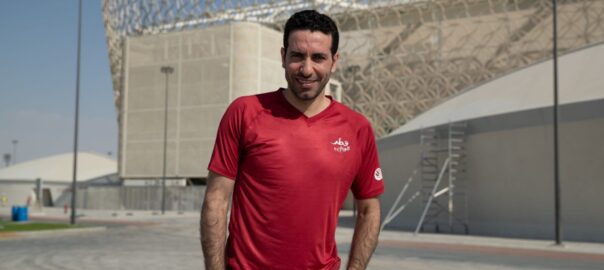
Aboutrika: Qatar 2022 will amaze everyone

Mohamed Aboutrika lauds historic potential of Qatar 2022

  • Mohamed Aboutrika is one of Africa’s best-ever players
  • He is an ambassador for Qatar 2022’s Supreme Committee for Delivery & Legacy
  • The Egypt legend believes the tournament will wow the world

Mohamed Aboutrika – widely recognised as one of Africa’s greatest-ever players – has hailed the significance of the first FIFA World Cup™ to be held in the Middle East and Arab world.

Speaking exclusively to qatar2022.qa from Al Rayyan Venue – which will be inaugurated on 18 December when it hosts the Amir Cup final – Aboutrika said: “Hosting the first World Cup in this part of the world provides a much-needed opportunity to change many of the negative perceptions that people have about this region.

“Having the World Cup here in Qatar will prove to the world that we are able to organise a mega sporting event to the highest standards – and in a way that reaffirms a commitment to innovation, while continuing to be inspired by the region’s rich traditions.”

Aboutrika, who supports Qatar 2022 as an ambassador for the Supreme Committee for Delivery & Legacy, also heaped praise on Al Rayyan Venue – which will become the fourth World Cup stadium to open later this month. The 40,000-capacity venue was built on the site of the deconstructed Ahmed Bin Ali Stadium and will become the new home of popular local team Al Rayyan Sports Club.

“As soon as you enter this stadium, you feel welcomed by the intimate atmosphere created by the seats being so close to the pitch,” said Aboutrika. “It is yet another architectural masterpiece which will welcome everyone in 2022.”

Aboutrika, who won the CAF Champions League on five occasions with Al Ahly, added: “With under two years to go, Qatar is well on its way in terms of being ready to provide the stadiums, infrastructure and expertise required to host a tournament that will amaze everyone.”

Mohamed Aboutrika lauds historic potential of Qatar 2022

Aboutrika also discussed the compact nature of Qatar’s tournament. The furthest distance between stadiums will be just 75km, meaning Qatar will host the most compact edition of the FIFA World Cup in modern history.

“The compact nature will provide a huge boost to teams, because it will save them from the exhaustion of air travel between venues, leaving more time for a quick recovery,” said Aboutrika. “Also, as a player, I can tell you that staying in one accommodation throughout the duration of a major tournament provides you with much needed stability and focus.”

Meanwhile, from a fan’s point of view, they will never be far from the action in 2022. Accommodation, stadiums, fan zones and tourist attractions will all be close by and connected by a comprehensive transportation network, including the recently launched Doha Metro. Fans will also have the chance to attend more than one match per day during the early stages of the tournament.

Aboutrika said: “Getting around so easily and having the ability to attend more than match a day will create a unique experience for everyone that will be attending the tournament from around the world.”

Despite Aboutrika’s outstanding career, including 38 goals in 100 matches for The Pharaohs, he never got the opportunity to represent his country at the World Cup. However, Egypt did qualify for Russia 2018 and will have high hopes of taking their place in Qatar for the 22nd edition of the tournament.

“For Egypt, qualifying again for the World Cup remains a dream for millions of our fans,” he said. “Having played in Russia 2018, we continue to have an excellent team, which under the leadership of the manager, Hossam El Badry, has a great chance of making an appearance at the world stage in two years’ time. I wish them the best of luck and I’ll be waiting for them to make an appearance in Qatar 2022.”

FIFA.com
FIFA.com News

2022 World Cup in Qatar Qualifying Draw

https://www.italiansoccerseriea.com/wp-content/uploads/2019/07/Anna_Italia_bigger.jpgBy Anna Italia
Follow me in Twitter ,
Facebook: Anna Italia Page
Instagram: annaitalia2
Italian Soccer Serie A

The 2022 World Cup Qatar Qualifying Draw was held on Monday 7 December 2020 in Zurich.     The groups  were drawn in a five-team group and will play eight qualifying matches instead of ten so they can fit in their Nations League Final Four commitments in October 2021.   Italy will be in Group C with Switzerland, Northern Ireland, Bulgaria, and Lithuania. 

👉   2022 World Cup qualifying groups

Group A: Portugal, Serbia, Ireland, Luxembourg, Azerbaijan
Group B: Spain, Sweden, Greece, Georgia, Kosovo
Group C: ITALY, Switzerland, Northern Ireland, Bulgaria, Lithuania
Group D: France, Ukraine, Finland, Bosnia & Herzegovina, Kazakhstan
Group E: Belgium, Wales, Czech Republic, Belarus, Estonia
Group F: Denmark, Austria, Scotland, Israel, Faroe Islands, Moldova
Group G: Netherlands, Turkey, Norway, Montenegro, Latvia, Gibraltar
Group H: Croatia, Slovakia, Russia, Slovenia, Cyprus, Malta
Group I: England, Poland, Hungary, Albania, Andorra, San Marino
Group J: Germany, Romania, Iceland, North Macedonia, Armenia, Liechtenstein

World Cup qualification: Italy drawn alongside Switzerland, Northern Ireland, Bulgaria and Lithuania

Italy Head Coach Roberto Mancini expressed: “We mustn’t underestimate anyone, I believe it’ll be a battle between ourselves and Switzerland for top spot.” The Italian Football Federation (FIGC) President Gravina said: “A challenging group”


Italy with 22-game unbeaten run (17 wins and five draws), a sequence that has resulted in them rising to tenth place in the FIFA Ranking and which allowed them to be in Pot 1 for today’s draw, which was conducted by Rafael van der Vaart and 2006 World Champion Daniele De Rossi. With Italy having been placed in Group C, Switzerland then joined the Azzurri from Pot 2, Northern Ireland from Pot 3, Bulgaria from Pot 4 and Lithuania from Pot 5.

The great ex-AS Roma midfielder and Italian National team player Daniele De Rossi

Italy’s World Cup qualification journey will begin in March 2021 and conclude in November 2021, with Italy intent on erasing the shame of failing to qualify for the 2018 World Cup in Russia.

Mancini added, “I believe it’ll be a battle between ourselves and Switzerland, who could have easily been among the top seeds. They were one of the best teams in Pot 2, although it’s good that they are nearby and it’ll be a short trip. Northern Ireland may seem an easier prospect than Switzerland on paper, but all the matches are difficult and must be played in order to win. Games against Bulgaria have also never been easy. We mustn’t underestimate anybody, we need to approach all our matches in the same way because a draw could be enough to complicate matters. The first fixtures in March will be vital, then we’ll focus on the European Championship.”

The ten group winners in qualifying will automatically qualify for the World Cup, while the last three European places in Qatar will be decided through a play-off stage. This will involve the ten group runners-up and the two best Nations League group winners who do not finish in the top two of their World Cup qualifying group. Unbeaten against Lithuania (four wins and two draws), the Azzurri also have the edge over Switzerland in their previous clashes (28 wins, 22 draws and eight defeats). Italy have recorded six wins, drawn twice and lost on one occasion against Northern Ireland, while their record against Bulgaria reads as follows: ten wins, seven draws, two defeats.

“It’s a challenging group,” said FIGC President Gabriele Gravina. “I would have liked to avoid Switzerland, but having such a high-calibre opponent in our group will spur us on. It’ll be an important test against a team that we’ll also face at the European Championship. I agree with Mancini when he says that we mustn’t underestimate anyone, but, after witnessing the strength of our National Team, I was calm during the draw.”

Front Pages, La Gazzetta dello Sport, Corriere dello Sport, and Tutto Sport, Tuesday 8 December 2020

https://www.italiansoccerseriea.com/wp-content/uploads/2019/07/Anna_Italia_bigger.jpgBy Anna Italia
Follow me on Twitter ,
Facebook: Anna Italia Page
Instagram: annaitalia2
Italian Soccer Serie A

Good morning, my friends! Here are the front pages from the Italian newspapers La Gazzetta dello Sport, Corriere dello Sport, and Tutto Sport, Tuesday 8 December 2020.

La Gazzetta dello Sport, Front Page, Tuesday 8 December 2020.


Photo: twitter.com/ItalianSerieA

Corriere dello Sport, Front Page, Tuesday 8 December 2020


Photo: twitter.com/ItalianSerieA

Tutto Sport, Front Page, Tuesday 8 December 2020


Photo: twitter.com/ItalianSerieA


European aspirants react to qualifying draw

France's football team head-coach Didier Deschamps looks on

  • Road to Qatar 2022 confirmed in Europe
  • High-profile coaches react to draw
  • Ten groups drawn two years ahead of tournament

In two years’ time, the FIFA World Cup Qatar 2022™ will be in full swing. The Round of 16 will just have been played, with everyone looking forward to the quarter-finals. Before we get down to those last eight teams however, we need to establish which 32 will make it through to Qatar in the first place. In Europe, 13 spots are up for grabs via the qualifiers, which will be held between March 2021 and March 2022.

The draw for the UEFA preliminary competition took place in Zurich on Monday, with Daniele De Rossi and Rafael van der Vaart on hand to oversee proceedings.

Here is how the 55 participating countries were grouped in the draw.

The draw took place behind closed doors due to the COVID-19 pandemic, but a number of coaches and players took to social media, national association websites and virtual press conferences to share their thoughts. Here are some of the highlights courtesy of FIFA.com.

“France are the favourites but we’ll need to do the business out on the pitch. We’re the top seeds so obviously we’re supposed to be the best team. Time will tell whether that is a help or a hindrance. The risk is thinking that you’re better than the rest of the group. We’ll be seen as the favourites, but even if we’re the strongest on paper, we’re going to have to go out and get the results. We’re going to need to be determined and focused if we’re going to get through.”
Didier Deschamps, France coach (Group D)

“Here’s the proof once again that I tend to be unlucky when it comes to draws, although it’s true that we could have ended up in an even tougher group. England made the semi-finals of the last World Cup and are currently fourth in the FIFA Ranking, while Poland are 19th and have got Lewandowski, who has been the top scorer in most of the World Cup qualifying rounds that I’ve been a part of. And I think that Albania are one of the strongest teams from Pot 4.”
Marco Rossi, Hungary coach (Group I)

“I think that it’ll be between us and Switzerland, who could easily have been one of the teams in the first pot and are one of the best teams in Pot 2. The advantage is that they’re a nearby country so it’ll be a short trip. On paper, Northern Ireland would appear to be an easier opponent than Switzerland but every match is a tough one. Even Bulgaria have never given us an easy ride. You can’t afford to underestimate anyone because all it takes is a draw to make life complicated for us.”
Roberto Mancini, Italy coach (Group C)

“We’ve got a five-team group, which is a positive. There are some really tough eastern European places to go and who are strong physically, like Bulgaria. We obviously know the qualities of Italy and Switzerland, who we played three years ago in the play-offs. We know that on our night we can beat the so-called bigger teams, and we have to be right for each and every one of those fixtures. It’s a tough group and one that we will be very much looking forward to come March.”
Ian Baraclough, Northern Ireland coach (Group C)

“It’s a good draw for Denmark for a number of reasons. The other teams have quality and talent, and Austria and Scotland in particular are really on the up and have a lot of potential. But we’ve got a solid team and we want to go out and beat them. It was also a favourable draw geographically because we won’t have to travel too far or have to deal with totally different time zones. I hope that we will be able to have fans at our home matches – it would be great for the supporters and for the players.”
Kasper Hjulmand, Denmark coach (Group F)

“It’s the kind of draw you always get when there are lots of teams involved. You always get some teams that you know better than others in your group. In any case, we’re excited about the idea of kicking off a new World Cup qualifying campaign.”
Luis Enrique, Spain coach (Group B)

“It’s not a group of death – there isn’t a group of death. The team from Pot 1 are the favourite in each group in my opinion. Obviously Turkey and Norway will be tough opponents. Turkey are a great footballing nation with a lot of good youngsters, while Norway have got a good team with Erling Haaland and Martin Odegaard. Montenegro and Latvia are well organised teams. We’ll have to make sure we work on our goal difference against Gibraltar.”
Frank de Boer, Netherlands coach (Group G)

“The match against Wales will be really fun to prepare for from an emotional point of view. On the pitch though, that will be two really tough games. Wales are a competitive team with quality players. Czech Republic are quite similar to Wales. They’re a well-balanced team and they never give you an inch. Belarus – who we’ll be facing for the first time – have also shown that they’ve got quality. Not forgetting Estonia, who we know well and who caused us a few problems when we faced them away in the qualifiers for the 2018 World Cup. They’re all countries that put up a fight and we’ll have to be prepared for them to come out looking to shake us up.”
Roberto Martinez, Belgium coach (Group E)

“They are good neighbours and it’s a country that lives for football – you can feel it every day, every minute, on the TV or any time you have any contact with the country. They have a young, interesting team which have managed to develop very well. We’ll be facing them as well at the EURO in Rome. They’re certainly the favourites but we’re good enough to hold our own with them.”
Vladimir Petkovic, Switzerland coach (Group C)

A five-team group is good. It gives us more room to prepare with only two matches in the first two qualifying slots. It’s an interesting group with exciting fixtures. We know Spain very well, having drawn them for the EURO qualifiers and we’ll be playing them again at the EURO as well.”
Janne Andersson, Sweden coach (Group A)

“Portugal are the real favourites for this group. And even if we weren’t the favourites now, what would we do? We’d make sure we finished first. I think that Portugal’s aim has to be to qualify for the World Cup in first place and with the confidence of being able to go on and win the tournament. That would really be the cherry on the cake for this country.”
Fernando Santos, Portugal coach (Group A)

“Overall it’s an interesting group. We’ll very much be the favourites and obviously we owe it to ourselves to win the group. Iceland have made a name for themselves at major tournaments in recent years, and there’s always a good atmosphere wherever they play. They’re also a very well-organised team, who play a pacey, refreshing brand of football that is focused on attack. Romania have a very young team from what I know, with players who really stood out at the most recent European U-21 championships, where they faced Germany in the semi-final. They’ve got some interesting players in their ranks.”
Joachim Low, Germany coach (Group J)

“There’s a great history with that fixture. There was a spell when we seemed to draw them every time. A couple of good historic fixtures with the Hungarians as well. The Tomaszewski game is obviously a legendary one in English football and I’ve heard people talk about that match a lot. It’s a big night whenever you face England and a chance for these countries to make some history. Whenever England play an opponent, it’s a chance for them not only to play well but to catch the eye of Premier League clubs. There’s always a lot of motivation when they play us.”
Gareth Southgate, England coach (Group I)

FIFA.com
FIFA.com News