Category Archives: 2022 FIFA World Cup

A first-hand World Cup experience

FIFA Fan Movement Osvaldo Santander

  • Osvaldo Santander is a member of the #FIFA Fan Movement
  • Argentinian talks about his relationship with football and the World Cup
  • “Only a few take away the glory, but everyone can take away the celebrations!“

The passion of the Argentinian fan has been well documented, not least at the last two FIFA World Cups™. In both Brazil and Russia, Albiceleste supporters took their devotion to new levels, attending games in huge numbers while winning admirers with their catchy songs and characteristic colour.

Who better then than an Argentinian member of the FIFA Fan Movement to tell us first-hand about the sport closest to his heart, as well as his experience sharing that passion with other fans from all over the globe at the last two FIFA World Cups:

My name is Osvaldo Santander and I’m 55 years old. I have a degree in advertising and, above all, I’m Argentinian. I underline this because it relates directly to my passion for and devotion to football, and my unconditional love for the round ball.

I’ve been attending football games since the age of three, when my father first took me to see my beloved San Lorenzo de Almagro. That gave rise to something inside me that is still growing and has made me part of a large football family that enjoys games, delights in goals, suffers with defeats and experiences many emotions.


FIFA Fan Movement Osvaldo Santander

FIFA Fan Movement Osvaldo Santander

FIFA Fan Movement Osvaldo Santander

FIFA Fan Movement Osvaldo Santander

FIFA Fan Movement Osvaldo Santander

FIFA Fan Movement Osvaldo Santander

FIFA Fan Movement Osvaldo Santander

FIFA Fan Movement Osvaldo Santander

FIFA Fan Movement Osvaldo Santander

The 1974 FIFA World Cup in West Germany will forever have a place in my heart. I was nine years old and obsessed with filling my sticker album, which proved impossible but nonetheless led me to watch all the games on a black and white TV. That edition, along with the 1978 World Cup in Argentina, ensured my love of football would endure forever.

My life story constantly references the World Cups: if I want to remember what I was doing at 25, I think of Italia ‘90; if I’m wondering about 2006, then I trace it back to the World Cup in Germany. It’s always been like that.

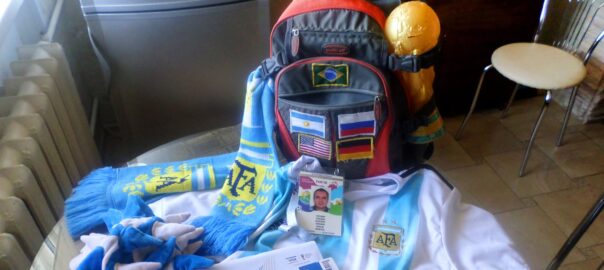
I’ve also been a collector of football memorabilia for more than 30 years, especially World Cup items. Football brings me joy and lets me dream. It’s a love that never asks anything of you in return.

My World Cup obsession led me to spend two weeks in Brazil for the 2014 edition. I experienced some fantastic shared moments there. A full-on party, swapping football shirts, scarves, flags… I even attended the Algeria-Korea Republic game with low expectations and witnessed an absolute cracker (4-2)… That’s when I first realised that I had to go to Russia 2018!

FIFA Fan Movement Osvaldo Santander

I came back very happy from Porto Alegre but then it dawned on me how difficult it would be: getting tickets, travel and accommodation costs, etc… My friends told me I was crazy, but nothing could deflect me from my goal.

The first positive sign came from FIFA, who granted me tickets for the seven matches I’d applied for, all in Moscow. There was also the chance of seeing Argentina there, but there were still two matchdays left in South American qualifying and we were struggling to secure our place.

Luckily, we qualified and I could breathe again. Those tickets were not only for me, but also for my son Julian – my companion on a thousand football adventures – my sister Maria Mercedes and a friend who was committed to our cause from the beginning.

Then we bought our flights. Eight months ahead of the World Cup, we already had the most important thing!

The months leading up to it were exciting. There were meetings with other fans who were joining us, and lots of plans to meet people whom I’m in contact with in other countries. Many of them are also collectors, and they too contributed to making this trip so wonderful.

As we were going to be 18 days in Moscow, we rented an apartment near the Luzhniki stadium, behind Moscow University.

FIFA Fan Movement Osvaldo Santander

En route to Russia, we had an eight-hour stopover in Frankfurt, and so to pass the time, we spread out all the flags we had with us on the floor. Other fans followed suit, and soon we’d created a magical global confraternity.

Russia 2018 was pure joy and excitement; everything was incredibly well organised. The authorities were cordial but strict, which helped us enjoy an event of great emotion in a controlled way, without fights or anything like that. That’s remarkable.

If I were to recommend one thing, it’d be to arrive a few days before the start of the tournament. We got there four days early and met loads of fans in a state of complete bliss. None of us had had results to celebrate or be down about, that was all still to come.

With no tickets to the Opening Ceremony, we left early for Fan Fest. To say it was fabulous is an understatement. We’d seen it in Brazil, but this was on another scale. During half-time in Russia-Saudi Arabia, we approached the stadium on the hunt for memorabilia for our own museum: plastic cups that had been binned, credentials, merchandising… anything and everything!

Two days later, it was our turn to see our beloved Argentina against Iceland at the Spartak Stadium. We went with our football shirts, hats and flags, as well as stickers and 300 coasters, which we handed out to anyone we came across.

Hearing our national anthem was very emotional. My son and I were crying because, just a few months previously, the person who’d nurtured my love of football – my father (his grandfather Paco) – had passed away, and we felt that he was accompanying us. The result was not as important as the joy of having cheered on our national team so far from home. That was unforgettable.

After that we attended the Germany-Mexico, Poland-Senegal, Portugal-Morocco, Belgium-Tunisia and Denmark-France games before we ended our adventure with Brazil-Serbia. Those games were fantastic for acquiring content for for our museum: we got shirts, inflatables, tickets, glasses and many other things.

Safely through to the last 16, we began the journey back to Argentina with a host of unforgettable experiences. And all because football is unpredictable: win or lose, you always take away stories and moments that stay with you for the rest of your life.

You meet at a huge amount of diverse and inclusive people at a World Cup. You jump for joy and find yourself hugging and singing with other fans, and when you look closely, you see one is German, one Ecuadorian, another Senegalese, another Romanian… we even met someone from Nepal! It’s magnificent!

A World Cup is not just about players, officials and coaching staff trying to win the Trophy. It is the coming-together of the world’s people, all pulsating with the same passion, the same feeling. Only a few take away the glory, but everyone can take away the celebrations! Long live football!”

FIFA.com
FIFA.com News
Xavi: When you win the World Cup you are a champion forever

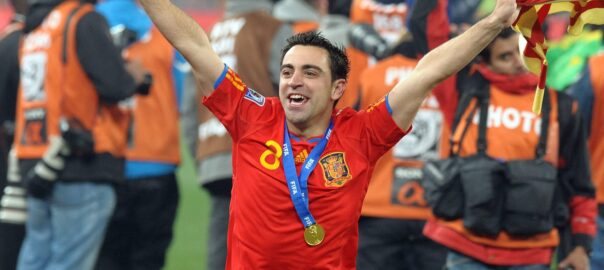
Xavi celebrates winning the 2010 FIFA World Cup

  • Spain legend Xavi talks Qatar 2022, South Africa 2010 memories and more
  • Xavi has lived, coached and played in Qatar for several years
  • “Football culture is growing at a tremendous speed in Qatar”

Xavi sits among the pantheon of great football technicians in the modern era. The midfield maestro was an integral figure as Spain won an unprecedented treble crowned by a maiden FIFA World Cup™ win in 2010, sandwiched either side of UEFA EURO triumphs.

After a glorious career with Barcelona, Xavi successfully transitioned to coaching with a successful spell at Qatar heavyweights Al Sadd. 

Having lived in Qatar for several years, Xavi talks exclusively about why the 2022 World Cup will be a memorable experience on and off the field, his memories of South Africa 2010, the main contenders to win Qatar 2022 and much more.

Who do you see as the current favourites for the tournament in 2022? Are there any teams under the radar that could have a big impact?

Xavi: I’m really looking forward to the World Cup in Qatar in two years’ time. It is shaping up to be a really exciting tournament and lots of teams will go there with the belief that they can win it. It was great to see Spain play really well again in recent internationals – I think the team has returned to a high level and will go to the EUROs and then the World Cup in 2022 with lots of confidence.

The European nations are looking very strong at the moment. It is impossible to pick a favourite, but France will be going to Qatar as the reigning champions and will believe their squad is strong enough to defend the title – they have so many exciting players, including match-winners like Kylian Mbappe and Antoine Griezmann.

Germany, Italy, Belgium, Portugal and Croatia should all be very competitive too and will be very difficult teams to beat – so I wouldn’t write any of them off at this stage. When you look at South America, Brazil and Argentina always go into the competition thinking they can win and both will have strong squads, with players like Neymar and Lionel Messi leading the way for some of the younger players coming through. Uruguay, Colombia and Chile are also more than capable of competing with the best teams in the world and getting a result. Let’s see who qualifies but I think it will be a very open tournament which will make it a great spectacle.

Having lived in Qatar for the last few years, and seeing the progress here first-hand, I’m really excited to see the host country compete at the tournament. Not only has a huge amount of investment gone towards developing top-class facilities and stadiums to host the tournament, but a huge amount of work has gone into developing a national team capable of competing on the biggest stage with the world’s best teams. The new generation of players coming through in Qatar are improving a lot and with the current rate of development and having recently won the Asian Cup, I think Qatar can compete very well at their first World Cup. Football culture is growing at a tremendous speed here and I think the World Cup will help take the sport to the next level, not only in Qatar but in the whole Arab region.

Al-Sadd Sports Club head coach Xavi Hernandez reacts

You moved to Qatar back in 2015 to play for Al Sadd. From your experience, what can fans travelling to the FIFA World Cup in 2022 expect when they reach the host country?

Excitement is really starting to build here in Qatar for 2022. The country has promised to put on a spectacular show for football fans and having seen the progress since I moved here in 2015 on everything from the stadiums to accommodation, I’ve every confidence that it will be an incredible tournament for both players and fans.

When you walk around Doha and meet the locals, it is clear that people here are really passionate about football. I didn’t really know what to expect when I first moved here as it was a completely new experience for me, leaving Barça after 25 years, to go to a new part of the world with a different culture and traditions that I was accustomed to in Catalonia. But I must admit that I like practically everything about living in Qatar. The weather is amazing with sunshine almost every day and it is a very relaxing place to work as the people are really respectful and friendly. It’s also a very safe country with very little crime so is a great place to raise a young family.

I think fans will have a great experience here. The stadiums are super impressive and have been built to ensure the best possible fan experience, so the atmosphere inside the grounds should be incredible.

Away from the football it will be a chance for fans to experience a whole new part of the world and culture. It has amazing beach hotels, lots of lovely restaurants and shopping malls, and the fan zones will be a great place for fans from all over the world to gather for a drink and soak in the atmosphere, so I think fans travelling to Qatar will have a great experience in 2022.

Spain’s World Cup winning team in 2010 was unique. What are the key characteristics that made that group of players so special?

I was very lucky to be part of a special generation of players. Not only did we win the World Cup, but we also won the European Championship twice in a row. I think the main characteristics that defined those winning teams was that we had a very humble and honest group of players that worked very hard for each other. Everyone was there for the group and did everything they could for the greater good of the team. It was also a winning team on an amazing run which meant we played with the confidence that we could win every game.

The coaches also did a lot for us. Luis Aragones brought the core group together initially, and Vincente del Bosque continued his work, and was someone who really got the best from the talent we had in Spain at that time. It was a generation with a lot of talent and Del Bosque gave us the confidence to go out and play a style of football that allowed us to dominate games and was exciting to watch. I think that is what people will remember about that era.

2020 is the tenth anniversary of Spain’s victory in South Africa. What’s the first memory or image that comes to mind, whenever anybody mentions that World Cup?

Many spectacular memories come to mind. It’s been ten years since the victory in South Africa, but it seems like yesterday. That feeling of knowing you have made history is incredible. I remember the celebrations vividly, having the cup in our possession and travelling on a convertible bus through Madrid. The joy that the victory brought to everyone in Spain was immense and it is something that will live in my memory for the rest of my life. After you win the World Cup, you are a world champion forever, nobody can take that away from you. It is spectacular what we were able to achieve, so it makes me very happy and proud to remember those moments.

Perfect matches probably don’t exist as there’s always something to improve. However, if you had to choose a match in the 2010 World Cup when Spain’s performance was at its best, which one would it be, and why?

I think the best game we played in 2010 was the semi-final against Germany. Germany had a very similar philosophy to ours, of wanting the ball, of dominating the game, of going on the attack. I think we both played a similar style in that game and on the day, we were better than them. In the final we suffered a bit more because we came up against a very tough and aggressive Dutch team that wouldn’t let us play. On the other hand, Germany wanted to play us at our own game and on the day, we were the superior team.

Spain based its domination on ball possession. Football is evolving to a game where physical strength and speed in transitions are crucial. Could a team playing the way Spain did in 2010, in your opinion, win the World Cup in 2022?

I’m convinced that the team that has more possession of the ball and goes on the attack more often has a better chance of winning than a team that defends. I’m convinced because I lived it that way as a player and achieved success in the game following that model. In the end, the team that goes on the attack, the one who shoots the most, the one who is closest to the opposition’s goal, is the one with the best chance of winning. It doesn’t guarantee it, but I think the statistics are in their favour. So yes, I believe a team could win the 2022 World Cup by playing a possession-based game at a high tempo.

In football, I believe there are two types of coaches, those who want to defend and those who want to attack. For me it is clear which is my preferred philosophy. As a coach, I want my team to have the ball, I want to attack. I want to play in the opposition’s half of the pitch. I want my players to put a lot of pressure on the opposition to ensure the ball is in our possession the majority of the time. I believe lots of things have improved in the modern game and of course there is a big emphasis on things like the speed ​​of transitions and the physical strength of players, but in the end, I believe it is the most talented and skilful team that will prevail in the game.

Spain's national team's (LtoR) Fernando Torres, Xavi Alonso and Marcos Senna attend a training session
FIFA.com
FIFA.com News

The Finals that made history

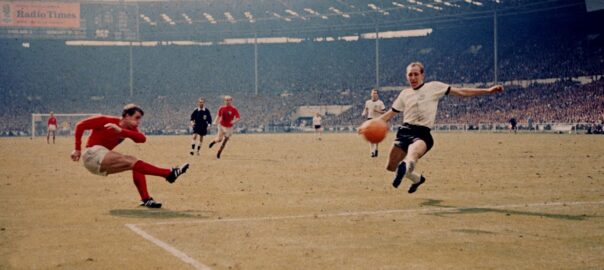
Geoff Hurst scores England's third goal against West Germany in the World Cup final

  • The Final of Qatar 2022 will take place in exactly two years’ time
  • FIFA.com looks back on the competition’s most memorable showpiece matches
  • The Maracanazo, the Miracle of Berne, Geoff Hurst’s hat-trick and the magic of Pele all remembered

With the Covid-19 pandemic continuing to grip the world, it is hard to plan even a few days ahead, let alone the coming weeks and months. One date you can put into your diary, however, is 18 December 2022, when the Final of the FIFA World Cup Qatar 2022™ takes place and the eyes of the world will be fixed on Lusail Stadium in Doha.

FIFA.com marks the start of the two-year countdown by recalling some of the greatest World Cup Finals of them all.

16 July 1950: Brazil 1-2 Uruguay

Technically speaking, not a Final but the last match of the four-team final phase and a game Brazil only needed to draw to lift the Trophy. The match should have been remembered for Uruguay’s achievement in winning the World Cup for a second time – 20 years after triumphing at the inaugural world finals – at a Maracana packed with 200,000 home fans. Instead, however, it has gone down in history as a Brazilian trauma, not just for A Seleçao but the whole country. “Brazil is Dead” announced the daily newspaper Mundo in dramatic fashion, though there was some truth in it: two fans threw themselves from the stands and three succumbed to heart attacks.

On the pitch, the Uruguayans were not so much assassins of a dream but footballing heroes, chief among them Juan Schiaffino and Alcides Ghiggia, La Celeste’s scorers on the day. Their goals had turned around a match that Brazil led 1-0 courtesy of Friaça. Miles away from the stadium, his ear glued to the radio, a nine-year-old boy saw his father burst into tears on the final whistle, and offered him these consoling words: “Don’t cry, Daddy. I’m going to win it, the World Cup, for you.” His name? Edson Arantes Do Nascimento, a.k.a. Pele.

4 July 1954: West Germany 3-2 Hungary

The question on everyone’s lips when the Final of Switzerland 1954 kicked off was not if Hungary would win but how many they would win by. Thanks to the myriad talents of Ferenc Puskas, Zoltan Czibor, Nandor Hidegkuti and Sandor Kocsis, the Magyars had gone unbeaten for more than four years and had thrashed Final opponents West Germany 8-3 in the first round. With the rain falling hard in the Swiss capital of Berne, the stage seemed set for another day to forget for the Germans, an impression that appeared to be confirmed when Puskas and Czibor scored in the opening eight minutes.

Yet instead of wilting, Die Nationalmannschaft fought back straightaway, with Fritz Walter proving inspirational. Within just ten minutes they were level and brimming with confidence, though only the woodwork – on two occasions – and a disallowed goal for Puskas stopped the Hungarians from retaking the lead. With six minutes remaining, the Germans broke the siege on their goal and launched a counter-attack that ended with Helmut Rahn firing a shot across Gyula Grosics and into the back of the net. The invincible Magyars had been toppled, as the Germans claimed the first of their four world titles to date.

30 July 1966: England 4-2 (aet) West Germany

Playing in front of their own fans and their most illustrious supporter in Queen Elizabeth II, England were in a similar position to the one Brazil had found themselves in 1950, with a World Cup to be won on home soil, at Wembley. Though determined to avoid a Maracanazo of their own, they were facing the West Germans, who enjoyed upsetting the odds, as they showed against Hungary in 1954.

Wolfgang Weber deprived the hosts of the Trophy in normal time, scoring in the last minute to make it 2-2. A goalscorer in the regulation 90 minutes, Geoff Hurst struck twice more in extra time, the first of those two goals the most controversial in World Cup Final history: a powerful drive that hit the underside of the crossbar and bounced on the goal-line – according to the Germans – or just over it – according to the English and, crucially, the Soviet linesman. Victory gave England their only world title to date, while Hurst remains the one and only player to score a hat-trick in a Final.

21 June 1970: Brazil 4-1 Italy

In the eyes of many, A Seleçao’s defeat of La Squadra Azzurra in Mexico was the crowning achievement of the greatest team in history at the greatest World Cup of all time. Tied on two world titles with the Italians going into the game, Brazil became the first country to win three after a match lit up by Pele’s individual brilliance and some collective Canarinha magic. O Rei scored with a header and Jairzinho and Gerson both got on the scoresheet before Carlos Alberto, latching on to a sublime pass from Pele, rounded off a wondrous move to put Brazil on top of the world. Italy defender Tarcisio Burgnich, the man who had the unfortunate job of marking Pele that day, later commented: “I said to myself before the match: ‘He’s just flesh and bone, like anyone else.’ But I was wrong.”

29 June 1986: Argentina 3-2 West Germany

When the World Cup returned to Mexico in 1986, another classic tournament ensued, capped by a gripping decider. Inspired by a Diego Maradona at the peak of his powers, Argentina stormed into the Final. Waiting for them there were a West Germany side anxious to atone for their defeat in the Final at Spain 1982. The 115,000 capacity crowd at the Azteca Stadium saw the South Americans take a two-goal lead, only for the tenacious Germans to prove their expertise in putting the champagne back on ice, with Karl-Heinz Rummenigge and Rudi Voller both striking in the space of seven minutes late on.

With just six minutes remaining, Maradona conjured up one more piece of genius to flick a perfect pass into the path of Jorge Burruchaga, who strode away from the German defence and slid the ball past Harald Schumacher. The 3-2 win gave La Albiceleste their second world crown and ensured eternal glory for their peerless No. 10.

12 July 1998: Brazil 0-3 France

Staging the World Cup for the second time, France reached their first Final, against four-time champions and hot favourites Brazil no less. Denied the services of the suspended Laurent Blanc, Les Bleus could have been forgiven for feeling apprehensive, especially with the likes of Ronaldo, Rivaldo, Cafu, Bebeto and Roberto Carlos lining up against them. Nevertheless, coach Aime Jacquet won the tactical battle against opposite number Mario Zagallo, and Zinedine Zidane was at his imperious best. Thanks to his brace and a late goal from Emmanuel Petit – when they were down to ten men – Les Bleus finally achieved their moment of glory.

Honourable mentions:

FIFA.com
FIFA.com News

Salman: Extraordinary World Cup will honour all Arabs

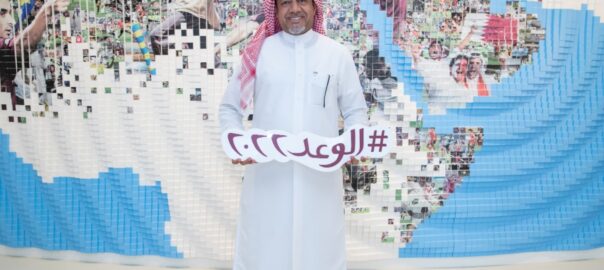
Qatar former national team midfielder Khalid Salman 

  • Khalid Salman took part in the FIFA World Youth Championship Australia 1981
  • Qatari reminisces about event two years out from Qatar 2022 final
  • Salman: “If it weren’t for the rain, we would’ve won the title”

The countdown to the first FIFA World Cup ™ to be staged in the Middle East continues. Today, Friday 18 December 2020, marks exactly two years before the Final of the FIFA World Cup Qatar 2022 ™, a game every Qatari would love to see Al-Annabi contest.

Far-fetched as that dream might seem, a quick search of the history books reveals that, 1981, Qatar did reach a global final – at the FIFA World Youth Championship in Australia – only to lose to West Germany.

Qatar qualified for the knockout phase as runners-up in Group A, having beaten Poland, drawn with USA and lost to Uruguay. In the quarter-finals, they beat Brazil, led by Julio Cesar and Josimar, 3-2 thanks to a hat-trick from midfielder Khalid Salman.

In an exclusive interview with FIFA.com, Salman spoke about Qatar’s impressive campaign at that tournament. “Good planning, a quality squad, and the outstanding leadership of our Brazilian coach Evaristo de Macedo all played an important role in our distinguished performance at that tournament,” he said.

“A solid programme was put in place for that squad, whose objective was to represent Qatar in the best way possible. But as we progressed from one round to the next, we grew more and more hopeful, especially as we weren’t just representing Qatar, but Arab and Asian football as well,” he added.

A dream come true

In the semi-final, Qatar beat England 2-1, a victory that was beyond the players’ wildest dreams. However, in the decider they suffered an emphatic 4-0 defeat against a West German side led by Ralf Loose, who scored a brace that day.

Salman recalled the historic triumph over England and talked about that final, which he thinks Qatar could have won had it not been for Sydney’s weather conditions at that time. “If it weren’t for the rain, Qatar would have won,” he insisted.

“We didn’t expect to beat England, one of the tournament favourites. However, the morale in the squad, as well as the confidence we’d gained from previous games, led us to believe we could win and prove that we were in the final on merit, not luck.

Speaking of the final, Salman said: “We had as good a chance as Germany, but the weather conditions on the day before the match didn’t help us; we couldn’t have our training session on the pitch because of the amount of water on it.

“We weren’t used to playing in rainy conditions, which made things very difficult for us. In fact, we had two chances in the first 15 minutes, but because of the condition of the pitch, we didn’t convert them. Honestly, had it not been for the rain, Qatar would have won,” he stressed.

FIFA World Youth Championship Australia 1981

Realism for 2022

Despite the country’s youth side reaching the World Youth Championship final in 1981, Al-Annabi’s senior team had to wait until 2019 to win the Asian Cup, an achievement Salman considers a source of pride for him and the older crop of players.

“I’m very proud of the generation that won the Asian Cup, because they achieved what we wanted to do. This group prevailed against top Asian sides like Japan, Korea Republic, Australia and Iran, and became the continent’s best side,” said the former player, who currently works as a football pundit.

But can Al-Annabi repeat that success and make the FIFA World CupTM Final in two years’ time? “The World Cup will be a different story,” Salman said, adding: “We must be realistic because we’re not better than football powers like Brazil, Germany, the Netherlands, England and France.”

“It’s possible that our side will get good results and go beyond the group stage, which would be an achievement in itself. But honestly, we haven’t reached the level of the teams that have top players competing in the major leagues,” he said.

Regardless of how Al-Annabi fare in the finals, Salman believes that hosting the World Cup is magnificent in itself.

“Organising that mega sporting event and impressing the whole world will be an achievement not only for Qatar, but for all Arabs, as His Highness the Emir has said. The world-class stadiums and the state-of-the-art infrastructure, be it the metro, tunnels, bridges or hotels, will be a source of pride for Qatar and the whole region,” Salman explained.

“After 2022, it’ll be difficult for any country to organise a World Cup in a similar fashion. It’ll be an extraordinary event that will honour not only Qatar but all Arabs,” he concluded.

Khalifa International Stadium, Qatar
FIFA.com
FIFA.com News

Qatar 2022 board meeting held ahead of Al Rayyan venue inauguration

Qatar 2022 board meeting held ahead of Al Rayyan venue inauguration

The board of the FIFA World Cup Qatar 2022 LLC (Q22) met today, just three days before the inauguration of another FIFA World Cup™ stadium, the Al Rayyan venue, which will host the Amir Cup final on Qatar National Day. 

The meeting, which was held via video call due to the ongoing COVID-19 pandemic, reviewed key achievements while looking forward to upcoming milestones, including stadium inaugurations, the FIFA Club World Cup 2020™, which will take place in February 2021, and the FIFA Arab Cup, which will be held in December next year. 

H.E. Hassan Al Thawadi, Q22 Chairman and Secretary General of the Supreme Committee for Delivery & Legacy (SC), said: “Despite the enormous challenges presented by the ongoing COVID-19 pandemic, major strides have continued to be made during 2020 in preparation for the first FIFA World Cup in the Middle East and Arab world. 

“At the start of the year, we marked 1,000 days to go until kick-off, followed swiftly by the digital launch of Education City Stadium. The two-year countdown was celebrated in November and now we are gearing up for the inauguration of the fourth tournament-ready stadium, Al Rayyan Venue.”

Al Thawadi added: “Qatar has also played a major role in hosting top-level football in Asia during the pandemic. Our country stepped in to successfully host matches for the AFC Champions League and is looking forward to staging the final of that competition on 19 December.”

Colin Smith, Managing Director of Q22, said: “Qatar’s strong and continued commitment has been key to making steady progress and ensuring that with two years to go the FIFA World Cup project is well on track to being a resounding success.

“2021 will be a key year on the journey to Qatar 2022 as we look forward to two exciting tournaments, the FIFA Club World Cup and the FIFA Arab Cup, which will enable us to test infrastructure and operational aspects of hosting major football competition.”

The inauguration of Al Rayyan Venue follows the successful launch of Khalifa International, Al Janoub and Education City. Al Bayt has also been completed and will be inaugurated in the near future. Al Thumama, Ras Abu Aboud and Lusail are in the final stages of construction and will be delivered well in advance of the tournament, which kicks off on 21 November 2022.

FIFA.com
FIFA.com News