Category Archives: History and facts 2026

World Cup 2026 stadiums and places: BMO Field, Ontario

Country: Canada
City: Toronto, Ontario
Address: 170 Princes’ Boulevard
Capacity: 45,736 after expansion (40,100 actual seating capacity for World Cup)
Opened: 2007
Last Renovation: 2026
Surface: Hybrid grass
Construction cost: CA$62.9 million
Record attendance: 44,828, Toronto FC vs. Inter Miami CF, May 9, 2026
Interesting fact: Protective Canopy: The east, west, and south seating stands are covered by a long-span roof canopy, providing weather protection for fans and helping to contain crowd noise

BMO Field is an open-air venue situated at Exhibition Place in Toronto, Ontario. Built on the grounds formerly occupied by Exhibition Stadium, the arena officially opened in 2007 as the home of Toronto FC in Major League Soccer. The site itself has a long sporting history, as Exhibition Stadium previously hosted both the Toronto Argonauts and the Toronto Blue Jays before the opening of SkyDome, now known as Rogers Centre, in 1989. Exhibition Stadium was eventually demolished in 1999.

The stadium belongs to the City of Toronto and is operated by Maple Leaf Sports & Entertainment, the company that owns Toronto FC and the Argonauts. Naming rights belong to the Bank of Montreal, widely recognized through the “BMO” brand. The venue will also play an international role during the 2026 FIFA World Cup, becoming one of two Canadian stadiums selected to host tournament matches. During the competition, FIFA sponsorship rules will require the facility to operate under the temporary name “Toronto Stadium.”

Originally designed as a soccer-specific facility, BMO Field was built in preparation for the 2007 FIFA U-20 World Cup and became Toronto FC’s first permanent home ground. The venue later welcomed additional international competitions, including the 2014 FIFA U-20 Women’s World Cup.

Renovations and sporting events

Between 2014 and 2016, the stadium underwent extensive modernization work that significantly changed its appearance and functionality. The project included the construction of an upper level on the east side, installation of a roof covering the seating sections, and expansion of the playing surface to accommodate Canadian football.

These upgrades allowed the Toronto Argonauts to relocate to BMO Field for the 2016 CFL season. In the same year, the stadium hosted the 104th Grey Cup, one of the Canadian Football League’s showcase events.

The ground has also become an important location for championship soccer. While the 2010 MLS Cup was staged there as a neutral-site final, BMO Field later hosted the 2016 and 2017 championship matches involving Toronto FC after the league adopted a format rewarding the higher-ranked regular-season team with home-field advantage.

Beyond soccer and Canadian football, the venue has welcomed rugby union competitions, including matches featuring Canada’s national side. Rugby sevens contests during the 2015 Pan-American Games were also staged at the stadium.

Stadium design and features

The playing area measures 74 yards wide by 115 yards long, dimensions that satisfy FIFA requirements. Seating throughout the venue is predominantly red, though several visual elements distinguish the two main stands.

A large maple leaf pattern is displayed across the east grandstand, reflecting a national symbol closely tied to Canada. On the west side, the lower seating section spells out “TORONTO” and incorporates part of the Toronto FC crest into the overall design.

For the 2026 FIFA World Cup, the venue’s capacity will be temporarily increased to 45,736 spectators. The expansion will allow the stadium to accommodate larger international crowds during the tournament.

Main attractions across Ontario

Ontario offers a wide range of destinations, from natural landmarks to major urban centers. Niagara Falls remains one of the province’s most recognizable sights, where massive volumes of water plunge over the curved edge of the river with tremendous force. Mist rises high above the gorge as visitors gather daily to observe the spectacle. The surrounding area also contains riverside trails and historical locations connected to the War of 1812.

Toronto stands as Canada’s largest and most multicultural city, known for its skyline, sports scene, and cultural institutions. The CN Tower dominates the downtown landscape, while Nathan Phillips Square hosts festivals and seasonal skating. Along the waterfront, visitors can enjoy beaches, marinas, and walking paths. The city is also home to major professional sports teams and venues such as Scotiabank Arena and Rogers Centre, alongside museums including the Royal Ontario Museum and the Art Gallery of Ontario.

Algonquin Provincial Park is recognized for wilderness experiences centered around lakes, forests, and extensive backcountry routes. Established in 1893 as Ontario’s first provincial park, it contains numerous canoe routes, hiking trails, and campgrounds concentrated near the Highway 60 corridor. The park also forms part of the Muskoka region, an area often associated with seasonal cottage life.

Ottawa, the national capital, combines government institutions with cultural attractions and outdoor recreation. Parliament Hill and several museums highlight the country’s history, while festivals and arts venues contribute to the city’s atmosphere. Seasonal activities include the Canadian Tulip Festival in spring and skating on the Rideau Canal during winter. Although Ottawa is located in Ontario, its proximity to Gatineau offers visitors quick access to francophone Québécois culture.
World Cup 2026 stadiums and places: BC Place, British Columbia

Country: Canada
City: Vancouver, British Columbia
Address: 777 Pacific Boulevard
Capacity: 54,500
Opened: 1983
Last Renovation: 2026
Surface: FieldTurf
Construction cost: CA$356 million
Record attendance: 65,061, Ed Sheeran, September 2, 2023
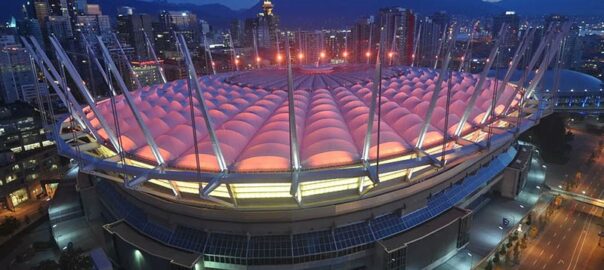
Interesting fact: Northern Lights Display: The stadium’s ETFE façade utilizes thousands of energy-efficient LED lights to create dynamic, colorful animations that illuminate the Vancouver skyline

BC Place is a multi-purpose stadium situated on the northern side of False Creek in Vancouver, British Columbia. The facility belongs to the BC Pavilion Corporation (PavCo), a Crown corporation operated by the province. Since opening on June 19, 1983, the venue has become one of the most recognizable sports and entertainment sites in Canada.

The stadium was constructed as part of preparations for Expo 86, the 1986 World’s Fair held in Vancouver. Structural engineers from Geiger Berger Associates designed the original building with an air-supported roof that was considered the largest of its kind in the world at the time. The design resembled the Hubert H. Humphrey Metrodome in Minneapolis, Minnesota, and remained a landmark feature for decades.

Today, BC Place serves as the home stadium for the BC Lions of the Canadian Football League and Vancouver Whitecaps FC of Major League Soccer. The venue also hosts the annual Canada Sevens tournament and houses the BC Sports Hall of Fame. Over the years, it has welcomed major international sporting events and large crowds for football and soccer matches.

The stadium played a central role during the 2010 Winter Olympics and Paralympics, later hosting the 2012 CONCACAF Women’s Olympic Qualifying Tournament and several matches at the 2015 FIFA Women’s World Cup, including the final. BC Place is also scheduled to stage multiple games during the 2026 FIFA World Cup, among them knockout-round fixtures.

Major renovation and modern upgrades

In May 2008, officials confirmed that BC Place would undergo an extensive modernization project worth more than $150 million. The renovation work was divided into two phases and became one of the largest redevelopment projects ever completed at the stadium.

A key element of the reconstruction was the replacement of the original inflatable roof. Following the 2010 Winter Olympics, the building closed for 16 months so crews could install a retractable roof supported by cables. After completion, the new structure became the largest retractable roof of its kind.

The renewed venue also received a centre-hung high-definition scoreboard that ranks as the second largest in North America behind the display at AT&T Stadium. In addition, a new artificial playing surface produced by Polytan was installed at a reported cost of $1.2 million. The pitch was designed to meet FIFA 2-star certification standards and measures 117 by 75 yards.

After Vancouver Whitecaps FC entered MLS and relocated to the updated stadium, the club initially used only the lower seating bowl for league matches. In 2018, the team attracted 27,683 supporters for a regular season meeting with Seattle Sounders FC without opening the upper level. Several years later, on November 22, 2025, the Whitecaps established a new MLS attendance record for the club when 53,957 fans watched the playoff semifinal against Los Angeles FC.

Stanley Park and Vancouver Island highlights

Among the best-known destinations in British Columbia is Stanley Park, a 1,000-acre green space located beside downtown Vancouver. The park offers views of the city skyline, surrounding mountains, and the Pacific Ocean. Visitors can explore forest paths, cycle or walk the 9-kilometre Seawall, spend time at the Vancouver Aquarium, or relax near the waterfront beaches.

One of the park’s most photographed landmarks is the collection of totem poles at Brockton Point. The area remains a popular stop for travelers wanting to experience nature while staying close to the city centre.

On Vancouver Island, the Inner Harbour in Victoria stands out as one of the province’s most picturesque waterfront areas. Tourists can watch floatplanes depart from the harbour, visit the Royal BC Museum, admire the Fairmont Empress Hotel, or join whale-watching excursions departing from the docks. During summer, the harbour becomes especially lively with musicians, street performers, and outdoor cafés.

Another major attraction on Vancouver Island is Pacific Rim National Park Reserve on the island’s west coast. The park is known for its dramatic shoreline, ancient rainforests, and outdoor activities. Travelers can walk along Long Beach near Tofino, kayak through the Broken Group Islands, or visit the area for surfing and storm watching.

Mountain resorts, gardens and remote islands

Whistler Blackcomb is internationally recognized as one of British Columbia’s leading ski destinations. The resort attracts visitors throughout the year, offering skiing and snowboarding across more than 8,000 acres during winter months. In warmer seasons, guests can explore alpine hiking routes, mountain biking trails, and the Peak 2 Peak Gondola, which provides panoramic mountain views.

Near Victoria, Butchart Gardens remains one of the province’s most celebrated attractions and holds status as a National Historic Site of Canada. Spread across 55 acres, the gardens include floral displays, fountains, themed landscapes, and walking paths.

Among the most visited sections are the Sunken Garden and the Japanese Garden. During summer evenings, the site also features entertainment events and fireworks displays that attract large numbers of visitors.

Farther north, Haida Gwaii offers a more remote experience shaped by Indigenous culture and natural scenery. Previously known as the Queen Charlotte Islands, the archipelago is home to Gwaii Haanas National Park Reserve, where visitors can see historic Haida totem poles and longhouses.

The islands are also known for fishing, hiking opportunities, and wildlife viewing. Their isolated location and cultural significance make Haida Gwaii one of the most distinctive destinations in British Columbia.

World Cup 2026 stadiums and places: Estadio Akron, Jalisco

Country: Mexico
City: Zapopan, Jalisco
Address: Cto. J.V.C. 2800, El Bajío
Capacity: 49,850
Opened: 2010
Surface: Grass
Construction cost: $200 million
Record attendance: 45,310, boxing match between Saúl “Canelo” Álvarez and John Ryder, May 6, 2023
Interesting fact: Volcano Concept: The exterior is designed to resemble a volcano, with a roof and natural grass berm meant to blend harmoniously into the surrounding La Primavera forest landscape

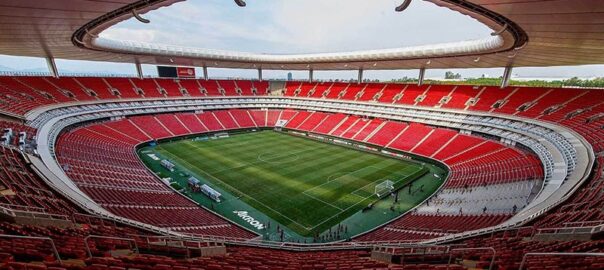
Estadio Akron, previously known as Estadio Omnilife, stands in Zapopan near Guadalajara in the Mexican state of Jalisco. The multifunctional venue primarily hosts football matches and serves as the home ground of Liga MX club C.D. Guadalajara. Located within the JVC complex, the stadium accommodates 49,850 spectators.

Construction of the arena began in February 2004, although financial difficulties and additional complications delayed completion for several years. The venue later received the name Estadio Akron following a sponsorship agreement with Grupo Akron, a Mexican company specializing in lubricants and fuel products.

The stadium quickly became a significant site for international sporting events. It staged the opening leg of the 2010 Copa Libertadores Finals and later welcomed the opening and closing ceremonies of the 2011 Pan American Games. During that tournament, it also hosted every men’s and women’s football match.

The arena originally featured an artificial surface, which generated criticism from numerous well-known players. In May 2012, officials confirmed the pitch would be replaced with natural grass following the controversy surrounding the synthetic field.

International tournaments and memorable football moments

Estadio Akron hosted eight fixtures during the 2011 FIFA U-17 World Cup, including the semifinal between Uruguay and Brazil. The venue later became one of the selected stadiums for the 2026 FIFA World Cup, where it is expected to host four group-stage matches, including Mexico’s second game of the tournament.

In accordance with FIFA regulations regarding sponsored stadium names, the arena will temporarily operate under the title “Estadio Guadalajara” during the World Cup. The venue is also scheduled to host Pathway 1 of the inter-confederation play-offs.

One of the stadium’s most memorable occasions came in 2010, when Chivas faced Manchester United in a friendly match arranged to inaugurate the ground. Javier “Chicharito” Hernández appeared for the Mexican side during the first half before switching teams at halftime as part of his ceremonial move to the English club.

The stadium’s design is among its defining features, with architecture inspired by a volcano encircled by a ring resembling smoke. Although Mexico’s men’s national team has played there only once, the venue has earned recognition for its lively atmosphere and close connection with one of Liga MX’s most popular clubs.

Tequila and the cultural heritage of Jalisco

A visit to Jalisco often begins with Tequila, the town internationally associated with Mexico’s famous spirit. Surrounded by blue agave fields, the destination introduces visitors to the traditions and production methods behind tequila making.

Recognized as a Pueblo Mágico for its cultural importance and history, Tequila lies only about an hour from Guadalajara. Guided distillery tours allow travelers to observe the detailed crafting process while learning about the origins of the drink that became known worldwide.

Guests can sample different varieties ranging from blanco to añejo while exploring the region’s longstanding traditions. The combination of history, craftsmanship, and local scenery has helped establish Tequila as one of Jalisco’s leading attractions.

Another important historical destination near Guadalajara is Los Guachimontones, an archaeological site connected to the ancient Teuchitlán culture. The location is distinguished by circular pyramids and stepped structures surrounded by concentric stone formations.

Dating back more than two thousand years, the site highlights remarkable architectural achievements from Mesoamerican civilization. Set against lush natural surroundings, the ruins offer visitors insight into the ceremonial practices and cultural heritage of the region.

Coastal escapes and mountain towns

Puerto Vallarta provides a completely different side of Jalisco, combining beaches, coastal activities, and vibrant urban life. Visitors can relax along sandy shores, snorkel in Banderas Bay, or take boat excursions to the Marietas Islands.

The Zona Romántica attracts travelers with cobblestone streets, boutiques, galleries, and seafood restaurants. Puerto Vallarta also serves as a convenient starting point for journeys into the surrounding mountains and nearby coastal communities.

Within driving distance, travelers can explore San Sebastián del Oeste or continue north to the beach town of Sayulita. These nearby destinations expand the range of experiences available from the Pacific coast.

Ajijic, situated beside Lake Chapala, offers a quieter atmosphere away from major cities. Known for its expatriate community, artistic culture, and traditional Mexican architecture, the town has also received Pueblo Mágico status. Visitors can enjoy lakeside walks, boat trips, and views of the mountains surrounding Mexico’s largest lake.

Jalisco is also home to several additional Pueblos Mágicos, including Tapalpa, Mascota, and San Sebastián del Oeste. Tapalpa is known for mountain scenery, rustic streets, and access to the Salto del Nogal waterfall, while Mascota and San Sebastián del Oeste preserve colonial architecture and mining history within the Sierra Madre Mountains.

Mexico’s president agrees Iran can be based in Mexico during World Cup

Mexico’s President Claudia Sheinbaum has agreed that Iran’s national football team can remain based in Mexico during the World Cup, following an approach from FIFA. She said there was no objection from her government to hosting the squad while the tournament is taking place.

Sheinbaum explained that the United States had made clear it did not want the Iranian team staying overnight on its territory, despite Iran being scheduled to play several matches there. As a result, FIFA contacted Mexico with a request regarding accommodation arrangements for the team.

She added that Mexico saw no issue with allowing Iran to stay in the country during the competition.

The training base moved to Tijuana facility

FIFA has confirmed that Iran’s training base will be located at Centro Xoloitzcuintle in Tijuana, Mexico. The decision follows changes to the team’s original plans for the tournament.

Iran had initially been assigned Tucson, Arizona, as their base camp, even though all of their group-stage matches were scheduled to be played in the United States.

Security concerns and revised arrangements

Uncertainty surrounding Iran’s participation has grown amid ongoing conflict in the Middle East and related security concerns. These factors contributed to adjustments in logistical planning for the team’s World Cup preparations.

The tournament is being jointly hosted by the United States, Canada, and Mexico. Iran is set to face New Zealand on 15 June in Los Angeles, Belgium on 21 June, also in Los Angeles, and Egypt on 26 June in Seattle.

At present, Iran is continuing its preparations in Antalya, in southern Turkey.

Visa assurances and political conditions

Iran’s sports minister Ahmad Donyamali said FIFA had assured the country that all members of its squad would be granted visas for entry into the United States during the tournament. He added that there should be no obstacles preventing players from receiving entry approval.

The Iranian Football Federation (FFIRI) submitted a list of 10 conditions to FIFA regarding participation. These included a request that players, coaches, and officials who had completed military service with the Islamic Revolutionary Guard Corps (IRGC) be allowed to obtain visas.

US position and previous entry issues

US Secretary of State Marco Rubio stated that Iranian players would be permitted to take part in the tournament, although individuals with connections to the IRGC could face restrictions on entry.

Separately, FFIRI official Taj was denied entry at the Canadian border ahead of FIFA’s annual congress in Vancouver. Canadian authorities later said his visa had been revoked due to alleged links to the IRGC.

Some members of Iran’s squad have also visited the US embassy in Ankara to submit their visa applications for the upcoming tournament.

World Cup 2026 stadiums and places: Estadio BBVA, Nuevo León

Country: Mexico
City: Guadalupe, Nuevo León
Address: Av. Pablo Livas 2011
Capacity: 53,500
Opened: 2015
Surface: GrassMaster (hybrid grass)
Construction cost: $200 million
Record attendance: 120,000, Shakira, March 2025
Interesting fact: Architecture: The structure features a striking tripodal design inspired by the surrounding Monterrey mountains, with a roof shape often compared to an armadillo

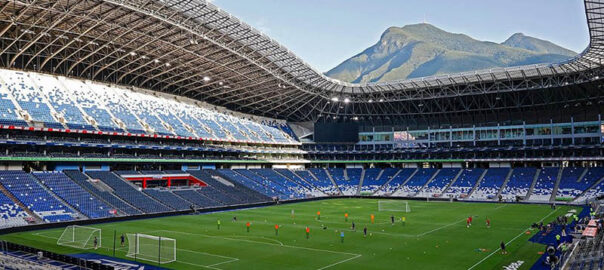
Estadio BBVA, previously called Estadio BBVA Bancomer, stands in Guadalupe within the Greater Monterrey area of Nuevo León. Known by the nickname “El Gigante de Acero,” the venue became the new home of C.F. Monterrey after replacing Estadio Tecnológico, where the club had played for 63 years. The stadium carries the branding of the Spanish banking group BBVA and its Mexican division BBVA Mexico.

The arena officially opened on 2 August 2015 during the eighth edition of the Eusébio Cup. In that inaugural match, Monterrey secured a 3–0 victory over S.L. Benfica. The venue is also expected to stage matches during the 2026 FIFA World Cup.

Architecture and sustainable design

The project was developed by FEMSA, owner of Monterrey, while the architectural concept was created by the international firm Populous together with the Mexican studio VFO. Federico Velasco and Populous led the design process. Building work started in August 2011 and concluded in July 2015.

When the stadium first opened, it accommodated 51,000 spectators, ranking it as the fourth-largest football stadium in Mexico. Constructed at a cost of US$200 million, it became the country’s most expensive stadium at the time. In 2016, additional seating increased the capacity to 53,500 people.

The venue features a natural grass pitch, luxury suites, a themed restaurant connected to the club, and premium interior and exterior finishes. With a grandstand inclination of 34 degrees and the minimum FIFA-approved distance between spectators and the field, fans are placed close to the action during matches.

The stadium also earned silver certification from Leadership in Energy and Environmental Design for its environmentally conscious planning. It became the first football venue in North America to receive that distinction.

Green areas and mountain scenery

More than one-third of the stadium grounds consist of landscaped green zones, surpassing existing regulatory requirements. These permeable spaces help filter rainwater and support aquifer replenishment. Parking areas were arranged throughout the complex alongside wooded sections in order to integrate the structure with the surrounding ecological park.

One of the most recognizable aspects of the stadium is the view toward Cerro de la Silla, the famous mountain whose highest summit reaches 1,820 meters. Spectators seated in the northwestern part of the arena can enjoy panoramic views of the landmark while attending events.

Main attractions of Nuevo León

Macroplaza and Paseo Santa Lucía

Macroplaza is among the most visited destinations in Nuevo León. Situated in central Monterrey, the public square covers more than 40 hectares and is considered one of the world’s largest plazas. The area includes monuments, museums, gardens, fountains, and notable buildings connected to the city’s history and culture.

Another prominent attraction is Paseo Santa Lucía, a pedestrian promenade centered around an artificial canal stretching roughly 2.5 kilometers. Bridges, murals, landscaped areas, and fountains line the route, making it a popular location for both residents and tourists.

Boat rides along the canal provide visitors with a different perspective of Monterrey’s urban scenery, while the walkways surrounding the waterway create an inviting setting for exploration and photography.

Fundidora Park and the Bishopric viewpoint

Fundidora Park combines recreation, culture, entertainment, and industrial heritage within a single urban space. Built on the former grounds of Fundidora de Acero, the park has become one of the most significant tourism sites in Monterrey.

More than 150 original structures from the former steel plant remain preserved inside the complex and are regarded as part of the city’s industrial archaeological heritage. Among the most important features is the Horno 3 Steel Museum, a restored blast furnace transformed into an interactive museum focused on Monterrey’s industrial development.

Another major destination is the Mirador del Obispado, located on Cerro del Obispado. The site offers sweeping views across the city and is home to the Monumental Flagpole, recognized as one of northern Mexico’s defining symbols.

The same area also contains the Regional Museum of Nuevo León El Obispado, a historic colonial-era structure featuring a central courtyard and an oratory decorated with Churrigueresque elements. Through its exhibits, visitors can explore the historical development of Monterrey and Nuevo León.