Category Archives: 2022 FIFA World Cup

Alfaro: I’ll put my heart and soul into getting Ecuador to Qatar

Gustavo Alfaro head coach of Ecuador gives instructions to his players

  • Gustavo Alfaro speaks exclusively to FIFA.com
  • Argentinian discusses his career and how he came to coach Ecuador
  • Also analyses opening games of South American qualifiers and the challenges ahead

Following his appointment as Ecuador coach, Gustavo Alfaro had less than two months to prepare the team for the start of qualifying for the FIFA World Cup 2022™ and instil in his charges a belief that they could reach the finals in Qatar.

The Argentinian, in charge of a national team for the first time, opts for restraint when summing up the task ahead. “The challenge over the next year and a half is to make that hope a reality,” he tells FIFA.com, in his first exclusive interview since taking up the reins on 26 August.

Following a short playing career as a midfielder with Atletico de Rafaela from 1988 to 1992, Alfaro moved into coaching just a few months after his retirement. Since then, he has worked exclusively in Argentinian football, except for a brief stint in Saudi Arabia, interspersed with work as a TV analyst, which has taken him to the last four World Cups. All this and more was up for discussion in a wide-ranging interview with FIFA.com.

FIFA.com: Your spell as a professional footballer was relatively short. Why was that?

Gustavo Alfaro: Football was always my passion. As well as playing for Atletico Rafaela, you could say I grew up there, as my parents were club officials. I dreamed of one day playing in the top flight, avidly listening to football on the radio and updating my own cut-out league tables. However, from Rafaela that seemed a long way off, so I started studying to be a chemical engineer.

Then one year we entered the regional tournament, and from there we got promoted to the B Nacional (second division). I promised my father that I’d play for a while and then resume my studies, and three years later that’s what I did. However, football won out in the end, and I decided to seek out as a coach what I’d longed for as a player. By the age of 30, I was already coaching professionally.


Gustavo Alfaro (Ecuador)

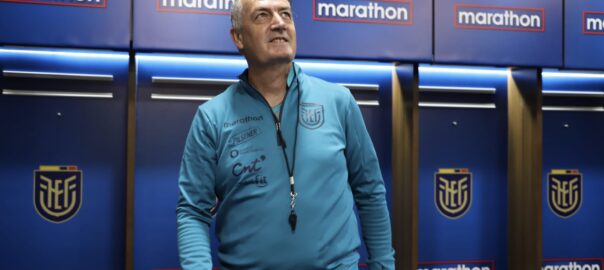
Ecuador’s coach Gustavo Alfaro is seen in the team’s looker room

Gustavo Alfaro coach of Ecuador, Robert Arboleda and Erick Ferigra of Ecuador leave the field

Gustavo Alfaro coach of Ecuador walks onto the field before a match vs Argentina

Coach of Ecuador Gustavo Alfaro shouts instructions to his players

Gustavo Alfaro head coach of Ecuador stands during the national anthem

Oscar Tabarez head coach of Uruguay greets Gustavo Alfaro head coach of Ecuado

Luis Suarez of Uruguay greets Gustavo Alfaro head coach of Ecuado

Gustavo Alfaro head coach of Ecuador gives instructions to his players

How much of Alfaro the player is in this Ecuadorian team?

A great deal. For starters, there are the values, which you cannot compromise on. Secondly, the determination never to settle and the knowledge that you can always go further. Something I tell my daughters and my players is that it’s okay to have dreams, but don’t sit around waiting for them to happen, go out and seize them. I had to make some difficult decisions, but I was, and am, lucky that they worked out.

Do you think this opportunity has come at just the right time for you?

I’m 58 years old, and, rightly or wrongly, I’ve had to struggle for things. Things don’t just happen overnight. At 34, I was coaching in the second division and convinced that the top flight beckoned, but a year later I was down in the third tier. Sometimes reality knocks you for six and puts you in your place!

Has your work as a television analyst at the World Cup been any help with your current role?

For me, covering a World Cup is like doing a master’s degree. Not only did I watch games, but I discussed football, especially with coaches. I analysed performances and offered tactical explanations: what was such a person hoping to achieve by that decision? I studied the profiles of successful coaches, looking for patterns that I could use one day if I found myself in the same position.

Can you give us an example?

At Brazil 2014, Argentina started with a line of three or five at the back, but at half-time in their first game, [Alejandro] Sabella switched tactics to two lines of four and went on to reach the Final. At that same World Cup, Algeria gave Germany no room out wide and made things so complicated for them on the break with a fast striker that [Manuel] Neuer had to play like a sweeper. Low found the solution in extra time by getting his midfielder [Sami] Khedira to play more directly through the middle. Then there was [Netherlands coach] Louis van Gaal, who changed his goalkeeper just before a penalty shoot-out and it paid off. I want to make decisions like these, which can change the outcome of a match or tournament.

Gustavo Alfaro coach of Ecuador walks onto the field before a match vs Argentina

Were there any of your previous clubs that especially prepared you for international management?

Being offered a national team job was the culmination of a long process, but I know I’m here because of my time at Boca Juniors. More than once I’d hoped for this kind of job but, as I didn’t meet certain criteria, people doubted that I had the right profile to take charge of a national team. Boca is not an easy job – it places daily demands on you and everything gets funnelled up to you. That kind of experience puts you in another category, which of course is not to diminish everything that came before, which I greatly value.

What excited you about the Ecuador job?

The potential. I’d watched the development of the young players in the youth teams, and they are a very good crop. There’s also a group of interesting players around 23 years old, but not many between those and the likes of [Christian] Noboa, [Alexander] Dominguez and [Antonio] Valencia. In the rebuilding process, if I can give the team the imprint of Argentinian football, without losing the essence of what makes an Ecuadorian player, then the national team can get back to where it was six years ago and also think about a ten-year development plan.

What was your first challenge in taking on the role so close to the start of qualifying?

Balancing the lack of available time with the need for results while forging a team and group identity. It was almost a case of introducing myself to the players as I sent them out on the pitch, hoping for a good first impression and to quickly establish a rapport. They responded superbly and made things easy for me. I felt like they believed in me and tried to assimilate the advice we gave them.

In your opening two qualifiers you lost narrowly to Argentina and comfortably beat Uruguay. On balance, how would you sum that up?

On the whole it was positive, because we were up against two of the best teams in South America. We played well, especially against Uruguay. We’ve created some expectancy now that we have to deliver on, without believing our own hype. Ecuador won their first four games in the last edition but didn’t qualify for Russia. Anyone that doesn’t know their own history is doomed to repeat it. Our work is just beginning, so we all have that advantage.

Luis Suarez of Uruguay greets Gustavo Alfaro head coach of Ecuado

The team seemed to throw off their inhibitions against Uruguay. What changed?

I sensed a different performance in the second half against Argentina. I told the players to forget they were facing Argentina and their big names, as that would only make it harder to compete. They had to leave aside any preconceptions – just as with the issue of altitude.

What do you mean by ‘issue of altitude’?

Before the Uruguay game, I pointed out that I was tired of hearing that the real opponent in Ecuador is the altitude. I said to them: ‘Let’s show them that their opponent is the one wearing the shirts and built around football not geography.’ After that I saw a freer more giving team. For me there are three things Ecuador needs to close the gap on higher-ranked sides.

The first is aggression, in the good sense. Due to their biotype, they’re strong, fast, dynamic and technical, but how you contest a ball can sometimes dictate who wins it. This also influences the tactical side of things – they shouldn’t be afraid to defend higher up the field, further from our goal. With their speed, they can regroup quicker.

The second is concentration. My aim is for the players to be able to perceive situations or spaces to take advantage of at any time, because details like that can make the difference at this level. Against Uruguay we gave away two unnecessary penalties because of lapses in concentration.

And third, tactical discipline, and understanding why we do everything. Talent is a pre-requisite, but not enough in itself. All three factors can make us the team I intend us to be.

Coach of Ecuador Gustavo Alfaro shouts instructions to his players

The three goals conceded in those two games were all from the spot. You could say that’s both a positive and a negative, right?

On the downside, all three were unnecessary: two for sliding tackles in the era of VAR, although the one against Argentina I didn’t agree with, and another for a hand raised in a set piece. Here, small differences can have huge consequences.

Tactically, Argentina prevented us from playing the way we’d hoped: if we’d gone in 0-0 at half-time, the idea was to deploy our fastest players and take advantage of their need to push for a result. Also, these qualifiers are decided not just by points, but often goals, so a better scoreline against Uruguay could have been worth an extra point.

On the positive side, it means that we’re serious in defence, but I have to view the glass as half empty.

How are you planning to face Bolivia and Colombia?

As a whole, we’re thinking about how we’d like to start and finish the game in Bolivia, and how to do likewise in Colombia. For Bolivia, not winning would diminish the progress they’ve made, so we expect them to contest that one like it’s a final. For that reason, we need to be mentally prepared.

After that, Colombia will be very intense, as they have an identifiable style beyond the subtle changes made between the Pekerman and Queiroz eras. Besides, they know what it’s like to win in Quito, so we’ll have to be smart to make sure the game is played in the areas we want it to be.

How do you feel about the early optimism surrounding the team?

Right now, Ecuador is more a handful of very good intentions than a [finished] team. As I said before, the challenge is to convert hope into reality. I’m not here to manage a team but rather to win. For example, who says we can’t win the next Copa America? With my feet firmly on the ground, I have to admit that it’ll be a disappointment if we’re not at the next World Cup, so I’ll be putting my heart and soul into getting Ecuador to Qatar.

FIFA.com
FIFA.com News
Mohamud Ali: I’m a winner, just like my namesake

Somalia national team

  • Somalia won their first FIFA World Cup qualifying match in September 2019
  • That victory over Zimbabwe was not sufficient to reach the next round
  • It did, however, have a huge impact, according to defender Mohamud Ali

“Don’t quit, suffer now and live the rest of your life as a champion,” said boxing legend Muhammad Ali. One of Somali’s defenders, who created a little bit of footballing history by contributing to his country’s first-ever FIFA World Cup™ qualifying victory (1-0 versus Zimbabwe in September 2019), has made that line his personal motto. His name? Mohamud Ali.

“It’s obviously quite a unique name, but I’m very proud of it,” the player in question told FIFA.com. “He’s a sporting icon. Of course, people have often made jokes about my name, but overall it’s not been too tough to bear – I would never compare myself to such a legend anyway. And our two sports are very different. That said, I’m a winner, just like Muhammad Ali. A winning attitude is part of my DNA.”

Icing on the cake

The 26-year-old centre-back proved exactly that around a year ago, with the eyes of Africa on him and his team. Impressive throughout the historic triumph over Zimbabwe, Ali, who has earned seven caps so far, was one of the Ocean Stars’ best players on the day, and was deservedly named Man of the Match.

“I don’t know if it’s the best performance I’ve ever put in, but it’s definitely the best result I’ve ever been involved in!” he recalled. “The atmosphere, the stakes, the intensity: I’ve got goosebumps just thinking about it, because I’d never experienced anything quite like it. I didn’t play too badly, but it was a team effort, really. Honestly, all I remember is the win. My Man-of-the-Match award was just a bonus.”

Somalia did not sit on their laurels after this landmark success. In the second leg, in Harare, they had a Zimbabwe team that was placed 111th in the FIFA/Coca-Cola World Ranking – 85 spots higher than the Somalis – against the ropes for most of the match, but their hopes of advancing to the second round of qualifying for Qatar 2022 were dealt a knockout blow in the final 13 minutes, and they would eventually bow out 3-2 on aggregate.

“On paper, there was a big gulf between Somalia and Zimbabwe,” said Ali. “But we competed with them and pushed them right up until stoppage time of the second leg. It was obviously disappointing that we didn’t get through to the next round, but we were proud of ourselves. We fought hard.”

Did you know?

  • The captain of the Somali national team is none other than Ahmed Ali, Mohamud’s brother. “He’s my role model,” he said. “Enjoying all that alongside him made the experience even more incredible.”
  • A semi-professional footballer, Mohamud also works as a driving instructor.
  • Born in the Netherlands, Ali has spent the majority of his football career in England. He currently plays for sixth-tier outfit Southport FC.

Photo of the match between Somalia and Zimbabwe

Triumph and hope

Having never qualified for a major tournament, Somalia could not be described as one of the football world’s powerhouses, but the country, which has struggled to get back on its feet after enduring a long civil war that began in the 1990s, will likely content itself with this memorable win for now.

“A win like that brings people together and creates joy,” explained the defender. “It had a massive impact – the whole country was talking about it. Somalia is a football country; the fans are passionate about it. By force of circumstances, the beautiful game has had to take a back seat. But this victory augurs well for the future!

“The potential is huge, but that unfortunately can’t be reflected in the FIFA World Ranking. But our objective is to organise more matches, and to increase our global standing. We’re in the early stages of a process that began with the win over Zimbabwe. I really think that it will open the door to the next generation. And maybe one day we’ll take part in the Africa Cup of Nations!”

As his namesake Muhammad Ali once said, “The man who has no imagination has no wings.”

FIFA.com
FIFA.com News

Djibouti's coach and captain dream of a better future

Julien Mette, coach of Djibouti national team

  • Djibouti have improved tremendously under Julien Mette
  • Team’s French coach discusses his philosophy with Les Riverains de la Mer Rouge
  • Captain Waiss talks about his coach and Qatar 2022 qualifiers

“Discipline, beautiful football, intelligence, aesthetics, pride, unity, hard work and commitment”

Those are the eight words used by Djibouti captain Daoud Waiss to describing his coach Julien Mette, who has been doing stellar work since taking charge of Les Riverains de la Mer Rouge last year. In conversation with FIFA.com, Waiss was effusive in his praise of Mette.

“He’s a young ambitious coach who wants us to accompany him on a wonderful adventure. He’s changed our mentality as well as our lifestyle, influencing things like what we eat and drink, and how we rest and sleep. We now believe in ourselves. The way he prepares for our training sessions is different to what we did in the past, both at a theoretical and practical level. He makes us watch videos to identify our mistake and know our opponents. This coach has finally created a philosophy for us for the first time since Djibouti joined FIFA in 1994,” said the captain.

As the oldest player in the squad, Waiss also tries to be his coach’s eyes and ears on the field. “I do my best to support my team-mates, on and off the pitch. I set an example for them and urge them to seize every opportunity to stand out and attract attention, as that could earn them the chance to play overseas,” he explained.

The Djibouti national team consists of amateur players whose main jobs are in other industries. Asked about this, Waiss said: “This isn’t negative at all. On the contrary, it’s a positive thing that allows us to train together for extended periods, unlike other teams with professional players.”

Qatar 2022 qualifying: The player’s view

The draw for Africa’s second qualifying round for the FIFA World Cup Qatar 2022™ saw Djibouti drawn into a tough group alongside reigning continental champions Algeria as well as Burkina Faso and Niger.

“This is only the second time Djibouti will appear in the second qualifying round. Back in 2008 we were drawn into a group with Egypt, Malawi and Congo DR. As for the 2022 Qatar qualifiers, if we look at the FIFA World Ranking, our chances would seem to be slim, but on the pitch anything can happen, and we’re determined to get good results,” said Waiss.

“Our goal is to obtain positive results. No team in this group is guaranteed a spot in the final qualifying round. We also aspire to gain a lot more experience,” he added.

Djibouti can expect some tough encounters in their group, not least the clash with Riyad Mahrez’ Algeria. Asked about the prospect of taking on the African champions, he said: “It’ll be like all the other games. We have to be focused tactically and psychologically from start to finish.”

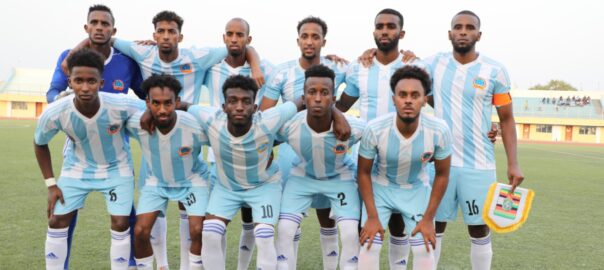
Djibouti national team

A coach’s revolution

Before the new project headed up by Julien Mette began transforming Djibouti’s fortunes, the team were frequently on the wrong end of heavy defeats and even endured a two-year suspension.

FIFA.com asked the Frenchman to tell us more about the philosophy he adopted to lead Djibouti to where they are now. “It involved laying out my coaching methodology and the nature of my relationship with the players, as well as changing their mindsets to focus on the possible, not the impossible. For them, Djibouti were a side that almost always lost games, and that had come to be seen as inevitable. The first thing I changed at the mental level was to enhance self-confidence,” he explained.

“I used week-long training programmes requiring two sessions a day. These included video and educational sessions because Djibouti doesn’t have training centres and the players had never learned these things. I focused a lot on playing with passion and patriotism, because we represent a national team. We watched some videos of the Chilean national team as well as clips of Insigne and Callejon at Napoli to prove to them that you don’t need to be physically imposing to play really well. We tried to improve their positioning on the field, especially from a tactical perspective, and we also introduced some new faces – almost half the squad, in fact. That gave an opportunity to more young players along with some experienced ones,” he added.

The work paid off and Djibouti progressed to the second qualifying round of FIFA World Cup qualifying for only the second time after they eliminated Eswatini. “Eswatini beat us 6-0 in 2015, and I was certain they’d underestimate us. We studied them well by watching videos of their games. I realized they play with the same line-up and formation, so our preparation was easy. We’ve shown ourselves to be strong when facing difficult situations away from home, and when our opponents are pressing us.”

Julien Mette, coach of Djibouti national team

Qatar 2022 qualifying: The coach’s view

“We’re the minnows of this group,” said Mette of Djibouti’s chances in the Qatar 2022 qualifiers, adding: “We’ll face African champion Algeria, who haven’t suffered a defeat for a long time. Some people think they’re going to thrash us and others have said they won’t watch the game, but it’s going to be an honour for us. Djibouti didn’t have a national team for two years and won maybe one game in ten years, so we’re proud to have this opportunity. After all these difficulties, Djibouti players will face Riyad Mahrez and Traore, and this will be wonderful.”

“We know all our opponents. Algeria and Burkina Faso have some top players based in Europe, and even Niger are far ahead from us in the World Ranking. I don’t want to talk about our aims in the qualifiers, but before every game I tell them it’s 11 v 11 and that anything is possible in football. We can beat Algeria if they don’t play well in our game, but at the same time we might suffer a big defeat, but we’ll prepare well to try to win every game,” he added.

Excerpts from Julien Mette’s interview

  • “I want to help Djibouti’s players to play in top leagues overseas so they can bring professionalism to their country.”
  • “A short stature was considered a negative thing in Djibouti, but I believe it can be a positive, and this is what I wanted to instil in the minds of the players.”
  • “All the Djibouti players are amateurs except for Warsama Hassan, who is based in Slovakia, and Aaron Kadame, who plays in Belgium’s third division.”
  • “We beat Eswatini and drew twice with Gambia. We gave Ethiopia a hard time and defeated Burundi.”
  • “We fought hard to live the dream of playing against big teams like Algeria and Burkina Faso, and we’ll seize the opportunity and enjoy it.”
  • “Playing against big teams like Algeria and Burkina Faso is a milestone in developing the game in Djibouti”

FIFA.com
FIFA.com News

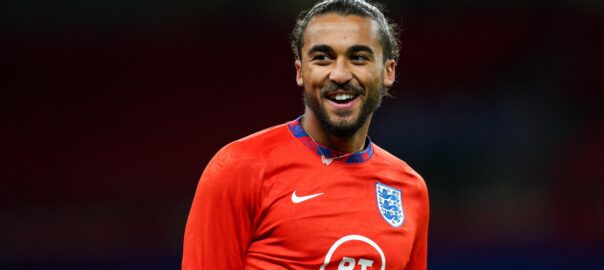
Calvert-Lewin: I want to be the man England rely on to score goals

England's Dominic Calvert-Lewin

  • Dominic Calvert-Lewin is the Premier League’s joint-top goalscorer
  • He discusses his aerial ability & desire to be England’s main man
  • DCL hails James, Richarlison, Rashford and Lewandowski

Dominic Calvert-Lewin’s reputation has, in a few months, skyrocketed proportionately to his torso whenever James Rodriguez or Lucas Digne have swung back their arrows and aimed at the blue bullseye, AKA his head.

The 23-year-old has scored 11 goals in nine appearances for Everton. He is, in a sea of apex predators including Harry Kane, Mohamed Salah and Jamie Vardy, co-leading the swim for the Premier League Golden Boot. DCL made, and scored on – naturally, with a header – his England debut.

Three Lions legends Gary Lineker, Alan Shearer and Wayne Rooney have raved about him. His game has been compared to Didier Drogba’s; his aerial majesty to Cristiano Ronaldo’s. And the man with the Michael Jordan-esque leap-and-hang has reportedly got Real Madrid reminiscing about ‘Bam Bam’ Zamorano’s aerial terrorisation of defences and salivating over luring him to the Bernabeu.

FIFA.com caught up with Calvert-Lewin to discuss his incredible start to the season, whether he’s the best header of a ball in the world, and all things Everton and England.

FIFA.com: Dominic, 11 goals in nine games for Everton. How pleased are you with your start to the season?

Really pleased. Coming into this season I had a good feeling because of the signings we’d made and how hard I’d worked. I really wanted to start fast, and I’ve certainly done that. Consistency is key – I want to keep playing well, first and foremost, and the goals will keep coming.

You’re the Premier League’s joint-top scorer alongside Son Heungmin. Is winning the Golden Boot something you think about?

It’s not necessarily something I think about – the main competition is with myself. I’m competing with myself every day in training to try and better myself, and going into games to try and score goals. It’s nice to be recognised at the moment at the top of the scoring charts. Whoever scores the most goals, the Golden Boot is a by-product of that. I want to be seen up there, at that level.

Your leap, is it a natural gift or is it something you’ve worked on?

My leap is something that I’ve always had. I’ve always been able to jump high. I’ve been blessed with the athleticism that I’ve got. I’ve worked a little bit to try and fine-tune certain aspects – my pace, leap, timing – to make it work on the football pitch, but I always had it in my armoury being able to jump high. I was always good at long jump back in the day at school – nobody could ever beat me.

Did people try and get you to pursue other sports?

100 metres, 200 metres, long jump – they were my kind of things. I think athletics is something I could have potentially gone into, but football’s always been my love and what I wanted to do. I’m very grateful to be where I am now.

Are you the best player in the world in the air right now?

(laughs) I’ve heard that a little bit recently and obviously it’s nice to hear that one of my top attributes is being recognised. I’ve got other aspects to my game, but it’s important to work on your strengths. When I do get a chance in the air, I want to make sure I put it in the back of the net. The aerial game is something I take great pride in.

Can you talk about the difference between Dominic Calvert-Lewin when he arrived at Everton and Dominic Calvert-Lewin now?

I’d say it’s more the mental side. Confidence. The belief in my ability has always been there, but to do it, act upon it is something different. I’ve gained experience, knowledge. Naturally, technically, tactically you improve. I probably had a bit of everything when I first joined Everton, but I was very raw and I had a lot of work to do. I still do now – I’m working and improving every day. There’s a lot more to come from me. But mentally I feel a different player and person, so I’d say I’ve evolved in this way the most.

What’s Carlo Ancelotti like to work under?

Carlo’s top. He’s very much a people person. He came with a reputation of being a good man-manager and to work with him in the flesh, I could see that straight away. He has an aura about him – a friendly aura, he makes you feel comfortable. He lets you enjoy what you do. I’m enjoying my football now more than ever – day in, day out – and then when I step on to the pitch I think that shows. It’s showing in my goals return. I think tactically he’s brought experience and great knowledge to the club. For me as a young striker, you think of the players he’s worked with in the past when he’s giving me advice. He gives it in different ways, subtle ways. You see some of his quotes towards me – it’s a nice way to take things on board. I take everything he says on board. He wants me to improve. He’s on at me every day – every day – to keep getting in the box, hitting it first time, scoring goals. I’m just like a sponge taking it all in.

What was your reaction when you heard rumours James Rodriguez was coming to Everton?

It’s only right that a club of Everton’s size, with where we want to go, attract that calibre of player. For me personally, I was just really excited because I was aware of what he was capable of. I’d seen the great goals he’d scored and the big teams he’d played for. He’s a top, top player and for me, as a centre-forward, I knew chance-creation would be there and it would be down to me to put the ball in the back of the net. It has been and I’m really enjoying playing with him. He’s a different level. He dictates games. He takes players out of games by taking touches. The way he manipulates the ball, he’s very hard to get it off – I don’t think I’ve seen him get tackled, even in training.

What about Richarlison?

Richy’s top. We’ve played with each other for a while now and we’ve got to learn each other’s game and personality. First and foremost, it’s his mentality – he’s a winner. He works so hard for the team. Some stuff that the naked eye can’t see as a spectator, but playing with him, the energy and work-rate that he gives you can’t be underestimated. And the quality he’s got going forward, he’s such a threat. For me to play alongside a player like that, it’s an absolute joy. We enjoy each other doing well – scoring, assisting. When he scores I’m equally as happy for him as he is for me when I score. I’ve got no doubt that he’s got a lot more to come, but the proof is in the pudding with the way you see him play at the moment – he’s got a bit of everything.

How confident are you that Everton can qualify for the UEFA Champions League this season?

We have to be confident. I’m confident, with the quality we’ve got within the squad, that we can achieve Champions League football. But we have to be consistent throughout the season. We can’t afford to have off-days. Sometimes you can’t put your finger on why some results happen, but it’s how you react to them. But if we stay consistent I’ve got no doubt we can achieve big things.

Moving on to international football, how did it feel to make your England debut?

Ah, it was amazing. It’s very cliché to say you dream of it as a kid, but for me it was really true. That feeling of seeing the No9 next to my name in the dressing room and pulling on the England shirt, it was absolutely amazing. Then going on the pitch and scoring… it’s emotional, you think about how proud your family will be. It was just exactly how I dreamed it to be. It doesn’t always go that way. Football moves fast. You play well, you win, you score. You can embrace it, but then it’s suddenly on to the next game, so I just had to take it in and enjoy that moment. But it’s something I want more of. I’m addicted. I want to keep playing for England and doing well and scoring goals.

You had two starts, scored on your debut and put in two good performances. How would you assess your first time away with England on a personal level?

I think it was successful. Sometimes people are unsure if you’re capable of competing at that level, question if you should be there, so you have to prove that you are comfortable and can compete. But I didn’t just want to prove that. I wanted to prove that I could really affect games and bring different qualities to the squad, so I was very happy.

You mentioned the squad, but how determined are you to make a starting place your own?

You have to be. I’m still growing as a player and a person, but the ambition has to be high and my goals has always been high: to play for England and to play regularly for England. Nothing’s changed there. Even when I was nowhere near the England squad, out of the Everton side, my ambition was always to be where I am now and more. That’s where my sights are set: I want to lead the line for England in major competitions and be the man they rely on to score goals.

You scored the winner for England in the FIFA U-20 World Cup final in 2017…

That was a great feeling. As a group, we got everything right at that tournament. I remember going into the final feeling, ‘This is where I’m supposed to be, this is my stage’. After the game I remember running over to my family and celebrating and celebrating long into the night with my family, because they were over in South Korea. To score the only goal in the final, it was a very special moment and something that will stay with me forever.

What are your memories of the senior FIFA World Cup from growing up?

Heartache (laughs). You always want England to do well. You remember England always getting close and not quite winning a World Cup or the EUROs. But as a young boy and a football fan, it was always so exciting to watch England on the big stage. Big players from the Premier League going to represent England in the World Cup, it was always something I looked up to and aspired to. Just because it’s not been done in recent times, it doesn’t mean that I can’t be part of something special, an England team that wins it.

How confident are you that England can win the senior World Cup at Qatar 2022?

I’ve not been in the fold very long – I’ve only had one camp – but I’m confident. Players are doing it for their clubs week in, week out. There are so many quality players in the team. Everybody, to the man, has to back themselves to compete with the best players in the world. I want to be a part of that. I back myself against whoever I’m up against, and I’m sure all the other lads do too. There are a lot of top teams in the world. I had the opportunity to play against Belgium in the last international camp. Belgium are the number one team in the world rankings, so to play against them at the beginning of my international journey, to feel what that level of play is like, it was a great experience in preparing me for what is to come. To win that game and to put in a good performance, I think we showed that England can compete with the best.

You talk about England having so much quality, but who do you think is their best player?

For me, Marcus Rashford. I’d seen a lot of him and he’s an unbelievable player, but I’d never played with him and he was even better than I thought. He’s got everything: pace, power, skill. He’s so sharp, clinical in front of goal. He can finish, he can head. As a centre-forward, playing alongside someone like that fills you with the utmost confidence you can beat whoever you play against. I’ve got no doubt he’s going to be a top, top player for many years.

What about the best player in the world?

(pauses) Robert Lewandowski. He scores so many goals. As a young centre-forward, if I’m to look along the line of top centre-forwards, I would look at Robert Lewandowski and study his game and see what positions he gets in, because I feel he’s got similar attributes to what I have.

What do you like to do off the pitch?

I’m a creature of habit. I like to keep myself on a tight schedule to prepare myself as best I can, ultimately, for playing on the weekend. Football-related, I like to do yoga and have massages and things like that. Other than that, I play a bit of PlayStation with my mates – I enjoy that. I try to learn a bit of Spanish. And when I have free time – it’s been a bit hard at the moment – I like to go for coffees with my mates and be around my friends and go home to see my family.

Finally, what’s your favourite food?

Salmon, in different variations. If a game’s on a Saturday, I’ll have salmon for dinner on a Thursday, salmon on a Friday, and salmon for pre-match. I just love salmon – can you tell? (laughs)

FIFA.com
FIFA.com News

Jordan’s great hope furthering his European education

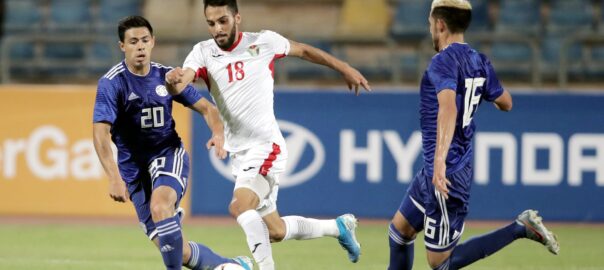
Jordan national team player Musa Al-Taamari

  • Al-Taamari is a pillar of Jordan’s national team
  • He believes Al-Nashama can progress to the decisive round of Qatar 2022 qualifiers
  • The player is now starring in Belgium after making his mark in Cyprus

Keen to continue achieving his long list of ambitious goals, Musa Al-Taamari has had a promising start to his football journey as he hurries to accumulate experience and develop his skills. The young winger carries the hopes of a great many Jordanians, who would love to see him raise his country’s profile in major international tournaments, foremost of which is the FIFA World Cup Qatar 2022™.

With only three games left in Group B of the AFC qualifiers for Qatar 2022, Jordan would have to win them all to ensure qualification for the next round. Waiting in store are Kuwait (with whom they share 10 points), Nepal, and group leaders Australia (12 points) for what will effectively be three finals.

Jordanians are banking on their star Al-Taamari and his professional team-mates to bring something extra to the team and help them into the region’s final qualifying round for only the second time. The first time Jordan went that far was in the Brazil 2014 qualifiers, going all the way to the CONMEBOL–AFC intercontinental play-off, where they lost to Uruguay.

“We know full well that we can’t afford to drop any points,” Al-Taamari said of the qualifiers. “We’ll approach every match with the aim of winning it. We’re confident we’ll perform as we always have (playing with a fighting spirit) so as to achieve victory.”

Building on past successes

Next week, Al-Taamari and the rest of the squad will gather for a training camp in Dubai, where Jordan will play friendlies against Iraq and Syria. That will be an opportunity to bring the all the group together, having not played an international for months due to the coronavirus.

Building on some fine performance and results at the 2019 AFC Asian Cup, Al-Nashama have the potential to come back strongly and keep their hopes alive in the current World Cup qualifiers. At the aforementioned Asian Cup, Jordan beat Australia and Syria to top their first-round group.

“We went to that competition determined to show our strength and prove we had a lot to offer in games against the biggest teams,” said Al Taamari. “What we achieved in the first round gave us a lot of confidence to build on in the future.”

Jordan could well have advanced further in the UAE, but their last-16 defeat to Vietnam left a wound from which the team and the coaches aim to learn.

“Everything was going well until that game. It was one of those days when you feel football is not fair to you. We had no luck converting our chances or even our penalties [in the shootout]. Perhaps we wasted a historic opportunity to go far at that tournament.”

A European journey

Although still 23, Al-Taamari has a mature outlook and knows exactly what he needs to do. After rising to stardom in the Jordanian league with Shabab Al-Ordon and Aljazeera, he wanted to fast-track his progress. In the summer of 2018, he moved to Cyprus to play for APOEL, where he had a magnificent first season and and helped the club win the league and the Cypriot Super Cup.

Unsurprisingly, fans voted Al-Taamari the best player in the league and the best left-winger among foreign players for the 2018/19 season. He was also selected by several pundits for their team of the year.

“It was the perfect season for me,” he said. “I wanted to show my best, and thank God I succeeded. With APOEL I reached new heights, especially as I played in the UEFA Europa League and the UEFA Champions League. When you play against big names like Ajax and Sevilla, who have won European titles, you know you are competing at the very top.”

Jordan national team player Musa Al-Taamari

Al-Taamari then moved to the Belgian Pro League last month after signing for Oud-Heverlee Leuven. And though the season was already eight games old, he was soon in the thick of the action, facing heavyweights Anderlecht and Club Brugge.

“After the Cypriot league, I had to move to a championship where I could get closer to top European standards. In Belgium there are many big clubs that always feature in the Europa League and the Champions League. I soon saw the difference between Cyprus and Belgium. Here you spend more hours at your club and could have to attend two training sessions a day, several times a week.”

Al-Taamari wants to benefit from the Belgian experience as much as possible. “I have a number of objectives I want to achieve there: to develop my physical skills in terms of speed and running stats during games; to be able to carry out attacking and defence duties at the same time, while improving some other details that are important for every professional footballer.”

Al-Taamari has won the backing of all Jordanians over the past two years. Now that he is playing in the Belgian league, he will be watched even more closely to see what he can accomplish there. In addition to being an ambassador for Jordanian football in Europe, he remains one of the central pillars of the national team and someone on whom great hopes have been pinned.

FIFA.com
FIFA.com News