Category Archives: 2022 FIFA World Cup

Pacific classic in store as South American qualifying resumes

Chile s Erick Pulgar (L) vies for the ball during the Copa America 2019 semi-finals soccer match between Chile and Peru, at Arena do Gremio Stadium in Porto Alegre, Brazil, 3 July 2019.

Although it is still early days, the stakes are already high for a raft of South America sides as they gear up for the third round of qualifying games for the FIFA World Cup Qatar 2022™.

FIFA.com previews all the action.

Matchday 3 schedule (all times local)

12 November

Bolivia–Ecuador (16:00)

Argentina–Paraguay (21:00)

13 November

Colombia–Uruguay (15:30)

Chile–Peru (20:00)

Brazil–Venezuela (21:30)

Peru v Chile - FIFA 2018 World Cup Qualifiers

The big match

Chile–Peru: Estadio Nacional Julio Martinez Pradanos (Santiago, Chile)

Though still early days in this marathon competition, the latest edition of El Clásico del Pacífico already looks crucial for two selections with fewer points than expected.

With the return of Claudio Bravo (after 1099 days) and Jean Beausejour, Chile coach Reinaldo Rueda has experienced players to call on in the absence of Gary Medel and Charles Aranguiz. In addition, he can finally count on midfielder Erick Pulgar, who missed the opening two fixtures due to COVID.

Ricardo Gareca, for his part, will have to make do without a trio of key players in Carlos Zambrano, Paolo Guerrero and Jefferson Farfan. Raul Ruidiaz, who has 12 goals in 18 games in the MSL, seems the obvious choice to lead the line.

The stat: Chile have never lost a home World Cup qualifier to Peru, drawing two and winning eight of their 10 meetings, including the last four.

Argentina v Paraguay - FIFA 2018 World Cup Qualifiers

Elsewhere

Bolivia, with nothing to show from their opening two games, desperately need a result at home against Ecuador. In conversation with FIFA.com, La Tri coach Gustavo Alfaro sought to dampen expectation after his side put four goals past Uruguay last time out. That said, history favours the visitors, who have won three and drawn two of their last five qualifying clashes with Bolivia in La Paz.

Playing once again at La Bombonera in Buenos Aires, Argentina will be trying to maintain their perfect start against Eduardo Berizzo’s undefeated Paraguay. With Lionel Messi declared fit, the hosts will be looking for revenge against an Albirrojaside that won their first World Cup qualifier in Argentina on their last visit. Antony Silva will once again start in goal for Paraguay.

Uruguay and Colombia face off in the round’s other standout fixture. The unbeaten Cafeteros will be without Davinson Sanchez but welcome back goalkeeper David Ospina. La Celeste, meanwhile, will be buoyed by the return of Edinson Cavani following their loss in Quito and the recent injury to Federico Valverde. Starting for the visitors should be Diego Godin and Luis Suarez who, along with coach Oscar Tabarez, are the only survivors from Uruguay’s sole qualifying win in Colombia (1-0 in 2008).

Finally, an in-form Brazil welcome a Venezuela side in dire need of their first points. And while Tite is expected to keep Neymar for next Tuesday’s trip to Uruguay, A Seleção still carry a formidable threat. Nor can the visitors take much encouragement from their head-to-head: of their 16 World Cup qualifying games, Brazil have won 15. The only draw, however, did occur on Brazilian soil.

“We need to be at our very best,” Vinotinto defender Rolf Feltscher told FIFA.com.

Player to watch

Edinson Cavani (Uruguay)

Uruguay not only welcome back the top scorer from the last South American qualifiers (10), but also the country’s all-time second-highest scorer in the preliminaries (15). However, just one of Cavani’s 15 goals came against Colombia.

Did you know?

Counting the current edition, Carlos Queiroz (6) and Oscar Tabarez (5) have been involved in 11 World Cup qualifying campaigns. However, while the Portuguese achieved his with four different teams, all of the Uruguayan’s have been with La Celeste.

On social media

FIFA.com
FIFA.com News

Tapia: I’m absolutely certain Peru will qualify

Renato Tapia of Peru celebrates | Peru v Brazil - South American Qualifiers for Qatar 2022

  • After debuting at Russia 2018, Peru want more of the same in Qatar
  • Contenders for one of South America’s four direct qualifying berths
  • Key midfielder Renato Tapia talks to FIFA.com before double header

When Peru upset the odds in 2017 to reach their first FIFA World Cup™ for 36 years, Renato Tapia was among a crop of exciting young talents in Ricardo Gareca’s promising squad.

Three years on and the midfielder’s resume includes World Cup experience, a Copa America final and a recent move to Spain’s Celta Vigo, after honing his craft for seven seasons in Dutch football. Now 25 and enjoying the best period of his career, the Peruvian is facing into his second World Cup qualifying campaign with the confidence of one who has already endured its rigours and come out smiling.

And while South America’s road to Qatar 2022 has only just begun, no one is surprised anymore by the either Gareca’s Blanquirrojan or Tapia and the rest of his generation. “We will qualify,” he insisted ahead of Peru’s forthcoming fixtures against Chile and Argentina.

FIFA.com: Despite a new country, new league, new club and new team-mates, you’ve been a fixture in the Celta side since your arrival. You must be pleased with how well you’ve adapted.
Renato Tapia
: I thought it’d take me a bit longer with it all being new and with the Spanish league being a lot more demanding, but I’ve been one of the most-used players. At Feyenoord I didn’t have much playing continuity, so I didn’t expect to have such a full-on start to the season. It’s something I’ve been after for a long time.

When it comes to winning back possession, you have one of the best records in the league, yet Celta are struggling near the foot of the table. How can the club turn things round?
While personally it’s very nice to have those stats, they count for nothing if we as a team aren’t getting the three points. We’ve not been getting the results we wanted, but in terms of overall play and creating chances, we’ve put on some very good performances, especially at home. It is a long championship and hopefully our fortunes will turn soon. If not, then we can expect to suffer just like the last two years (Ed’s note: Celta have flirted with relegation in the last two seasons).

Philippe Coutinho of Barcelona is challenged by Renato Tapia of Celta Vigo | La Liga Santander

You moved to Europe at such a young age that you never got to play professionally in Peru. That first happened in the Netherlands. Can you tell us what you took from your time in Dutch football?
I experienced a lot of things that have made me mature faster. When I was 16, I went to FC Twente for a trial and ended up staying. For years I came and went between Peru and Holland, so there was a lot of travel, but I really enjoyed my time there. The first thing I did was to learn Dutch, but I liked it. I’m interested in languages and learning about other cultures.

In terms of the football, I took a great deal from the experience. In Holland they’re more daring when it comes to using young players, the idea being that, by the time you’re 18 or 19, you have 50 top-flight games under your belt. That helped me a lot when I broke into the senior national side. You see the team from a different perspective.

With 53 caps, you’re something of a Blanquirroja veteran at this stage. What does Ricardo Gareca expect from you in midfield?
A great deal of commitment and a lot of composure on the ball. Ricardo is a very good coach, and someone who sees who sees the tactical and technical side of things. He’s a guide. He talks to us a lot and really helps us decipher what goes on during matches, pointing out details that you just don’t notice in the heat of battle. He’s taught me to grow as a player, and I value him a great deal.

After taking Peru to the World Cup and the final of the continental championship, Gareca is something of an idol. What aspects of his character would you single out?
A lot of people regard him as very serious, but he has a sense of humour. When we catch him in a good mood, we try to joke with him, which is when you realise that he was a player too and understands the environment and how to manage a group. In a team the most important thing is communication, and both he and his coaching staff know how to do it very well. I think that’s been the key to having us more relaxed and solely focused on football.

Renato Tapia and Ricardo Gareca of Peru

In this your second World Cup qualifying campaign, Peru have the same nucleus of players that made it to Russia. Will that experience help this time around?
These qualifiers are three times as complicated. The other teams now know how Peru play, that we’re a very inventive team, especially in the final third. This is not the Peru of old that were vulnerable at home and often lost on the road. On the way to Russia, certain things happened that made us realise that we were on par with all the other teams, and that we could get good results anywhere. We had our first ever win in Quito, we won in Paraguay for the first time in 12 years… That gives us another perspective on these qualifiers.

The Peru team walk out to the pitch | Peru v Denmark: 2018 FIFA World Cup Russia

It’s fair to say that Peru are now firm candidates for one of four automatic tickets to Qatar. Will that extra pressure take a toll on the team?
It’s about getting used to it as we’ve never had it before. The hardest thing is not reaching the top but staying there. Based on what we’ve done over the last four years, you could say we deserve to be at the next World Cup, but we know that’s not how things work. Having the same players as the previous campaign is a plus, and I think we’re going to get a lot better. Our aim is to be in the top four and not have to rely on the play-offs. I know we’re going to qualify, I’m absolutely certain. I say that from the heart, just as I said it after the opening game of the previous qualifiers. With a big effort and dedication from everyone, we’ll make it.

Would you be bold enough to predict which teams will qualify?
That’s hard! Ecuador, for example, have their U-20 players that reached that World Cup and did very well. They’re going through the same generational change that we had four or five years ago. Venezuela also have players who three years ago were runners-up at the U-20 World Cup. I can’t say that they’re not going to qualify. So, no, I couldn’t tell you who the top five will be, counting the play-off berth. The only thing I can guarantee you is that Peru will be among them (laughs).

After a point away to Paraguay, you scored in what was a very good performance against Brazil, despite the defeat. What has the team taken from their start?
We weren’t happy with our performance against Paraguay. While it’s true that we ended up with a point, we could just as easily have lost or won that game. So we couldn’t take a lot of positives from it or be happy about drawing in that manner. However, we played very well in the Brazil match and came away with positives, in spite of losing. I’ll hold on to the good things and look to improve on the bad.

Renato Tapia of Peru fights for the ball with Alexis Sanchez of Chile

Two significant rivals are up next: Chile, who desperately need a win, and an Argentina side that have hit the ground running. What would be a good return for Peru from this double header?
We always aim for all six points, no matter who the opponents are. Chile have been among the elite for many years now and proved to be a complicated opponent for us in the last qualifying campaign. The key will be to go out and battle them on an equal footing. And Argentina, for their part, have a lot of new faces, but they’re players of quality who seem at ease with international responsibilities. People like Lautaro [Martinez], [Leandro] Paredes and [Nicolas] Tagliafico… They’re going to be two very difficult matches, but we’re going to try to win them both.

After the experience of Russia 2018, what would it mean for this group to contest the Qatar World Cup?
We’d be a lot more mature going into it. I think if the group keeps developing like it is, then by that stage we could be talking of a team with almost everyone heading for 100 caps. We could be at a whole new level and have a different groove. As a group, you’d be talking about a whole other Peru.

FIFA.com
FIFA.com News

Feltscher: I get goosebumps imagining Venezuela in Qatar

Rolf Feltscher of Venezuela fights for the ball with Alfredo Morelos of Colombia

  • Rolf Feltscher insists that, despite a slow start, Venezuela can reach Qatar 2022
  • The right-back assesses upcoming opponents Brazil and Chile
  • He also discusses Zlatan, Michael Jackson and MMA

With their first two fixtures against Colombia away and Paraguay at home, Venezuela fans knew they were in for a tough start to FIFA World Cup Qatar 2022™ qualifying. For all that, La Vinotinto would not have been expecting to lose both matches.

“People may be discouraged but this is a very long process and we have more opportunities to accrue points coming up,” Venezuela defender Rolf Feltscher told FIFA.com. “We’re united, mentally strong, and the morale is good.”

The LA Galaxy right-back came off the bench in his side’s opening fixture and started their second.

“Against Colombia we were too open and allowed them to hit us on the break,” said the 30-year-old. “We remedied that against Paraguay, but we didn’t use the ball well enough. The good thing is that there’s plenty of room to improve.

“The Paraguay game became a bit scrappy, although we could have drawn or even won it. We had a goal disallowed, incorrectly to my mind, and a penalty saved. If we’d taken one or all three points, the outlook today would be different.”


Rolf Feltscher (Venezuela)

Rolf Feltscher of Venezuela looks on during a group C match between Uruguay and Venezuela 

abriel Jesus of Brazil fights for the ball with Rolf Feltscher of Venezuela

Lionel Messi of Argentina fights for ball with Rolf Feltscher of Venezuela

Hirving Lozano of Mexico crosses the ball in front of Rolf Feltscher of Venezuela 

Rolf Feltscher of Venezuela fights for the ball with Alfredo Morelos of Colombia

Rolf Feltscher celebrates a goal with Zlatan Ibrahimovic

Rolf Feltscher of Parma in action against Mauricio Pinilla (R) of Palermo

Rolf Feltscher poses during the team presenattion of MSV Duisburg

Rolf Feltscher of Parma attends the unveiling of their new kit 

Diego Fabbrini of Italy U21 is challenged by Rolf Feltscher of Switzerland U21

Rolf Feltscher of Grasshopper Club

Rolf Feltscher of U20 Switzerland (L) and U20 Germany forward Manuel Schaeffler (R) 

Asked how he had been handling the criticism, Feltscher responded: “I shield myself and do self-assessment and -criticism, but I’m not surprised. When you lose, everything is wrong, and when you win, everything is rosy.

“You can play badly and give your opponents 50 chances, but if you get the only goal of the game, then people are happy. If you’re the better team but still lose, they get angry. But it’s always been like that.”

The defender is speaking from experience given that this is his third World Cup qualifying competition since Cesar Farias came calling in 2011. In fact, he made his Vinotinto debut in November of that year against Bolivia during the Brazil 2014 qualifiers. Later, under Rafael Dudamel, he played almost all of the second half of the Russia 2018 preliminaries.

abriel Jesus of Brazil fights for the ball with Rolf Feltscher of Venezuela

The player’s backstory is also worth telling. Rolf was born in Switzerland to a Swiss father and a Venezuelan mother. After they separated, he and his brother Frank, who is also a professional footballer, moved with their mother to Venezuela in 1997. The two siblings returned to the Old Continent in 2000 to study and play football, albeit with a strong attachment to Venezuela.

Rolf debuted for Grasshoppers at the age of 16 and represented Switzerland at the UEFA U-17 Championship in 2007 and the U-20 one in 2008. However, it was while he was on the books of Parma that the offer came to play for the Venezuela senior team, and he accepted.

“People have said things about my dual nationality, but in the end, it depends on how you feel,” said Feltscher, who has never played club football in Venezuela. “I was born in Switzerland and grew up there, and I love the country. Why should I lie about that?

“Just as I love Venezuela: the country, the food, the culture, and I have family there. What counts is that you give your all in the moment.”

Nor does he regret his decision. “Would I have played at a World Cup if I’d continued to represent Switzerland? Maybe. But I’ve never had things easy and imagining myself helping Venezuela qualify for their first World Cup gives me goosebumps. I couldn’t put a price on that. It would be the ultimate.”

Hirving Lozano of Mexico crosses the ball in front of Rolf Feltscher of Venezuela 

Getting points on the board

Up next for Venezuela is a trip to Brazil then a home tie against Chile.

“With Brazil you need to be at your very best to get a good result,” Feltscher said. “No team can have an off day against them and hope to win. And that’s still the case even if there are no fans.”

Asked if he’s been studying the Brazilian strikers he could be facing, he responds with typical good humour. “As a full-back, I always have to deal with the best. Whether its forwards or midfielders, you always face the most technical players, the fastest, the best in every category, so it’s nothing new. Moreover, going up against good players really motivates me.”

Chile he sees as more negotiable: “There was a time when Venezuela felt inferior to other teams, but not anymore. Player for player, we’re all in good teams. In the end, they’re just 11 people out on a pitch, the same as us.”

Feltscher is willing to handle both his own expectations and those of others.

“I understand expectations are high, but I know what we can achieve as a team with the players we have available,” he said. “We have young players bursting with talent and potential. No doubt about it, we can be in Qatar.”

Lionel Messi of Argentina fights for ball with Rolf Feltscher of Venezuela

Feltscher and…

  • His career. As well as Switzerland and Italy, he’s played in Germany and Spain. “It would be nice to do so in England, but I’m fine in Los Angeles. MLS is competitive and teams are getting stronger all the time. Players coming here won’t have it easy.”
  • His tattoos. “The most important ones relate to my daughter. I have one of her hands tattooed as well as her face and a kiss.”
  • His admiration for Michael Jackson. “As an artist, he was unique, and all his songs are wonderful! As a kid, he was all I listened to. I even got a tattoo of his dance move.”
  • His spell playing with Ibrahimovic. “I gave him some assists. He has a beautiful personality that’s very unique, which I enjoyed. When you understand him, you can learn a lot.”
  • His future in singing: As a hobby. I sing everywhere and I could have a career writing my own songs. Instead of playing in front of 80,000 football fans, I could sing R&B in front of 80,000 concert-goers! (laughs)
  • His future in mixed martial arts: “I love it, just like boxing, but my wife doesn’t want me to do it. She says I’m too pretty to have my face rearranged! (more laughter).

Rolf Feltscher of Parma attends the unveiling of their new kit 
FIFA.com
FIFA.com News

Antony Silva: I'm putting all my chips on being in Qatar

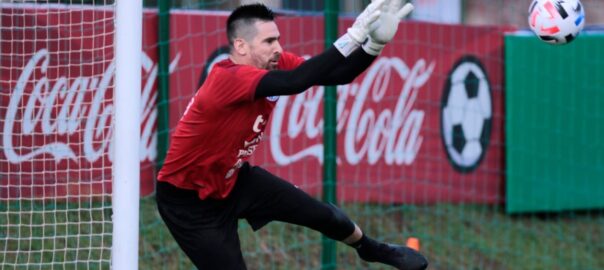
Paraguay's Anthony Silva is seen during practice

  • Antony Silva was key in Paraguay’s win over Venezuela
  • Keeper talks about his penalty save and role in these qualifiers
  • “We can work with a bit more peace of mind,” he tells FIFA.com

“When he stood so straight behind the ball, I felt he wouldn’t be able to swing it inside me, so I didn’t hesitate to throw myself to my left. And that’s exactly where he put it.”

Antony Silva vividly remembers the stoppage-time penalty he saved from Yangel Herrera, which allowed Paraguay to return from Venezuela with a 1-0 win in their second match of South American qualifying for the FIFA World Cup Qatar 2022™.

In fact, the player recalls everything he did from the moment the referee sought confirmation from his Video Assistant Referee (VAR) that Rolf Feltscher had indeed been fouled. “I kept saying to myself, ‘this can’t be happening to us again’,” Silva tells FIFA.com, referring to the late equaliser his side conceded to Peru on the opening matchday.

“We gave everything from the first minute, but we couldn’t score. They’d had a goal disallowed and we finally went ahead near the end. But then they signalled eight minutes of added time! That’s almost another game, which is why I said to myself, ‘this can’t be happening to us.'”

With the penalty confirmed, the mind games began. “We’d studied several of their kickers, but not Herrera, who convinced his team-mates to let him take it. Several of our guys told me he was going to curl it to my right, and so I was imaging them telling me afterwards, ‘I told you he’d put it there’,” the 36-year-old recounts with a laugh.

Paraguay's Anthony Silva saves a penalty kick against Venezuela

At the same time, he knew that, in compliance with the new rule, he had to have at least one foot on the goalline when the kick was taken. “I think that helps the goalkeeper as it forces you to wait until the very end to decide which way to go, and that can often throw off the kicker.”

Silva trusted his judgement and managed to push the kick out for a corner, although he still had to be on his guard. “I didn’t want my team-mates to get distracted by congratulating me because, if we’d conceded then, the penalty save would have been for nothing.”

As fate would have it, the keeper was also responsible for the last penalty saved in the South American qualifiers. Back in March 2017 in the preliminary competition for Russia 2018, he denied Brazil’s Neymar but could not prevent Paraguay losing that day 3-0.

“I don’t feel like a penalty specialist, and anyway this one was worth much more for what it meant to us. Taking four of the first six points is very good. It puts you on track and lets you work with a bit more peace of mind.”

Paraguayan National soccer team player Anthony Domingo Silva

Calm presence and low profile

To be fair to Silva, he appeared composed even before the game. And that was impressive considering he was a substitute for the opener against Peru and there were doubts raised by some sections of the press and public when he was named as replacement for the injured Roberto Fernandez.

“I knew what people were saying but, including the youth sides, I’ve been around the national team for 20 years. I don’t have anything to prove to anyone,” insisted the Asuncion native, who played at the FIFA U-17 World Cup in Trinidad and Tobago in 2001 and at the U-20 equivalent two years later in the UAE.

“As for the journalists who said that I hadn’t started a game for eight months, they were right! My last game had been with Huracan in February in the Argentinian league, but I never stopped training. What’s more, I’d been training with the national team before signing for Club Nacional in September,” says Silva, who contracted and recovered from COVID-19 this year.

The veteran knows better than most how a goalkeeper’s fortunes can ebb and flow. “I started the previous South American qualifiers as first-choice, but when the new coaching team arrived, they preferred others. They came back to me again in the final stretch and, from being practically out of the running, we almost made the play-off.”

Anthony Silva, of Paraguay celebrates during a match between Colombia and Paraguay

In all, Silva started 11 of Paraguay’s 18 matches in the Russia 2018 campaign, the first four and the final seven. With him in the side, La Albirroja garnered 16 of a possible 24 points and conceded 11 of their 25 goals against (an average of one per game).

In spite of that, Silva would never put his coach Eduardo Berizzo in an awkward situation. “I feel like I delivered for him, because he called me into the side when I wasn’t playing, but I’d never demand anything from him. Being ready is my job, and if the El Gato [Fernandez] comes back, I’ll be the first to encourage him.”

Up next

Coming up fast on Paraguay’s horizon are Argentina away and Bolivia at home. “Argentina have a lot of pedigree, but I still haven’t seen them perform at their very best. Besides, as with everyone except Brazil, they don’t always find it easy at home. A win there would be ideal, but not losing would be a good result too,” he says.

“Bolivia are having a tough time right now, so it’s imperative we get three points in Paraguay, especially having already dropped points at home to Peru. The responsibility will be ours, but we’ve shown already that we’re able to assume it.”

Looking further ahead, Silva accepts that this could be his last chance to play at a World Cup. “The next one’s a long way off,” he admits, laughing. “I’ll decide about that later. In any case, I’m aware that [any involvement] would depend on me still performing at the highest level. For now, I’m putting all my chips on being in Qatar.”

FIFA.com
FIFA.com News

Cazorla: Luis Enrique is on the right track with Spain

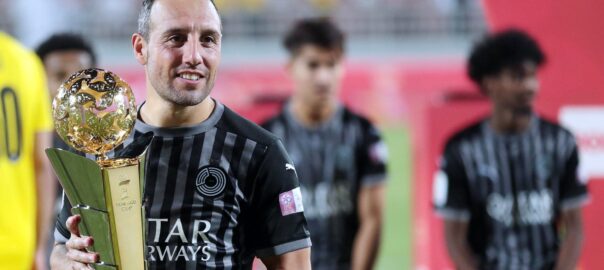
Al Sadd team player, Santi Cazorla

  • Santi Cazorla was part of Spain’s golden generation
  • The ex-Arsenal and Villarreal midfielder joined Al-Sadd earlier this year
  • He talks about Qatar’s World Cup preparations and being coached by Xavi

Santi Cazorla wrote his name large in Spain’s football history. He was a member of a golden generation that dominated world football for years, earning La Roja one FIFA World Cup and two UEFA European Championships.

Now 35, Cazorla made his senior Spain debut in 2008 and has proved over the years that he is a midfielder of unique qualities. His nickname, El Mago (the Magician), is testament to his laser-like passes, sumptuous dribbling skills and two-footed shooting.

Despite some long and serious injuries, Cazorla’s playing career has still endured. After impressing at his former club Villarreal, which he rejoined in 2018, he caught the attention of Qatar’s Al Sadd and their coach Xavi, who convinced him to move to the country that is set to host the FIFA World Cup in two years’ time.

Four months after touching down in Doha, FIFA.com spoke with the Spaniard about his move to Qatar, his time with La Roja, his experience with Luis Aragones and Vincente Del Bosque, and his opinion of Xavi, the Qatari league and Al Sadd.

FIFA.com: Can you tell us about your decision to move to Qatar and play for Al-Sadd?
Santi Cazorla
: It’s an exciting experience to move with your family to a new country. In fact, I spoke with Xavi several times about Qatar and Al Sadd, and he encouraged me do what he did by joining the club. He stressed how strong the competition is. Al-Sadd play very good football and always target local and continental titles. I’ve come here to do my best and help the club win titles. I’m happy in Qatar and think it’s the best place to end my career.

You started well with a league title this year and scored your first official goals in one of the FIFA World Cup Qatar 2022™ stadiums. How did that feel?
It felt great to score in one of the Qatar 2022 stadiums. I think I’ll remember that forever. We won that match comfortably, and I got two goals and made a good impression by giving my all for the team. Thanks to my team-mates, I was able to adapt well from the beginning. It was a good start to win the Qatari Stars Cup.

But luck wasn’t on your side in the 2020 AFC Champions League?
Our goal was to reach the final, particularly as the games were being hosted in Doha. However, the fact that we played successive games in such a short period made it difficult for all of us. I think we did well in the group stage, and the Persepolis game was very close. We created many chances but unfortunately didn’t capitalise on them and ultimately lost due to a lapse in concentration on that corner kick.

Looking back, we’re still frustrated by the result, but it’s forcing us to improve. We’ve made the Emir Cup final, and we’re top of the Qatar Stars League. We need to maintain this momentum and try again for the AFC Champions League in 2021.

You’re currently playing under your friend and former team-mate Xavi. What can you tell us about him as a player and a coach?
Xavi is a great player and the whole world saw what he did with Barcelona and the national team. He’s one of the best midfielders in history, and he proved this with his great performances and the titles he won. It’s great to play under his management at Al Sadd. He’s doing a great job with the club and has big ambitions, and I think everyone appreciates what he does.

How do you see his coaching future, given that many people would love to see him in charge at the Camp Nou, like Guardiola did before?
Without a doubt, Xavi is a great coach. I deal with him on a daily basis, and the many leadership qualities he had as a player he now has as a coach. He’s making great strides as a coach and brings his own philosophy. I think he’ll be Barcelona coach one day, but that’s his decision and he’ll know when it’s the right time to take that step.

Even though he’s a graduate of La Masia like [Pep] Guardiola, that doesn’t mean he’ll be a copy of him. He has a different coaching style and a lot of tactical ideas, so I’m sure he’ll be a great coach. We all need to wait and see.

Al Sadd team player, Santi Cazorla

Take us back to when Luis Aragones first called you up to the national team ahead of EURO 2008?
I owe him a lot. This late great coach gave a lot to Spanish football and provided many players the opportunity to shine and make it all the way to the top. I remember getting this call-up before EURO 2008. As a young player, it felt great to get this huge opportunity.

Spain won the title and you played your part in it?
It was amazing. I played alongside Xavi, David Silva, Iniesta and others. I learned a lot from them, and they supported me during our training camp and in preparing for matches. I remember that difficult game in the quarter-finals (against Italy). I came on in the second half for Iniesta and the match went to penalties. I was nominated to take the second penalty. The pressure was immense, but the motivation I got from my team-mates helped me convert it.

How did it feel to play in the final and win the title?
A final is never over until it’s over, especially when it’s against Germany. We had to maintain our concentration from beginning to end and tried to control the game. We ultimately achieved that. We could’ve scored more goals but were happy to win a major title after a 44-year drought.

While it’s usually harder stay on the top, things seemed easier four years later at EURO 2012?
That’s true! Despite having several strong contenders, this tournament was much easier. We dominated all our matches, and in the final against Italy we scored four goals quite easily. I think we were much better than all our opponents.

Do you think that win compensated for your missing out on the 2010 World Cup?
The World Cup is the most prestigious tournament a player can ever be part of. Unfortunately, an injury meant I couldn’t join my team-mates on their way to winning that tournament. But I was definitely happy with what they achieved there. A year earlier, we came third at the 2009 Confederations Cup [in South Africa] and perhaps that gave us the impetus to go back and win the World Cup title.

Matt McKay (L) of Australia competes with Santi Cazorla of Spain during the 2014 FIFA World Cup Brazil Group B match between Australia and Spain at Arena da Baixada on June 23, 2014 in Curitiba, Brazil. 

Four years later, you got a chance to play at Brazil 2014?
It wasn’t the appearance that I’d hoped for. It was a shock for everyone that we exited at the group stage. However, that’s football. Sometimes luck isn’t on your side when you need it. Despite that, I’d like to thank coach Vicente del Bosque for giving me this opportunity. He’s a great coach who helped La Roja win everything during this golden era. He’s a man who influenced so many players.

With two years left until Qatar 2022, how do you see the preparations in the host country?
We’re all excited here. I’ve been really amazed by the preparations in Qatar. They seem to be ready to host one of the best finals in history. I’ve played in some of the World Cup stadiums, and they’re really impressive with their designs and pitches. I think all the visiting players and fans will experience a fantastic atmosphere in two years’ time.

What’s your opinion on the new-look Spanish team that’s being shaped right now?
It’s great that the team is being built this way. We now have so many promising young players who’re doing very well given their actual experiences. I think Luis Enrique is on the right track, and we should give them the time needed to develop and gain the necessary experience so that they can come to the World Cup ready to compete again for the title.

FIFA.com
FIFA.com News