
Category Archives: Match Analytics 2026 World Cup

Match preview: Portugal vs Croatia

Portugal head into their World Cup 2026 last-32 tie against Croatia in Toronto with a place in the last 16 at stake after finishing second in Group K. Their group campaign included a draw with DR Congo, a draw with Colombia, and a commanding 5-0 win over Uzbekistan, which was enough to secure progression.

Roberto Martínez’s squad remain unbeaten so far in the tournament, recording one victory and two draws. However, they were unable to top their group and now face a knockout test against Croatia in a match that could define their campaign.

Croatia, meanwhile, reached this stage after finishing second in Group L. Their tournament began with a 4-2 defeat to England, but they recovered with a 1-0 win over Panama and a 2-1 success against Ghana to move into the knockout phase.

Date: Thursday, July 2, 2026
Kick-off Time: 19:00 Toronto local time (UTC-4)
Venue: Toronto Stadium, Toronto, Canada
Venue Capacity: 45,736
Opponents: Portugal vs. Croatia (Round of 32)
Portugal has historically dominated this fixture, remaining unbeaten in six competitive encounters (winning five and drawing one) and losing just once overall in 10 meetings

Portugal’s form, control and attacking concerns

Portugal produced record passing numbers during the group stage, completing 1,690 passes and averaging 62.5% possession, their highest figure at a World Cup. Despite that dominance in control, their attacking output was limited compared to previous tournaments.

They registered 37 shots and 12 on target across the group phase, which is among their lowest attacking returns in recent World Cup history. In 2018, only fewer attempts and shots on target were recorded for them than in this edition’s opening stage.

Cristiano Ronaldo, now 41, scored twice against Uzbekistan but failed to find the net in the draws with DR Congo and Colombia. If he features against Croatia, it would be his ninth World Cup knockout appearance, though he has never scored in any of his previous eight, despite 29 attempts in such matches.

Midfielder Vitinha has been central to Portugal’s build-up play, completing 270 passes in the group stage. His performance against Colombia stood out, as he completed all 54 of his passes, matching the record for a midfielder in a World Cup match with perfect accuracy.

Last 5 Portugal matches stats

FIFA World Cup

FIFA World Cup

FIFA World Cup

International friendlies

International friendlies

Colombia 0 – 0 Portugal

Portugal 5 – 0 Uzbekistan

Portugal 1 – 1 DR Congo

Portugal 2 – 1 Nigeria

Portugal 2 – 1 Chile

2026/06/28

2026/06/23

2026/06/17

2026/06/10

2026/06/06

Croatia’s recovery and tournament record

Croatia’s campaign started with a setback against England, where they were level at 2-2 before eventually losing 4-2. They responded strongly by beating Panama 1-0 and Ghana 2-1, securing their place in the knockout rounds.

Zlatko Dalić’s side now aim to win three consecutive matches at a major tournament for the first time since their run to the 2018 World Cup final. Their consistency in reaching this stage continues, as this is their fourth appearance in the knockout phase of the competition.

The Croatian team also carries individual milestones into the match. Luka Modrić could reach 23 World Cup appearances, placing him among the competition’s most experienced players, alongside figures such as Paolo Maldini and Manuel Neuer.

Last 5 Croatia matches stats

FIFA World Cup

FIFA World Cup

FIFA World Cup

International friendlies

International friendlies

Croatia 2 – 1 Ghana

Panama 0 – 1 Croatia

England 4 – 2 Croatia

Croatia 2 – 1 Slovenia

Croatia 0 – 2 Belgium

2026/06/28

2026/06/24

2026/06/17

2026/06/07

2026/06/02

Historical edge and standout statistics

Portugal holds a strong historical record against Croatia, with seven wins, two draws, and only one defeat in ten meetings. In competitive matches, Portugal are unbeaten across six encounters, winning five and drawing one.

Croatia’s recent record against European opponents at the World Cup has been less positive. After strong early results in past editions, they have gone three matches without a win in such fixtures, starting from the 2018 final defeat to France, followed by a draw with Belgium in 2022 and a loss to England in this tournament’s opening round.

The match also carries significant individual milestones, as Cristiano Ronaldo could extend his World Cup appearance tally to 25, while only Lionel Messi, Lothar Matthäus, Miroslav Klose, and Ronaldo himself would be above Luka Modrić if he plays.

Past H2H Results

UEFA Nations League

UEFA Nations League

International friendlies

Croatia 1 – 1 Portugal

Portugal 2 – 1 Croatia

Portugal 1 – 2 Croatia

2024/11/18

2024/09/05

2024/06/08

Prediction and expected outcome

Portugal come into this last-32 clash as slight favourites, largely due to their strong historical record against Croatia and their unbeaten run in the group stage. Croatia, however, arrive with confidence after recovering from an opening defeat to England and securing their place in the knockout rounds with two wins.

Roberto Martínez’s side have dominated possession throughout the tournament and produced record passing numbers, but they have struggled to convert control into clear attacking output. Cristiano Ronaldo’s lack of goals in World Cup knockout matches adds an extra layer of pressure, even after his group-stage brace against Uzbekistan. Croatia’s ability to reach and progress through knockout rounds in previous World Cups highlights their resilience in these moments.

The match is likely to be tight and tactically disciplined, with Portugal expected to control the ball while Croatia looks to exploit transitions. Both teams have shown inconsistency in attack, which could make chances limited and margins very fine. Croatia’s experience and Portugal’s control suggest a closely fought contest that may be decided by individual moments.

Prediction: Portugal 2-1 Croatia

Expected outcome: A narrow Portugal victory in a competitive match where their possession and technical quality eventually edge out Croatia’s organised and resilient approach, securing their place in the last 16.
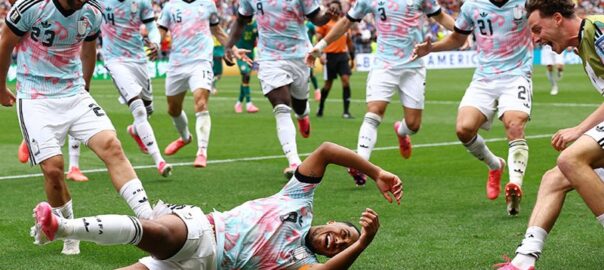
Belgium fight back from two goals down to stun Senegal in extra time

Belgium looked destined for an early World Cup exit before producing a remarkable turnaround to beat Senegal 3-2 after extra time in a thrilling last-32 encounter. The dramatic victory keeps Rudi Garcia’s side in the tournament and sends them into a last-16 meeting with the United States.

For most of the contest, Senegal appeared to have complete control. Their attacking intent was evident from the opening stages as Ismaila Sarr struck the post before failing to convert the rebound. Moments later, Sarr again hit the woodwork with a header from Sadio Mane’s delivery, but Habib Diarra reacted quickest to guide the loose ball into the net from close range.

The African side doubled their advantage shortly after the interval with an outstanding move. Moussa Niakhate’s long pass exposed Belgium’s defence, allowing Sarr to race clear, cushion the ball with his chest, and fire an emphatic finish beyond Thibaut Courtois for a deserved 2-0 lead.

With only minutes remaining, Belgium still had little to show for their efforts, while Senegal goalkeeper Mory Diaw had rarely been tested as his team looked set to progress comfortably.

Lukaku sparks late revival

Belgium’s hopes were revived in the closing moments when half-time substitute Romelu Lukaku converted Thomas Meunier’s cross with a clever touch to reduce the deficit and give his side renewed belief.

The momentum quickly shifted. In the 89th minute, Leandro Trossard delivered a dangerous cross into the area that Diaw failed to claim, allowing captain Youri Tielemans to head home the equaliser and force the match into extra time.

Earlier in the second half, Tielemans and Trossard had been involved in a heated exchange before the hydration break, with Lukaku stepping in to calm the situation between his team-mates.

Belgium’s dramatic recovery left Senegal stunned after the African side had controlled large periods of the contest and held what appeared to be a commanding lead with only minutes left on the clock.

Tielemans settles marathon contest

The decisive moment finally arrived in the closing seconds of extra time. After Dodi Lukebakio’s effort brushed the crossbar, the referee awarded Belgium a penalty for Lamine Camara’s sliding challenge on Tielemans following a VAR review that lasted seven minutes.

Tielemans accepted the responsibility from the spot and confidently sent his penalty into the top corner in the 125th minute, completing Belgium’s extraordinary comeback and securing a place in the next round.

The late penalty proved devastating for Senegal, whose promising performance ultimately ended in disappointment after surrendering their two-goal advantage.

Belgium remain alive while Senegal’s campaign ends

Belgium’s victory keeps alive the ambitions of several experienced members of the squad. Lukaku, one of the remaining players from the country’s celebrated generation, made a decisive impact after coming off the bench despite concerns over his condition before the tournament. Manager Rudi Garcia had previously described the striker as being “out of shape” when selecting him for the World Cup after an injury-affected season with Napoli.

Lukaku’s contribution ensured that both he and Kevin De Bruyne, who was substituted after 56 minutes and reacted with visible frustration, will have another opportunity to pursue international success.

For Senegal, the defeat brought another painful conclusion on the international stage. Earlier this year they defeated Morocco 1-0 in the Africa Cup of Nations final before later being stripped of the title following a controversial walk-off linked to a disputed stoppage-time penalty.

Belgium will stay in Seattle for their last-16 match on Tuesday, 7 July, where they will meet either the United States or Bosnia-Herzegovina. Senegal, meanwhile, leave the tournament after seeing a winning position slip away in dramatic fashion.

Match preview: Spain vs Austria

Spain enters Thursday’s round-of-32 encounter with Austria at Los Angeles Stadium aiming to reach the men’s FIFA World Cup knockout winners’ circle for the first time in 16 years. After finishing first in Group H, La Roja secured their place in the next phase by defeating Uruguay 1-0, with Álex Baena scoring the decisive goal in a tense contest.

Although Luis de la Fuente’s team opened their campaign with an emphatic 4-0 victory over Saudi Arabia, their performances have not consistently matched the standard they produced while becoming European champions two years ago. A scoreless draw against Cape Verde has been one of the biggest discussion points of their tournament, highlighting that their attacking rhythm has yet to fully emerge.

The margin for mistakes has now disappeared, and Spain knows every match from this stage onwards carries immediate consequences. Their recent World Cup history serves as a reminder that success in the group phase does not guarantee progress once the knockout rounds begin.

Date: July 2, 2026
Kick-off Time: 12:00 Los Angeles local time (UTC-7)
Venue: Los Angeles Stadium, Inglewood, California
Venue Capacity: 69,650
Opponents: Spain vs. Austria (Round of 32)
Austria’s run to the 2026 knockout stages is historic in its own right. They made World Cup history by becoming the first team to avoid defeat in a match after conceding a second-half stoppage-time goal, and still progress to the knockout round (thanks to a 96th-minute equalizer against Algeria)

Spain look to change recent World Cup record

Spain have not celebrated a victory in a World Cup knockout match since Andres Iniesta’s extra-time strike secured a 1-0 triumph over the Netherlands in the 2010 final. Since lifting the trophy, they have twice seen their campaigns end in penalty shootouts, suffering round-of-16 eliminations against Russia in 2018 and Morocco in 2022.

Another defeat would mark the first time Spain have failed to advance from three consecutive World Cup knockout ties, something De la Fuente will be eager to prevent. Matches against European opponents at this stage have also proved difficult, with Spain managing only one goal across their previous seven knockout games against teams from the continent. That lone goal came during the 1-1 draw with Russia before their eventual shootout exit.

Defensively, there have been more encouraging signs. Spain have recorded clean sheets in three of their last four World Cup knockout matches against European rivals, while they arrive for this contest having gone four straight World Cup games without conceding a goal. That equals the longest such sequence in their tournament history, matching the run achieved during their title-winning campaign in 2010.

Last 5 Spain matches stats

FIFA World Cup

FIFA World Cup

FIFA World Cup

International friendlies

International friendlies

Uruguay 0 – 1 Spain

Spain 4 – 0 Saudi Arabia

Spain 0 – 0 Cabo Verde

Peru 1 – 3 Spain

Spain 1 – 1 Iraq

2026/06/27

2026/06/21

2026/06/15

2026/06/09

2026/06/04

Austria embrace underdog opportunity

Austria heads into the match believing recent tournament surprises show anything is possible. Paraguay’s penalty victory over Germany and Morocco’s elimination of the Netherlands have demonstrated that several fancied nations have already been sent home, giving Ralf Rangnick’s players additional confidence ahead of their meeting with Spain.

The Austrians are appearing in the World Cup knockout rounds for the first time in almost 72 years. Their previous appearance came in 1954, when they defeated Switzerland 7-5 in Lausanne in a match that still stands as the highest-scoring game in the history of the men’s World Cup. Their memorable run that year eventually ended with a 6-1 semi-final defeat to eventual champions West Germany before Austria finished third.

One concern for Rangnick’s side is their defensive record. Austria have not kept a clean sheet in any of their last 12 World Cup matches, a run stretching back to their 2-0 victory over Algeria in 1982. Improving at the back could prove vital if they are to extend their stay in the competition.

Last 5 Austria matches stats

FIFA World Cup

FIFA World Cup

FIFA World Cup

International friendlies

International friendlies

Algeria 3 – 3 Austria

Argentina 2 – 0 Austria

Austria 3 – 1 Jordan

Austria 1 – 0 Tunisia

Austria 1 – 0 South Korea

2026/06/28

2026/06/22

2026/06/17

2026/06/01

2026/03/31

Previous meetings and historical record

Meetings between Spain and Austria have been relatively rare, but Spain has generally held the upper hand. They are unbeaten across the last five encounters between the nations, recording four victories and one draw, with each of their two most recent wins coming by four-goal margins.

The latest meeting took place in Vienna in 2009 and ended in a commanding 5-1 success for Spain. That match also featured a brief but impressive 25-minute substitute appearance from a young David Alaba.

Despite Spain’s recent dominance in the fixture, Austria can point to one significant success. Their last World Cup meeting ended in a 2-1 Austrian victory in 1978. Overall, Austria has contested five World Cup knockout matches against European opposition, excluding third-place play-offs, winning three against France, Hungary, and Switzerland while losing to Italy and West Germany.

Past H2H Results

International friendlies

FIFA World Cup

Austria 1 – 5 Spain

Austria 2 – 1 Spain

2009/11/18

1978/06/03

Prediction and expected outcome

Spain enter this knockout clash as clear favourites after topping Group H and extending their impressive defensive run, having not conceded in their last four World Cup matches. However, Luis de la Fuente’s side has yet to consistently reproduce the attacking fluency that made them European champions, meaning they cannot afford to underestimate an Austria team inspired by the tournament’s recent surprise results. Ralf Rangnick’s men will believe they can frustrate Spain and capitalise on any opportunities, but their long-standing defensive struggles could ultimately prove costly. Spain is expected to dominate possession and dictate the tempo, while Austria is likely to rely on discipline, organisation and quick counter-attacks. If Spain convert their chances more efficiently than they have at times during the group stage, they should have enough quality to progress.

Prediction: Spain 2-0 Austria

Expected outcome: Spain are expected to end their long wait for a World Cup knockout victory and secure a place in the next round, with their defensive solidity providing the platform for success. Austria should remain competitive and make life difficult for long spells, but Spain’s greater experience and overall quality make them the more likely winners.

Haaland’s late goal sends Norway past Ivory Coast into Brazil clash

Norway booked their place in the World Cup last 16 after Erling Haaland scored the decisive goal in the closing stages to secure victory over Ivory Coast in Dallas. The Manchester City forward, who had been largely kept under control for most of the contest, reacted quickest to Patrick Berg’s cutback in the 86th minute, turning the ball home from close range.

The win carries additional significance for Norway, who claimed a World Cup knockout victory for the first time. Haaland also extended his remarkable scoring streak, finding the net in a 13th consecutive competitive international for his country.

Their reward is a last-16 meeting with Brazil, who advanced after a comeback victory against Japan. The tie is scheduled for Sunday, 5 July, at 21:00 BST, with a potential quarter-final against England awaiting the winner.

Nusa and Amad provide moments of quality

The breakthrough arrived six minutes before half-time through Antonio Nusa, whose outstanding individual effort put Norway ahead. The RB Leipzig winger drove in from the left before curling a right-footed finish into the top corner, giving the Ivorians a deficit to overturn.

Ivory Coast manager Emerse Fae had started with a more cautious 4-1-4-1 system and left Amad Diallo among the substitutes. His team struggled to create meaningful opportunities before the interval and, after falling behind, was forced to become more adventurous.

The introduction of Amad transformed the attacking threat. The Manchester United winger equalised in the 74th minute by cutting inside from the right, beating two defenders and calmly finishing for his second goal of the tournament, raising hopes that extra time would be required.

Haaland has the final word

Shortly before Ivory Coast levelled the score, Norway missed a huge opportunity to double their advantage. Centre-back Torbjorn Heggem connected with a volley from four yards, but Amad produced an outstanding clearance on the goal line to deny him.

The closing minutes remained tense, with both sides searching for another breakthrough. Norway eventually found it when Berg’s low pass into the area reached Haaland, who bundled the ball over the line from close range to restore his team’s lead.

Amad nearly rescued Ivory Coast again in the dying moments, but his powerful 25-yard free-kick was pushed away by Norway goalkeeper Orlan Nyland, allowing the Norwegians to protect their advantage until the final whistle.

Pressure, milestones and what comes next

The occasion carried special importance for both nations. It represented Ivory Coast’s first appearance in a World Cup knockout match, while Norway had reached this stage for the first time in 28 years. Long periods of the game reflected that tension, with neither side consistently producing their best football.

Ivory Coast teenager Yan Diomande found it difficult to influence proceedings as Norway’s defence limited his impact. One notable challenge came when David Moller Wolfe halted the 19-year-old with a firm body check as he threatened to break away.

Norway captain Martin Odegaard quietly controlled much of his side’s play and created Nusa’s opening goal. The assist made him only the third player on record to set up a goal in each of his first three World Cup appearances. Haaland ultimately ensured Norway’s historic evening ended in celebration with another decisive finish, his fifth goal across three World Cup matches.

Match preview: France vs Sweden

France arrives in the knockout rounds of the World Cup in strong form as they prepare to face Sweden on Tuesday in the round of 32. The winner of this tie will go on to meet either Germany or Paraguay in the next stage.

Didier Deschamps’ team finished top of Group I with a flawless record, winning all three of their matches. Their victories came against Senegal, Iraq, and Norway, marking the first time since 1998 that France has gone through the group stage of a major tournament with maximum points.

There is also a notable historical link for Deschamps, who captained France to the 1998 World Cup title. That tournament remains a reference point as his current side continues to impress in North America.

France have also been highly productive in attack, scoring at least three goals in each of their last four World Cup matches. No team has ever managed to score three or more goals in five consecutive matches at the competition.

Date: June 30, 2026
Kick-off Time: 17:00 New York local time (UTC-4)
Venue: New York New Jersey Stadium, East Rutherford, New Jersey
Venue Capacity: 82,500
Opponents: France vs. Sweden (Round of 32)
Despite both being European heavyweights, this match marks the first time France and Sweden have ever faced each other in a FIFA World Cup. Their 23 previous matchups across all competitions were exclusively in friendlies or EURO Cup qualifiers

France’s attacking form and key players

Kylian Mbappé and Ousmane Dembélé have been central to France’s offensive strength, each scoring four goals in the tournament so far. Dembélé’s hat-trick in a 4-1 win over a rotated Norway side secured top place in the group.

The two forwards have also developed a strong on-field connection. They have combined for five World Cup goals, with Mbappé providing two assists for Dembélé and Dembélé setting up three for Mbappé, two of which came in 2022.

This total of five goal combinations matches the highest recorded for a pair at the World Cup since 1966, placing them alongside some of the competition’s most productive duos.

France’s attacking options are further strengthened by players such as Michael Olise and Désiré Doué, adding depth to an already high-scoring side.

Last 5 France matches stats

FIFA World Cup

FIFA World Cup

FIFA World Cup

International friendlies

International friendlies

Norway 1 – 4 France

France 3 – 0 Iraq

France 3 – 1 Senegal

France 3 – 1 Northern Ireland

France 1 – 2 Ivory Coast

2026/06/26

2026/06/23

2026/06/16

2026/06/08

2026/06/04

Sweden’s path and attacking threats

Sweden heads into the knockout stage after finishing third in Group F, behind the Netherlands and Japan. They will now attempt to challenge one of the tournament favourites in what is expected to be a difficult encounter.

Much of Sweden’s attacking output has come through Viktor Gyökeres, who led the team in both shots and chances created during the group stage. His involvement has been a key feature of their offensive play.

Other contributors include Yasin Ayari, who has scored twice, and Anthony Elanga, who has found form with goals in consecutive group matches against the Netherlands and Japan. Sweden also recorded their highest-ever group stage goal tally at a World Cup, scoring seven times.

Historically, only a few Swedish players have scored in three straight World Cup appearances, placing Elanga in a select category if he continues his scoring run.

Last 5 Sweden matches stats

FIFA World Cup

FIFA World Cup

FIFA World Cup

International friendlies

International friendlies

Japan 1 – 1 Sweden

Netherlands 5 – 1 Sweden

Sweden 5 – 1 Tunisia

Sweden 2 – 2 Greece

Norway 3 – 1 Sweden

2026/06/26

2026/06/20

2026/06/15

2026/06/04

2026/06/01

Head-to-head record and historical notes

France and Sweden will meet for the 24th time in all competitions. France has won 12 of those encounters, while Sweden has recorded six victories, with five matches ending in draws.

This will only be their third meeting at a major tournament and their first ever clash at a World Cup. Sweden won the most recent tournament meeting at Euro 2012, while the sides also drew at the European Championship two decades earlier.

France entered the match with a strong knockout record, having progressed from 83% of their World Cup knockout ties since 1998. Their only eliminations in that period came in the 2006 final, the 2014 quarter-final, and the 2022 final, all decided under different circumstances.

They have also won their last six World Cup matches against European opposition, with no team ever achieving seven consecutive victories against UEFA sides in the competition’s history.

Past H2H Results

UEFA Nations League

UEFA Nations League

FIFA World Cup qualification

France 4 – 2 Sweden

Sweden 0 – 1 France

Sweden 2 – 1 France

2020/11/17

2020/09/05

2017/06/09

Prediction and expected outcome

France enters this knockout tie as clear favourites after a perfect group stage, having won all three matches and consistently scoring at least three goals in recent World Cup games. Didier Deschamps’ side look particularly dangerous in attack, with Kylian Mbappé and Ousmane Dembélé both in excellent form and heavily involved in goals. Their combination play and depth in forward areas suggest they have enough quality to break down most defences at this stage of the tournament. Sweden, however, arrive with confidence after scoring their highest-ever group stage tally at a World Cup and showing they can be dangerous in attack through Viktor Gyökeres and Anthony Elanga. Their ability to create chances and score in key moments means they should not be completely ruled out of the contest. The most likely scenario is France controlling large spells of possession and eventually pulling away, while Sweden remains competitive through counter-attacks and individual attacking moments.

Prediction: France 3-1 Sweden

Expected outcome: A controlled but competitive French victory, with Sweden capable of troubling them at times but ultimately lacking the consistency to match France’s attacking depth and overall quality across 90 minutes.