Category Archives: History and facts 2026

Scientists call for stronger protections as heat concerns grow ahead of 2026 World Cup

A group of leading international scientists has warned that FIFA’s existing heat safety approach for the men’s 2026 World Cup may be insufficient and could expose players to serious health risks. In an open letter, experts in climate, health, and sports performance argue that current guidelines are not aligned with up-to-date research and describe them as difficult to justify.

The scientists say that conditions expected at many of the tournament venues could lead to dangerous levels of heat stress. They highlight that temperatures in several host cities may reach levels considered risky for elite athletic performance during the summer competition across the United States, Canada, and Mexico.

Researchers also point out that environmental conditions combining heat, humidity, wind, and solar radiation can significantly increase strain on the body. They warn that this combination raises the likelihood of extreme physiological stress for players during matches.

FIFA’s existing heat protocols and measures

FIFA states that it has put player welfare at the centre of its planning and has introduced mandatory three-minute cooling breaks in both halves of every match, regardless of weather conditions. It also says that team benches for staff and substitutes will be climate-controlled in all outdoor stadiums.

The governing body relies on wet-bulb globe temperature readings to assess heat stress, a system that combines temperature, humidity, and other environmental factors. According to FIFA’s medical guidance, when this measure approaches or exceeds certain thresholds, match officials are expected to consider additional precautions to prevent heat-related illness.

At the same time, FIFA has outlined fan-related precautions for hot conditions, including allowing sealed water bottles into stadiums and providing extra cooling options. These include shaded areas, misting systems, cooling transport vehicles, and expanded access to drinking water.

Calls from experts for stronger protections

The scientists behind the letter, numbering around 20 and based across multiple countries, are urging FIFA to strengthen its safeguards before the tournament begins. Their recommendations include longer cooling interruptions lasting at least five to six minutes instead of the current three.

They also propose that matches should be delayed or postponed when the wet bulb globe temperature reaches or exceeds 28°C, which is considered a critical threshold for heat stress. Additional suggestions include improving cooling infrastructure for players and updating guidelines regularly to reflect the latest scientific evidence.

The group also calls on FIFA to align its standards more closely with those proposed by the international players’ union FIFPro. They argue that current protections fall short of what is needed to ensure safe playing conditions in extreme heat.

Growing heat risk across host nations

Experts involved in climate attribution research warn that extreme heat is likely to be a major factor during the 2026 World Cup. They note that wildfire-related air quality issues and thunderstorms may also affect conditions across North America during the summer tournament.

Analysis cited by researchers suggests that a significant number of matches could be played under conditions above levels associated with increased risk. They also indicate that a small number of games may reach thresholds considered unsafe for competition by player welfare organisations.

Scientists further report that the likelihood of extreme heat conditions has increased compared with previous decades, linking this rise to broader climate trends. They say that the risk at the 2026 tournament is nearly double that seen during the 1994 World Cup held in the same region.

FIFA response and tournament planning

FIFA has not directly addressed the scientists’ letter but says it is committed to protecting everyone involved in the tournament, including players, officials, staff, and spectators. It states that climate risks are being assessed as part of its planning process.

The organisation says it will implement a tiered system to manage heat conditions, adjusting measures based on real-time environmental data. Dedicated meteorological teams will monitor conditions throughout the competition, using heat metrics to guide decisions.

FIFA also explains that match scheduling has been designed with climate considerations in mind, including adjusted kick-off times and limiting games during the hottest periods where possible. It adds that it will continue to work with local authorities and medical experts to ensure a safe and resilient tournament environment.

Trump says he would not pay reported $1,000 for USA World Cup opener ticket

United States President Donald Trump said he was unaware supporters might need to spend about $1,000 (£736) to attend the national team’s opening 2026 World Cup match against Paraguay and admitted he would not pay that amount himself.

Speaking to The New York Post, Trump said he would like to attend the fixture in Los Angeles on 12 June but was blunt about the reported expense. He added that he would be disappointed if ordinary supporters, including many of his own voters, were unable to afford seats despite the tournament’s success.

FIFA faces criticism over pricing and resale charges

FIFA has come under fire over what critics describe as excessive costs for the expanded tournament, which begins on 11 June and is being staged across the United States, Canada, and Mexico.

Unlike some previous World Cups, group-stage ticket prices were set according to the expected appeal of participating teams rather than a standard pricing model. Supporters have also been confronted by significantly higher prices on FIFA’s official resale marketplace, where the organization collects a combined 30% fee from transactions by charging both buyers and sellers 15%.

Infantino defends strategy and cheaper seats emerge

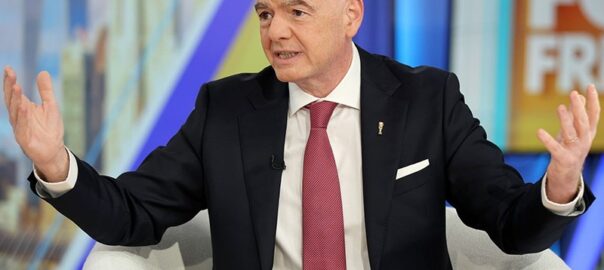
FIFA president Gianni Infantino defended the pricing approach during an appearance at the Milken Institute Global Conference in Beverly Hills, arguing that lower initial prices could simply encourage resale at far higher amounts in the United States, where ticket reselling is legal.

Following criticism after the first ticket release, Fifa introduced a limited allocation of more affordable £45 tickets covering all 104 matches. In Toronto, supporters are also protected from inflated resale costs because Ontario recently prohibited event tickets from being resold above face value.

Transport costs also spark concern for supporters

Travel expenses in the United States have added to concerns around affordability, especially for games at MetLife Stadium in New Jersey. A round-trip rail fare for the roughly 30-minute journey from Manhattan’s Penn Station had originally surged from the normal $12.90 (£9.50) to $150 (£111).

That fare has since been reduced by 30%, bringing the cost down to $105 (£77). New Jersey Transit chief executive Kris Kolluri said Governor Mikie Sherrill requested sponsorship and alternative funding to help lower the burden on fans traveling to matches.

Mexico federation threatens to drop no-shows from World Cup squad

The Mexican Football Federation has warned Liga MX-based footballers that missing a mandatory national team camp could cost them their place at this summer’s World Cup. Players selected by head coach Javier Aguirre were ordered to arrive at the High Performance Centre in Mexico City by Wednesday, 6 May, with the governing body making clear that anyone absent by the 8pm local deadline would be removed from World Cup consideration.

The gathering falls outside FIFA’s official international calendar, creating immediate conflict with domestic and continental club commitments. Its timing overlaps with both Liga MX’s championship play-offs and Concacaf Champions Cup fixtures, placing several clubs and players in a difficult position.

Last week, Aguirre named 20 Liga MX representatives for the camp, with 12 of those expected to secure places in Mexico’s final World Cup squad. The definitive roster is scheduled to be announced on 1 June.

Club commitments create tension

The scheduling dispute intensified because Toluca are due to face MLS club Los Angeles FC in the second leg of their Concacaf Champions Cup semi-final on Wednesday. At the same time, Chivas de Guadalajara are preparing for their Liga MX quarter-final second leg on Sunday.

Toluca asked the federation on Tuesday to keep forward Alexis Vega and defender Jesus Gallardo with the club for their international match, a move that angered Chivas after they had already allowed five squad members to join the national setup. Chivas released Raul Rangel, Luis Romo, Brian Gutierrez, Roberto Alvarado, and Armando Gonzalez.

Because Toluca trail 2-1 from the opening leg, their effort to retain key players was viewed as going against the prior arrangement between Liga MX sides and the federation.

Chivas initially push back before changing course

Chivas president Amaury Vergara publicly questioned the situation on social media, saying agreements only matter when every side honors them. He also instructed the club’s sporting department that their players should report to team facilities the following day.

That stance came after Chivas suffered a 3-1 defeat to Tigres in the opening leg of their domestic quarter-final, adding further importance to club priorities.

However, on Wednesday, Chivas reversed course and confirmed they would not interfere with their players’ hopes of representing Mexico at the World Cup, stating that those selected would report to camp on schedule.

Aguirre insists there will be no exceptions

Speaking after the federation’s statement, Aguirre reinforced the hardline message by declaring that any player who failed to attend would be left out of the World Cup squad. He stressed there would be no room for compromise.

The Mexico manager also praised both Chivas and Toluca, insisting no agreement had been violated and emphasizing that the post-season had so far continued without national team players. Aguirre said all parties remained aligned with the original plan and described the initiative as a special project backed by clubs, players, supporters, and media alike.

Mexico, co-hosting the tournament with the United States and Canada, begin their World Cup campaign against South Africa at Estadio Azteca on 11 June after warm-up matches against Ghana, Australia, and Serbia.

World Cup 2026 stadiums and places: Mercedes-Benz Stadium, Atlanta

Country: United States
City: Atlanta, Georgia
Address: 1 AMB Drive Northwest
Capacity: 75,000 (forecasted 65,085 for the World Cup)
Opened: 2017
Surface: FieldTurf CORE
Construction cost: $1.6 billion
Record attendance: 79,330, 2022 Peach Bowl, December 31, 2022
Interesting fact: The retractable roof consists of 8 triangular panels that mimic a camera lens, taking roughly 7-8 minutes to open or close

Opened on August 26, 2017, Mercedes-Benz Stadium became Atlanta’s modern replacement for the Georgia Dome, introducing a $1.6 billion venue owned by the state of Georgia through the Georgia World Congress Center Authority and operated by AMB Group. Serving as home to the NFL’s Atlanta Falcons, MLS’s Atlanta United FC, and an incoming NWSL expansion club, the multi-purpose facility quickly established itself as one of the city’s defining landmarks.

The venue has already hosted an impressive lineup of major occasions that once belonged to its predecessor, including the SEC football championship, the Peach Bowl, and College Football Playoff National Championships in 2018 and 2025. It also staged the 2018 MLS Cup, where Atlanta United triumphed on home turf, along with Super Bowl LIII in 2019. Looking ahead, the stadium is scheduled for Super Bowl LXII in 2028 and multiple matches during the 2026 FIFA World Cup.

For Atlanta United, the massive scale has not diminished matchday energy. Despite being one of Major League Soccer’s largest home grounds, the club consistently led MLS attendance figures before the pandemic with crowds averaging above 50,000, while the enclosed design amplifies crowd noise and reinforces its reputation for an electric environment.

Innovative design and engineering at the heart of the venue

The stadium’s most recognizable architectural element is its retractable roof, built around eight translucent triangular panels arranged in a pinwheel formation. These sections move along paired rails, with one guiding motion and the other ensuring stability. When fully opened, the structure resembles outstretched wings, while architect Bill Johnson drew inspiration for the circular opening from Rome’s Pantheon.

Constructed with lightweight clear polymer capable of adjusting opacity, the roof works alongside extensive glass and transparent exterior materials to create both natural light and expansive outside views. The engineering also allows the roof to remain open during light rain, supported by outdoor-rated electrical systems and a field drainage network.

Suspended beneath this roof is the Halo video board, a massive ring-shaped display measuring 58 by 1,100 feet and covering 62,350 square feet. Daktronics described it as triple the size of the NFL’s previous largest single display installation. Additional LED boards totaling more than 20,000 square feet further enhance both football and soccer presentations.

Built for versatility, spectacle, and culture

Mercedes-Benz Stadium was designed with flexibility in mind, adapting to the differing demands of professional football, college football, and soccer. Two oversized locker rooms were included from the outset to accommodate 100-player college rosters, while retractable lower bowl seating and mechanized curtains allow a soccer-specific arrangement with reduced capacity and expanded field dimensions.

Though college football infrastructure was prioritized, one notable omission at opening was direct seat-to-field stair access for marching bands, creating logistical challenges for halftime performances. Still, the venue’s broader adaptability has made it one of the nation’s premier event destinations.

Art also plays a central role throughout the property, with more than 180 commissioned pieces integrated into both interior and exterior spaces. Among works from artists such as Nari Ward, Hank Willis Thomas, Gregory Eltringham, and Steven and William Ladd, the most dramatic is Gábor Miklós Szőke’s “The Atlanta Falcon,” a towering stainless steel sculpture standing 41 feet high with a 70-foot wingspan atop a bronze football.

Exploring Atlanta beyond the stadium

Atlanta’s appeal stretches far beyond sports, with the Atlanta Botanical Gardens offering visitors a peaceful retreat through themed spaces such as the Canopy Walk, Japanese Garden, Rose Garden, Fuqua Conservatory, Orchid Centre, and Skyline Garden. Even outside peak bloom, the gardens provide a rich experience, from tropical displays to city views and colorful seasonal installations.

The World of Coca-Cola presents another signature attraction, immersing guests in the story of The Coca-Cola Company through exhibits on its history, the famed recipe vault, a working bottling line, scent-based beverage exploration, and a tasting room featuring more than 60 drinks from around the world.

For historical reflection, the Martin Luther King Jr. Memorial Complex offers access to significant locations, including his birthplace, Ebenezer Baptist Church, The King Centre, and his tomb. Combined with the International Civil Rights Walk of Fame and surrounding commemorative spaces, the site provides a meaningful look at civil rights history.

Atlanta’s cultural heritage is equally evident at the Fox Theatre, a 1929 landmark that blends architectural influences from Spain, Egypt, and the Far East. From its famous opening with “Steamboat Willie” to its grand interior, star-lit ceiling, and legendary “Mighty Mo” organ, it remains one of the city’s enduring entertainment treasures.

World Cup 2026 stadiums and places: Arrowhead Stadium, Kansas City

Country: United States
City: Kansas City, Missouri
Address: One Arrowhead Drive
Capacity: 76,416
Opened: 1972
Last renovated: 2010
Surface: NorthBridge Bermudagrass
Construction cost: $43 million
Record attendance: 82,094, Kansas City Chiefs vs Oakland Raiders, Nov. 5, 1972
Interesting fact: Holds the Guinness World Record for loudest stadium, reaching 142.2 dB in 2014

Located in Kansas City, Missouri, Arrowhead Stadium serves chiefly as the home field of the Kansas City Chiefs of the National Football League. Built alongside nearby Kauffman Stadium, where the Kansas City Royals play Major League Baseball, the two venues together make up the Truman Sports Complex. Since opening for the 1972 NFL season, Arrowhead has remained in operation as the oldest stadium in the AFC.

With room for 76,416 spectators, the venue ranks among the largest stadiums in the United States, stands as the fourth-biggest in the NFL, and holds the title of Missouri’s largest sports venue by capacity. A major renovation costing $375 million was finished in 2010, further modernizing the long-standing facility.

The stadium will also play an international role during the 2026 FIFA World Cup, when it is set to host tournament matches under the temporary name Kansas City Stadium to comply with FIFA marketing regulations.

Design, planning, and construction

Work on the project began in 1968, based on an original two-stadium vision created by Denver architect Charles Deaton and Steadman. Although the baseball and football structures were designed with distinct visual identities, they were connected through shared parking, utilities, and underground storage systems.

Early proposals included covered venues, but those plans were ultimately abandoned in favor of open-air stadiums. Lamar Hunt added a private owner’s suite to the football stadium design, featuring bedrooms, bathrooms, a kitchen, and living space.

To maximize seating without greatly expanding the stadium’s overall size, the upper decks were built with an unusually steep slope, a feature that modern accessibility standards would not permit today. Deaton’s plans were later carried out by Kansas City firm Kivett & Myers, while construction itself was handled by the Sharp-Kidde-Webb joint venture.

Architectural legacy and influence

Arrowhead Stadium’s distinctive design has been regarded by some as influential in shaping later NFL venues. Its combination of steep seating sections, large-scale capacity, and integrated complex planning helped distinguish it from many stadiums that followed.

The pairing of two separate sports facilities with shared infrastructure was also a notable feature of the Truman Sports Complex concept. While the football and baseball parks differed significantly in appearance, their coordinated development reflected a broader architectural and logistical strategy.

Today, Arrowhead remains not only a functioning NFL stadium but also a lasting example of late-20th-century sports design.

Top attractions beyond the stadium

Kansas City offers more than football, including the Rabbit hOle in North Kansas City, a vast former tin can factory transformed into a 150,000-square-foot celebration of children’s literature. Created by two former bookstore owners, the imaginative venue explores a century of stories from the 1920s onward, blending nostalgia and literary art in a deeply engaging environment.

Art lovers are drawn to the Nelson-Atkins Museum of Art, the city’s best-known museum, where free admission provides access to collections spanning ancient Egyptian objects, European masterpieces, and Chinese bronzes. Outside, giant badminton shuttlecock sculptures on the lawn have become one of Kansas City’s most recognizable visual symbols.

Union Station, a historic centerpiece dating to 1914, remains both a transportation hub and a cultural destination. Its Beaux-Arts style, towering ceilings, and broad windows make it architecturally impressive, while attractions such as Science City, a planetarium, a model train gallery, and large-format films expand its appeal.

In nearby Independence, the Harry S. Truman Presidential Library and Museum examines the life and presidency of Missouri’s only US president. Following a major renovation completed in 2021, the museum presents exhibits ranging from significant wartime artifacts to memorable pieces of presidential history.