Category Archives: 2026 FIFA World Cup

FIFA implements 3D digital scans for every World Cup player to improve offside calls

FIFA plans to create AI-powered three-dimensional representations of every participant in the 2026 World Cup to enhance semi-automated offside technology.

This initiative will cover all 1,248 players from the 48 squads, each consisting of 26 members.

Every player will step into a scanning chamber as part of the process. FIFA says that the scan itself will take only a second and is required just once, during the players’ pre-tournament photo session.

The digital capture aims to record precise body measurements for each athlete. The governing body believes this will allow for more accurate offside rulings during matches.

Improving offside accuracy and viewer experience

FIFA expects that having detailed 3D models will help officials follow players more reliably, even during rapid or obscured movements.

The organization also notes that the final offside decisions can be displayed in a way that is both more realistic and visually appealing for fans.

Earlier this season, controversy arose in the Premier League over a Newcastle goal against Manchester City.

In that instance, the semi-automated offside display showed Ruben Dias seemingly in motion in a way that conflicted with television footage. FIFA hopes that scanning every player in advance will prevent such mismatches in future broadcasts.

Testing and additional technology

The system has already been trialed during FIFA’s Intercontinental Cup. Players from Flamengo and Pyramids FC were scanned before their December fixture.

Last month, FIFA also revealed testing of technology capable of determining whether the ball crosses out of play before a goal is scored.

Alongside that, the organization has developed real-time 3D recreations designed to help officials make line-of-sight offside calls with improved precision.

FIFA defends World Cup ticket prices amid soaring demand

FIFA president Gianni Infantino has defended the high cost of tickets for next summer’s World Cup in the United States, Canada, and Mexico, arguing that the prices mirror an overwhelming public interest.

The tournament’s ticketing system has faced sharp criticism, with the Football Supporters’ Association (FSA) calling it “scandalous.” Group stage tickets are now up to three times more expensive than those sold for the 2022 World Cup in Qatar, while the lowest-priced final ticket in New Jersey is £3,119.

Infantino emphasized that the number of ticket requests far exceeds the available supply. Speaking at the World Sports Summit in Dubai, he revealed that six to seven million tickets were offered, yet 150 million applications were submitted within just 15 days.

“This is about 10 million requests every day, showing the World Cup’s enormous appeal,” Infantino said. He added that, historically, FIFA has sold 44 million tickets in nearly a century, meaning that in just two weeks the demand could have matched 300 years of World Cup sales.

Affordable options introduced after criticism

Following backlash over ticket costs, FIFA launched a limited selection of lower-priced £45 tickets for all 104 matches. A FIFA official involved in the process told BBC Sport that the decision was a direct response to public feedback.

Infantino explained that the new pricing tier is intended to make the tournament accessible to more fans while maintaining the overall ticketing strategy. The approach aims to balance affordability with the financial needs of hosting such a major event.

The £45 tickets are only a small proportion of the total available, reflecting FIFA’s attempt to accommodate fans who may not afford higher prices while still capitalizing on the strong demand for premium seating.

Revenue reinvested into global football

Infantino highlighted that proceeds from ticket sales are reinvested into football worldwide, though he did not disclose specific figures. He stressed that FIFA’s revenues are crucial for the development of the sport in numerous countries.

“Without FIFA, there wouldn’t be football in 150 nations,” Infantino stated. He pointed out that funds generated from the World Cup help sustain football programs globally, supporting the growth of the game beyond the tournament itself.

By linking ticket income to development projects, FIFA argues that the high prices ultimately benefit the sport on a global scale, providing resources for countries that rely on the organization to maintain and expand their football infrastructure.

World Cup hosts who fell short: the weakest campaigns ranked

Hosting the World Cup is often seen as a major sporting advantage, but history shows it doesn’t always translate into success on the pitch.

Six different hosts have celebrated lifting the trophy on their own soil, yet several others have fallen short despite their home crowds.

Below are five host teams whose campaigns were far from triumphant, measured against the general trend of hosts performing strongly.

Japan (2002)

Japan enters this list not because they collapsed, but because most home nations tend to progress far more convincingly.

Before sharing the 2002 tournament with South Korea, Japan had appeared in just three matches at previous editions and lost every one. Expectations were modest, but the Samurai Blue managed to exceed them.

A stalemate with Belgium set the tone, followed by triumphs over Russia and Tunisia, which lifted them to the knockout rounds and raised hopes of something special.

Turkey ended those dreams with a narrow 1-0 victory, halting Japan’s surprising journey before the quarter-finals could be reached.

South Africa (2010)

South Africa made unwanted history as the first home team ever to fail to escape the opening stage, though their performances were better than many anticipated.

They started with a point against Mexico and later stunned France, a result somewhat overshadowed by the chaos among the French contingent itself.

Siphiwe Tshabalala’s thunderous strike in the opening fixture became an instant classic, one of the tournament’s most memorable highlights.

Despite that moment and undeniable spirit, Bafana Bafana’s adventure ended early.

United States (1994)

FIFA’s dream of converting the U.S. into a football-first nation faced immediate obstacles on the field.

Progressing to the knockouts only as one of the higher-ranked third-place finishers, the Americans benefited from a win over Colombia—a match clouded by suspicions hovering over the South American side.

Brazil then appeared in the next round and dispatched the hosts without much difficulty, bringing the campaign to a conclusion.

Even before the matches began, the tone was set when Diana Ross dramatically failed to convert a penalty during the opening ceremony.

Spain (1982)

Spain arrived as hosts hoping to reverse their poor record since 1950, but the home advantage offered no breakthrough.

An uneasy opening phase included a defeat to Northern Ireland, a draw with Honduras, and a narrow triumph over Yugoslavia, enough to squeeze into the next stage.

In the second group round, a loss to West Germany and a goalless encounter with England ended their participation.

Supporters hoping for a deep run were left disappointed as the home tournament fizzled out.

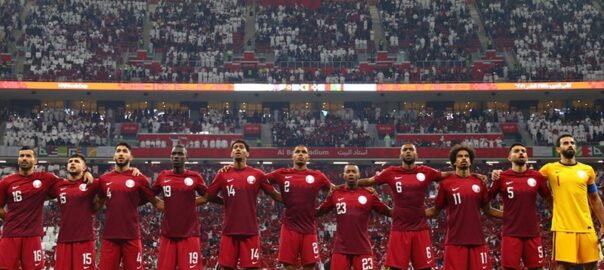
Qatar (2022)

Predictions of Qatar delivering the weakest host performance in World Cup history proved entirely accurate.

Their very first match, a 2-0 loss to Ecuador, felt fortunate to remain that close, and matters worsened from there.

Senegal won 3-1, the Netherlands added a 2-0 result, and Qatar exited with zero points, seven goals conceded, and just a single goal scored.

No other host has ever finished with an empty points tally—making Qatar’s campaign an unprecedented low.

FIFA lifts World Cup payouts by half ahead of 2026 finals

FIFA has confirmed a substantial rise in the money distributed to teams taking part in the 2026 World Cup, which will be staged across the United States, Canada, and Mexico.

The governing body said the total allocation linked to the tournament will reach a record $727m (£544.8m), representing a 50% jump on previous levels.

That figure was approved by FIFA’s council and forms the largest share of the organization’s financial distributions tied to the event.

According to the breakdown, the champions will earn $50m (£37.4m), while the finalists who fall short will collect $33m (£24.7m).

Teams eliminated at the first phase of the competition are set to receive $9m (£6.7m).

Beyond performance-based rewards, every qualified nation will also be given $1.5m (£1.1m) to help cover preparation expenses, guaranteeing a minimum return of $10.5m (£7.8m) for each participant.

Ticket pricing criticism and political reaction

The announcement arrives during ongoing debate over the affordability of attending matches at the expanded 104-game tournament.

Just one day earlier, FIFA revealed it would release a limited batch of £45 tickets for every fixture, following widespread backlash over its pricing approach.

FIFA president Gianni Infantino described the increased distributions as evidence the competition would deliver unprecedented financial benefits to football worldwide.

The organization has already projected record income of $13bn (£9.7bn) for the 2023–2026 cycle.

Supporter groups have questioned the balance between rising revenues and fan access, with the Football Supporters’ Association highlighting the scale of funds generated by the tournament.

Its chair, Tom Greatrex, urged FIFA to reconsider policies that could undermine the character of the World Cup, warning action was still possible.

In the UK, Prime Minister Sir Keir Starmer welcomed the limited ticket concession but encouraged further steps to reduce costs for fans.

New York City mayor-elect Zohran Mamdani also voiced concern, arguing that the reduced-price tickets cover too few seats and calling for measures such as ending dynamic pricing, limiting resale values, and reserving a portion of tickets for local supporters.

Additional funding initiative approved

Alongside the prize money decision, FIFA’s council endorsed the creation of a new post-conflict recovery fund.

The body said the move aligns with its aim of using football to promote unity and follows an announcement made by Infantino at the Sharm El-Sheikh Summit for Peace in October 2025.

The fund is intended to support regions affected by conflict and will be open to contributions from outside organizations.

FIFA stated that strict supervision would apply to the mechanism.

It added that the initiative would complement existing programs, including FIFA Forward and other ongoing projects.

FIFA introduces $60 ticket for 2026 World Cup

FIFA has announced a new £45 ($60) ticket tier for all 104 matches of the 2026 World Cup, responding to criticism over the high cost of attending the tournament. The tickets are intended for “loyal fans” of teams that have qualified, according to the governing body.

A FIFA official involved in discussions said the decision was unanimous and described it as a response to fan feedback. “We have listened to feedback, and this new category is the right thing to do,” they said.

UK Prime Minister Sir Keir Starmer welcomed the new pricing but urged further action to keep tickets within reach for true supporters. Under the previous pricing plan, following England through to the final would have cost more than £5,000.

The £45 tickets belong to the ‘supporter entry tier’, the lowest-priced category, and will make up 10% of each football association’s allocation for the tournament, which will take place in Canada, Mexico, and the United States. For England and Scotland, this amounts to around 400 tickets for each of their group matches.

Tom Greatrex, chair of the Football Supporters’ Association (FSA), described the move as a “hollow gesture,” suggesting it is a superficial response rather than a genuine solution. Football Supporters Europe (FSE) also acknowledged FIFA’s recognition of the issue but said the changes are insufficient.

Allocation process and fan eligibility

FIFA explained that the new ticket category will be distributed through the participating member associations (PMAs), which will set their own criteria to ensure the tickets reach fans with a strong connection to their national teams.

Overall, 50% of each association’s allocation will be in the more affordable range: 40% in the supporter value tier and 10% in the supporter entry tier. The remaining tickets are divided between the supporter standard tier and the supporter premier tier.

FA officials are now working to decide which fans will receive the limited number of entry-tier tickets, aiming to reward those who have demonstrated long-term loyalty. One challenge is that the number of loyal fans far exceeds the available tickets.

Demand has been exceptionally high, with over 20 million requests in the latest ticket phase. FIFA emphasized the unique nature of the tournament and the North American market, noting that the successful sale of tickets supports football development worldwide.

Reactions and criticisms

While some fan groups see the new pricing as a minor improvement, others remain critical. The FSA highlighted that the small number of affordable tickets will not resolve the majority of fans’ inability to attend. Greatrex noted that only a fraction of loyal supporters will benefit, and the high overall cost risks undermining the atmosphere and accessibility of the World Cup.

The FSE also stressed that no new arrangements have been announced for supporters with disabilities and described FIFA’s announcement as a temporary appeasement in response to global criticism.

Despite criticisms, the FSA’s Fans’ Embassy for England supporters called the introduction of entry-tier tickets “a step in the right direction,” acknowledging the effect of fan pressure but emphasizing that the majority of tickets remain prohibitively expensive.

Ticket prices for 2026 compared to 2022

Ticket prices for the 2026 tournament represent a significant increase from the 2022 World Cup. In Qatar, group stage matches were priced at £68.50, £164.50, and £219, whereas matches like England v Croatia or Scotland v Brazil in 2026 were initially set between £198 and £523.

Prices rise sharply in later rounds, with quarter-finals at £507–£1,073, semi-finals at £686–£2,363, and finals starting at £3,119, more than seven times higher than in Qatar. No concessions are offered for children or other groups.