Category Archives: 2022 FIFA World Cup

Legends forged in European qualifiers

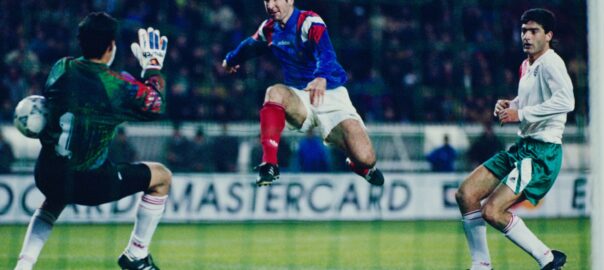
Eric Cantona during the France v Bulgaria FIFA World Cup Qualifying Match

  • The UEFA preliminary draw for Qatar 2022 takes place on Monday 7 December
  • FIFA.com sets the scene by looking back at ten legendary European qualifying matches
  • Part one includes a Scottish legend, a Polish “clown” and a Bulgarian miracle

1. Sweden-Estonia, 1933: The first one of them all

The success of the inaugural FIFA World Cup™ in Uruguay in 1930 led FIFA to organise a qualifying competition for Italy 1934. Some 32 teams from three continents took part in the preliminaries, with Sweden and Estonia having the honour of contesting the very first World Cup qualifying match.

11 June 1933, Olympiastadion, Stockholm, Sweden 6-2 Estonia

Goals: Knut Kroon 7’, Lennart Bunke 10’, Bertil Ericsson 13’, Torsten Bunke 43’, Bertil Eriksson 70’, Sven Andersson 79’ pen (Sweden); Leonhard Kaas 47’, Richard Kuremaa 61’ (Estonia)

Sweden forward Knut Kroon went down in history as the first player to score in a FIFA World Cup™ qualifying match. The home side were 3-0 up inside 15 minutes, with Torsten Bunke adding a fourth just before half-time. Though Leonhard Kaas and Richard Kuremaa pulled goals back for the visitors, the hosts truck twice more to send the 8,000 fans home happy.

The Swedes went on to beat Lithuania to clinch their place at Italy 1934, while Estonia have never come as close to qualifying for the world finals since.

FIFA World Cup Programme - Italy 1934

2. England-Poland, 1973: Ramsey’s men floored by a “clown”

England had to beat Poland at home to qualify for Germany 1974. Despite mounting criticism of coach Sir Alf Ramsey – the man who had taken them to World Cup glory in 1966 – the Three Lions were still expected to get the job done.

Adding to the general air of confidence were the pre-match comments made by the legendary coach Brian Clough, who would later lead Nottingham Forest to European glory. A TV pundit on the night, Clough described Poland goalkeeper Jan Tomaszewski as “a circus clown in gloves”, unconvinced by his unorthodox style. As England found out, however, clowns can sometimes make you cry.

17 October 1973, Wembley, London, England 1-1 Poland

Goals: Allan Clarke 63’ pen (England); Jan Domarski 55’ (Poland)

Though England laid siege to the Polish goal from off, Tomaszewski repelled everything they threw at him to keep the game goalless. Ten minutes into the second half, Poland took the lead. Wide man Grzegorz Lato was the architect, breaking clear down the left before squaring the ball to Jan Domarski on the edge of the England box. Domarski struck the ball first time, his low drive squeezing beneath the diving Peter Shilton and into the back of the net.

Though Allan Clarke equalised from the penalty spot a few minutes later and the English resumed their bombardment, they could not find the all-important winner, despite having 35 goal attempts to Poland’s two. The “clown” had had the last laugh.

Recalling the evening, Tomaszewski said: “I remember the last thing [Poland coach] Kazimierz Gorski said to us before the match: ‘You can play for the national team for 20 years and play a thousand games without anyone remembering you. But tonight you have the chance to go down in history’. And he was right. I didn’t have the greatest match of my life that night, no question. But I did have a lot of luck.”

Having been denied by the Polish keeper, England would have to wait until 1982 before returning to the World Cup.

Polish goalkeeper Jan Tomaszewski saves a shot against England in 1973. Photo courtesy thefa.com.

3) Wales-Scotland, 1985: Tragedy follows euphoria for the Tartan Army

Instead of celebrating a result that helped them take a massive step towards Mexico 1986, Scotland was a nation plunged into mourning when the legendary Jock Stein passed away at the end of a dramatic game in Cardiff.

10 September 1985, Ninian Park, Cardiff, Wales 1-1 Scotland

Goals: Mark Hughes 13’ (Wales); Davie Cooper 81’ pen (Scotland)

Having qualified for the previous three World Cups, Scotland arrived in Cardiff needing a point to secure second place in their group and a play-off meeting with Oceania representatives Australia. Standing in their way were Wales, who had beaten the Scots in Glasgow earlier in the group thanks, almost inevitably, to a goal from Ian Rush, and who needed a win to take the runners-up spot behind Spain.

Reflecting on that fateful night, Sir Alex Ferguson, who was Stein’s assistant coach at the time, said the tension was visible on his mentor’s face as kick-off approached. Mark Hughes’ 13th-minute opener for Wales only increased Scottish apprehension. With an hour gone, the former Celtic coach made a brave move, replacing star man Gordon Strachan with Davie Cooper. The Rangers winger repaid Stein’s faith by pulling the Scots level from the spot with just nine minutes remaining.

On hearing what he thought was the final whistle, Stein rose from the dugout to shake hands with his opposite number, Mike England, only to suffer a heart attack and collapse to the ground. After being carried into the medical room at Ninian Park, he was pronounced dead a few minutes later.

Some 12,000 Scots had made the journey to Cardiff that day. Interviewed on television, one of them spoke for a nation: “We’d rather be out of the World Cup and have Big Jock back.”

10th September 1985, World Cup Qualifier, Cardiff, Wales, Wales 1 v Scotland 1, Scottish players Alan Rough (L) and Mo Johnston celebrate at the end of the match as they qualify for the 1986 World Cup Finals in Mexico, At right is assistant manager Alex Ferguson who realises that manager Jock Stein has collapsed.

4) Republic of Ireland-Spain, 1989: Michel’s misfortune, Bonner’s brilliance

Absent from the first 13 World Cups, Republic of Ireland did not make the best of starts to the qualifying tournament for no. 14, collecting just two points from their opening three games – all away from home. Worse still for the Boys in Green was that their next opponents on the road to Italy 1990 were an in-form Spain side that had earned maximum points from their first five games in the group. But with Jack Charlton on the bench, anything was possible. He was, after all, the man who had led them to UEFA EURO 1988, their first appearance at a major international competition.

26 April 1989, Lansdowne Road, Dublin, Republic of Ireland 1-0 Spain

Goal: Michel 16’ og (Republic of Ireland)

Spain had handed the Irish a footballing lesson in Seville a few months earlier, the 2-0 scoreline barely reflecting their superiority on the night. Charlton also had to make do without Liverpool striker John Aldridge, who missed the game on compassionate grounds following the Hillsborough disaster, which had occurred just a few days earlier. Urged on by a 50,000 crowd, however, Charlton’s side put their opponents under pressure from the kick-off. They were rewarded in the 16th minute, when Michel, with Frank Stapleton lurking just behind him, inadvertently turned Ray Houghton’s near-post cross into his own net.

Spain did everything they could to equalise, only to find Pat Bonner in unbeatable form between the posts. “We beat a great Spain team that night and there’s no doubt that it was the turning point for us in reaching Italia 90,” said the Republic of Ireland goalkeeper afterwards. “I’d say it was one of the great nights at Lansdowne Road.”

5) France-Bulgaria, 1993: Kostadinov dashes Les Bleus’ American dream

With two home games remaining in their USA 1994 qualifying group, France needed just a point to go through. They missed their first chance, losing 3-2 to Israel, but were confident of getting the job done against Bulgaria, who needed to win if they were to qualify.

17 November 1993, Parc des Princes, Paris, France 1-2 Bulgaria

Goals: Eric Cantona 32’ (France); Emil Kostadinov 37’, 90’ (Bulgaria)

Favourites to win, France duly took the lead on 30 minutes, when Jean-Pierre Papin nodded the ball across the box for Eric Cantona to fire home. Five minutes later, the Bulgarians were level, Emil Kostadinov rising high at a corner to remind Les Bleus they were not in the USA yet. With memories of that loss to Israel still fresh, the French appeared more content to settle for a draw than to go for a win, a cautious approach that looked to be the right one as time went by. Then, with just a minute remaining, David Ginola won a free-kick deep in the Bulgarian half, right next to the corner flag.

Instead of keeping the ball and using up a few more vital seconds, the Paris Saint-Germain forward chose to swing in a cross. He overhit it, handing possession straight back to the visitors, who broke forward at speed. Picking up possession on the halfway line, Lyuboslav Penev chipped a delightful ball into the path of the charging Kostadinov, who made light of a tight angle to thrash a half-volley in off the bar and past the helpless Bernard Lama. The time on the clock was 44:58.

“The French were so scared they played with their buttocks clenched,” said Bulgaria captain Hristo Stoichkov. “We knew that’s how they would be and we based our tactics on that. They played for a draw and never went looking for the win. They didn’t deserve to win and we hit them where it hurt most.” Stoichkov would be one of Bulgaria’s heroes on their dramatic run at USA 1994 a few months later.

FIFA.com
FIFA.com News
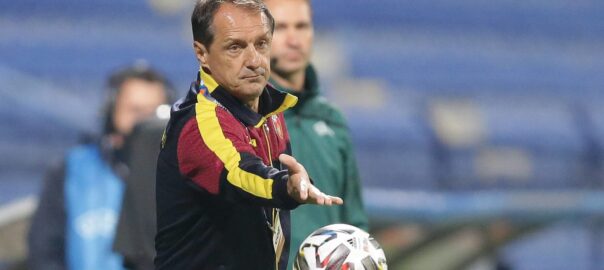
Hadzibegic: Montenegro is at the start of something amazing

Faruk Hadzibegic, Coach of Montenegro 

  • Faruk Hadzibegic has been in charge of Montenegro since July 2019
  • Coach has transformed a struggling side
  • Discusses his job, the draw for Qatar 2022 and his playing days

When Faruk Hadzibegic was appointed Montenegro coach in July 2019, he inherited a side that was very much down on its luck. Bottom of their UEFA EURO 2020 qualifying group – a position they remained in – the crisis-stricken Brave Falcons needed all the 63-year-old Bosnian’s patience and human touch to get back on track. And get back on track they did, stringing together some fine results in the last few months and reaping the rewards of his diligent work.

Such has been Montenegro’s recovery, in fact, that Hadzibegic believes they have what it takes to reach the FIFA World Cup Qatar 2022™, the UEFA preliminary draw for which takes place on Monday 7 December. In an interview with FIFA.com, the former Yugoslavia international discusses his current job, his ambitions for the future and his experience of playing at Italy 1990.

FIFA.com: What was going through your head when you were appointed Montenegro coach in July 2019?

Faruk Hadzibegic: I had mixed emotions. I was returning to a part of former Yugoslavia where political tensions had never really gone away and where the plight of the national team was causing a lot of stress, concern and sadness. It was a challenging situation and I had to think it through. In the end, though, my love for football and my desire to go back to my roots won out.

The team was in poor form. What was the mood like when you started?

All those bad results had knocked the team off course but my feeling was that the players wanted to turn things around. We needed to spend time together, to talk things through and get out on the pitch. The whole coaching staff rallied around the team, and the mood and the atmosphere couldn’t be better now.

The results have taken a little while to come.

I’ve got a lot of experience so I knew there were going to be some tough times at the start and a few mood swings involved. Everyone needed to take time out from the situation, on both a football and mental level. We also had injuries to the likes of Stevan Jovetic, who’s our most technically gifted player. Everything happened at once: morale was low, the results were bad and we had injuries too.

What targets were you set by Dejan Savicevic, the head of the national FA since 2006?

He didn’t give me any specific target other than getting the team back on a stable footing and restoring confidence and a sense of commitment to the national team. I played with him and against him in [former] Yugoslavia. He was known throughout his career for his qualities as a person and a player. He’s the best president I’ve ever had in my career, at club and national team level. He knows the game inside out and talks about nothing else. He runs the national association like a family, as if it were his home.

Montenegro's forward Stevan Jovetic (L) vies with England's midfielder Steven Gerrard (R)

The population of Montenegro is only 600,000. Does that limit your chances of success?

It goes without saying that when you only have 100,000 registered players you’re going to have a much smaller player pool than Spain, France or Germany, who’ve got millions. We get by, though. It’s a drawback but it’s not a problem for me. When we’re at full strength, which hasn’t happened since I’ve been here, we’ve got a chance against any team.

What are your views ahead of the UEFA preliminary draw for Qatar 2022, which is coming up on Monday 7 December?

My only hope for the qualifiers is to be able to go into them in the best possible shape, without any injury problems or anything like that. We’re in a good place right now. We’ll have to wait and see what the draw has got in store for us, but I’m hoping we get an exciting group with teams from the world’s top ten and some fixtures that will excite the players and the whole nation. Montenegro is a sporting country with a winning culture.

Do you think Montenegro are ready to play in the World Cup?

Yes, without a shadow of a doubt.

Your home country, Bosnia and Herzegovina qualified for Brazil 2014, of course. Is that a source of inspiration for you?

I helped out with the reconstruction of the country and the national team after the war [the Bosnian War of 1992-95]. They were very intelligent and brave in doing the work they did. We are looking at what our neighbours are doing and we are taking it slowly. You have to be ambitious but you can’t get ahead of yourself. If you ask me, though, Montenegro is at the start of something amazing.

Are you the type to talk about your playing career to your players?

Oh that! Never. I don’t allow myself to do that. It was another time. What’s the use in me saying I played with the likes of [Diego] Maradona, [Michel] Platini, [Lothar] Matthaus and [Emilio] Butragueno? They’re good memories and I cherish them but I don’t use those experiences to get on the same level as my players.

What memories do you have of your run with Yugoslavia at Italy 1990?

It was an amazing experience, a really exciting adventure for us. It gives me goose bumps just thinking about it. I was at the peak of my powers, both mentally and physically. It was a World Cup of artists. You had [Roberto] Baggio with Italy, [Rene] Higuita with Colombia, and Butragueno with Spain, to name but three. There was a lot of skill on show at that World Cup.

What impact did your performances have in former Yugoslavia, which was on the brink of war at the time?

We always got a lot of support from the fans. When we beat Spain in the last 16 it was completely normal for us, and I’m not being arrogant when I say that. We believed in ourselves. We respected the opposition but we had the quality to beat them.

You then played Argentina in the quarter-finals. As a defender, what goes through your head when you’re about to face Diego Maradona?

Diego was an outstanding player. It’s a pleasure to take on one of the best players in the world, but that’s something you think about after the match. During the game you don’t have time to think. We were playing the reigning world champions, so we were just looking at ourselves. I could see, though, that Maradona had an amazing attitude. He played for the team, was really up for it, and had a lot of respect for us. I admired him but I was focused.

That was Yugoslavia’s last international match and you missed the last penalty. Does it still hurt?

It’s just one of those things. I tend to put things into context. There are regrets because I would have preferred to score. But everyone reminds me about that penalty and talks to me about it. There was even a book about it and a film, which asks if my penalty started the war (laughs). I take it all with a pinch of salt. I played for 20 years and that’s the only thing people remember. But I laugh about it and I see the funny side. I went down in World Cup and in history full stop thanks to that penalty (laughs).

FIFA.com
FIFA.com News

Petkovic: Switzerland have no reason to fear anyone

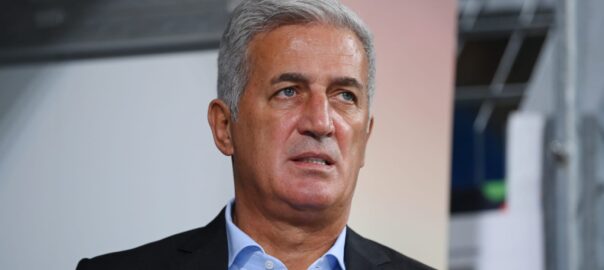
Head coach Vladimir Petkovic of Switzerland looks on

Vladimir Petkovic had some big shoes to fill when he took over as head coach of the Swiss national team in 2014 following Ottmar Hitzfeld’s successful tenure. But the 57-year-old has proven himself, and his contract was extended until the end of 2022 just a few months ago.

Petkovic, who was at the helm of Lazio in the Serie A just eight months before taking on his current role, has led Switzerland to qualification for both UEFA EURO 2016 in France and the 2018 FIFA World Cup Russia™. However, they were knocked out in the last 16 at both tournaments, leaving them with unhappy memories of the 5-4 penalty shootout defeat to Poland in Saint-Etienne and of the 1-0 reverse to Sweden two years ago in St. Petersburg.

FIFA.com caught up with Petkovic shortly before the European qualifying draw for the FIFA World Cup Qatar 2022™.

FIFA.com: Vladimir, what would be your verdict on 2020?

Vladimir Petkovic: The year 2020 will go down in the history books. The whole world was surprised by a pandemic, and it also affected football. I always take life as it comes and try to make the best out of it. After a long break, we had eight games in just under three months. It was both an intensive and informative time for my team and I. We played against the best teams in Europe in League A of the UEFA Nations League. In terms of results, there was room for improvement, but in the matches against Germany and Spain we saw that we’re developing positively, can compete with the best and assert ourselves.

To what extent has your work as a national team coach changed during the pandemic?

We weren’t able to meet up or play any matches for a very long time. In the end we were only actively out on the pitch for three months. We organised virtual meetings to maintain communication between the staff and players. Sometimes it was just so that we could see each other and have a drink together. I phoned the players a lot and watched the majority of their behind-closed-doors games on television, rather than at the stadiums. The players adapted to the new conditions, and my staff and I had to implement everything we hadn’t been able to before within a very short space of time. As I mentioned, I take everything as it comes and try to make the best of every situation.

Switzerland coach Vladimir Petkovic (R) during a team training session

What are your expectations for 2021? How far can you go at the European Championship?

It’ll be an intensive and eventful year for football in 2021. We’re looking forward to the World Cup qualifiers and the EURO, and we hope we’ll soon be able to play and experience football again like we did before the pandemic. We invested a lot in our Nations League campaign as preparations for the EURO. We want to qualify for the World Cup in Qatar and go as far as we can at the European Championship. A lot is possible with this team. If everything comes together we can go a long way and we hope that there will soon be a definitive decision that the EURO can go ahead as planned.

You will face Italy, Turkey and Wales in your group…

They’re three strong teams, but we don’t need to be scared of anybody. We go into each game looking to win it. Italy and Turkey have slight advantages in that they’re playing ‘home games’: Italy in Rome and Turkey in Baku. But our first objective is to progress to the next round.

Vladimir Petkovic, Head Coach of Switzerland, Senol Gunes, Head Coach of Turkey, Roberto Mancini, Head Coach of Italy and Ryan Giggs, Head Coach of Wales pose

Germany have received a lot of criticism recently. Were you surprised by their 6-0 defeat to Spain?

Obviously it’s a surprise when Germany lose 6-0, but it’s not that long ago that they beat Brazil 7-1. Anything is possible in football. There are extraordinary days like that when such things can happen, especially because we’re in a period where teams are gearing up for the EURO and World Cup qualification, and are trying things out. But the result shows that Spain are really good and have taken great strides. It also demonstrates just how good our 1-1 draw with Spain was, as we’d only played them three days earlier. That result didn’t receive the credit it deserved in some quarters.

Niklas Suele of Germany jumps for a header with Breel Embolo of Switzerland

Switzerland drew against Germany in September and October. How important are those ‘prestigious’ results against Germany?

We’ve always said that we have no reason to fear anyone. Our players play in the best leagues in the world, and a lot of the time they line up alongside Germany players. We’ve climbed closer to the global elite. Those draws are evidence of that, but you could also see that we’re still missing that little something to be able to win those games.

Let’s talk about the Qatar 2022 qualifying draw. Is there a country you would like to avoid?

You can’t pick and choose in World Cup qualifying. All the teams in Pot 1 are very good, and there are strong sides in Pots 2 and 3 as well. We always just take it as it comes and hope for the luck of the draw so that we end up qualifying with good performances.

Would you be happy to be drawn against Germany?

Of course. Germany are our neighbours. We’ve got a long-standing neighbourly friendship and a rich history of football together. Matches against Germany are always special and they’re highlights for our fans too. But we need to improve certain details in order to assert ourselves fully against teams like that. We would really look forward to a game against Germany.

Switzerland have qualified for the last four consecutive World Cups. Will Die Eidgenossen also be at Qatar?

We’ll do everything we can to get there. We’re very confident and believe we can do it, even though it’ll be harder to qualify because only the group winners and three best runners-up in Europe get a ticket. We’ll do our utmost to execute everything positively.

To what extent has the coronavirus pandemic affected results? Can there be more surprises?

I don’t think results have been affected by it. The pandemic has affected everyone, so every association and every team are battling the same difficulties. During the UEFA Nations League everyone had to learn how to cope with the pandemic, and we saw that there is room for improvement in some places.

What are your thoughts in general on the 2022 World Cup? Have you ever been to Qatar?

I’ve never been there and I’m looking forward to getting to know the country. I’m very curious to see what will await us. There’s a short window for preparation because the World Cup is taking place in winter, and the players won’t be as tired as they usually would be before a World Cup. The players from the top leagues will be fitter than they would be in June, so that will make the quality and intensity even greater. You can learn from that and pick up new experiences as a coach and as a team, all geared towards having a good World Cup.

Will the World Cup be an extra special tournament due to it taking place in winter?

It is indeed something special for the players and for fans all over the world. For our fans at home that will mean public viewing at indoor locations and not outside on a nice summer’s evening. But now those who live in the other hemisphere will get to experience a World Cup in summer. In Europe, people will be at home more during the winter and will be following the entire spectacle on their screens.

Switzerland have reached the Round of 16 in three of their last four World Cup campaigns. Can you go even further in 2022?

We’re working on it. We’re constantly looking to improve, step by step. First of all we want to qualify. The second step is to make it out of our group. And we’ll do everything we can to be able to take further steps too.

FIFA.com
FIFA.com News

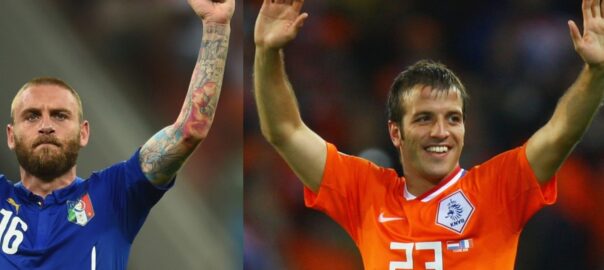
De Rossi and Van der Vaart confirmed as assistants in UEFA preliminary draw for FIFA World Cup 2022™

UEFA preliminary draw for FIFA World Cup 2022™ draw assistants

  • FIFA Legends look forward to Monday’s draw
  • De Rossi: “Playing at the FIFA World Cup and lifting that iconic trophy is every footballer’s dream”
  • Van der Vaart: “I expect an exciting race for the 13 European FIFA World Cup spots”

With the eagerly anticipated UEFA preliminary draw for the FIFA World Cup Qatar 2022™ fast approaching, FIFA Legends Daniele De Rossi and Rafael van der Vaart have been named as assistants ahead of the ceremony, which is due to take place in Zurich on 7 December at 18:00 CET.

De Rossi, a member of Italy’s 2006 FIFA World Cup-winning squad, also featured at the 2010 and 2014 editions of the FIFA World Cup during a glittering career that saw him earn 117 caps for the Squadra Azzurra. At club level, he remains one of the most iconic players in Roma’s history, whilst he also turned out for Boca Juniors.

Former Dutch international Van der Vaart, who made 109 appearances for his country, played at the 2006 FIFA World Cup, whilst he was also part of the squad that reached the final in South Africa four years later. During a stellar career, Van der Vaart showcased his talents for a host of top clubs, including Ajax, Hamburg, Real Madrid, Real Betis and Tottenham Hotspur.

“Playing at the FIFA World Cup and lifting that iconic trophy is every footballer’s dream. On Monday, that dream will become a little more real as all 55 European teams learn their fate on the road to the FIFA World Cup 2022,” commented De Rossi.

“I think that qualification for Qatar will be a tough task. As we have seen in recent years, the gaps between the teams at international level are becoming ever smaller.”

“I look forward to seeing an exciting race for the 13 European FIFA World Cup spots and, from my own experience, I know what it means when the most iconic tournament in world football begins to take shape,” said Van der Vaart.

“The FIFA World Cup always offers something different. You’re representing your country and feel as if the whole world is watching. All you want to do is write your name into the history books.”

The two football legends will assist FIFA’s acting Director of Competitions Jaime Yarza in conducting the draw.

The full draw procedures, including details on constraints, are available here.

Fans around the world will be able to follow the draw live on FIFA.com and through FIFA’s broadcast partners.

FIFA.com
FIFA.com News

Bangladesh braced for Qatari challenge

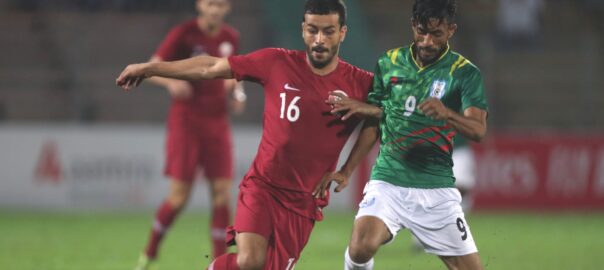
Action from Bangladesh and Qatar match

  • Qatar are top of Asian qualifying Group E
  • Bangladesh aiming for positive result despite difficult task
  • This will be the first competitive game in Asia in 2020

Bangladesh will have it all to do today against Qatar, the reigning Asian champions and host of the FIFA World Cup 2022™, when the teams meet in Group E of the Asian qualifiers for the global showpiece.

This Friday, the Abdullah Bin Khalifa Stadium will host Asia’s first competitive international of 2020 after matchdays 7 and 8 of the second qualifying round, which were originally scheduled for October and November 2020, were postponed due to the Covid-19 pandemic.

Action from Bangladesh and Qatar match

Home advantage

Qatar will be aiming to extend their lead in Group E, having already registered four wins and a draw, including a 2-0 defeat of Bangladesh in Dhaka. The hosts will enjoy a genuine home advantage with permission granted for spectators to occupy 20 percent of the stadium’s seating capacity.

Al-Annabi will be relying on the nucleus of players who won the AFC Asian Cup 2019, spearheaded by reigning AFC Player of the Year Akram Afif, as well as the top-scorer of the 2019 AFC Asian Cup Almoez Ali. They will, however, have to deal with the absence of defender Ro-Ro (Pedro Miguel) due to suspension.

The defending Asian champions cannot wait for the action to restart. “We’re very happy to resume matches as we haven’t played any competitive games for a long time. The players are excited about this encounter,” said Qatar coach Felix Sanchez.

Asked about the corresponding away fixture in 2019, the Spaniard said: “Bangladesh had some chances in that game, and we noticed that they defend very well. They do their utmost in every match and that is one of their strengths.”

Al-Annabi prepared for today’s match with three friendlies in the last two months; losing 5-1 to Ghana, drawing 1-1 with Costa Rica and most recently going down 2-1 to Korea Republic.

Bangladeshi pragmatism

Bangladesh will be under no illusions heading into this game, given that Qatar are 125 places above them in the FIFA/Coca-Cola World Ranking. Moreover, they are bottom of Group E, having picked up a solitary point in four games courtesy of a draw with India.

The South Asian side prepared for the encounter with two friendlies against Nepal last month, winning the first match 2-0 before drawing the second 0-0.

Bangladesh coach Jamie Day admitted it would be tough to defeat Qatar, saying: “Winning will be difficult despite the solid preparation we made by playing four friendly matches.”

The English coach recently contracted Covid-19 and was only able to join his team in Qatar on Wednesday. “We want to get a positive result against the Asian champions,” he said.

Bangladesh team line up
FIFA.com
FIFA.com News