Following the tender process in Greece to acquire the media rights to the FIFA World Cup 2022™, FIFA has awarded them to Antenna TV.
Antenna TV will provide daily free-to-air coverage of the tournament, with at least 32 matches, including the opening match, quarter-finals, semi-finals and final, to be shown via its primary channel, Ant1TV. All 64 matches of the 2022 tournament will be available live via Antenna’s platforms, meeting FIFA’s objectives of providing large exposure for its competitions and offering fans a high-quality viewing experience.
The FIFA World Cup Qatar 2022™ will be the 22nd edition of the competition, and it will be unique as it will be the first FIFA World Cup™ in the Middle East and the first to take place in November/December. With ultra-modern venues, optimal playing conditions and a compact event footprint, the host nation will provide a unique platform to celebrate the game and its ability to connect and inspire people around the world. The tournament will follow the traditional format, with 32 participating teams and 64 matches, offering a highly competitive group stage followed by an exciting knockout phase.
FIFA’s Director of Media Rights & Content Services, Jean-Christophe Petit, said, “We are pleased to welcome a new partner for the FIFA World Cup™ 2022 rights in Greece. Antenna TV will offer extensive coverage of the event on its linear and digital platforms, ensuring that this unique FIFA World Cup is unforgettable for all Greek fans.”
Through the sale of media rights for its tournaments, FIFA generates income which is essential to support and develop football around the world, for instance through the FIFA Forward Development Programme.
Stella Litou, General Manager of Television, Antenna Group, said: “Securing the exclusive media rights to the biggest football tournament in the world proves, once again, Antenna’s position as the Greek broadcast market leader. Televising the FIFA World Cup 2022™ supports the vision of Antenna Group Chairman, Theodore Kyriakou, to provide content of the highest quality for our viewers, across all our media assets and platforms. We are delighted to be the first private TV channel in Greece to broadcast this, the most important football event in the world, giving our viewers the chance to enjoy, free to air, the greatest moments from football’s biggest stars, on sport’s biggest stage.”
Antenna Group – ANT1 TV
Antenna Group is a leading international content, media and entertainment organisation, owning and operating a diverse portfolio of global media assets across Europe, the US, Canada and Australia, reaching a combined audience in excess of 150 million.
ANT1 TV, part of the Antenna Group, is Greece’s leading broadcaster. Founded in 1989, as one of the first private TV channels, it has evolved over the years, and expanded its global footprint over three continents. ANT1 TV has played a vital role in shaping the Greek television landscape with a strategy focused on the viewer, providing high quality programming, pursuing innovation and creativity, and adapting the best global practices to local needs.
In May 2019 Casillas suffered a heart attack that has changed his life and priorities
The Spain and Madrid legend turns 40 today 20 May
He talks to FIFA.com about his concerns, new projects and cherished memories
“We footballers believe that, because we’re monitored more, we won’t suffer from heart problems. However, cases like mine, and others even more serious, show that unfortunately that’s not the case,” says Iker Casillas on what concerns him most today, his 40th birthday.
On 1 May 2019, his life was turned upside down. The 2010 world champion suffered a heart attack while training with his club Porto. That day everything changed for him and he had to leave behind what he loved most, playing football, bringing his motivation and enthusiasm to new projects instead.
To coincide with his 40th birthday, FIFA.com chatted to Casillas about these projects and reminisce about some of the key moments in his glittering career.
FIFA.com: Congratulations on your 40th birthday. How special is this day for you?
Iker Casillas: Thank you very much. My birthday has always been special, but for two years I’ve also celebrated the date I had a heart attack. That was the day I was born again.
That happened in 2019 and forced you to retire from football. Have your priorities and the way you view football changed?
The heart attack changed my life, of course. It forced me to leave behind what I loved the most, which was playing football, at a time when my enthusiasm for competing at the highest level was still intact.
Fortunately, life goes on, albeit with different priorities, and now I’m excited and busy during this phase of my life with my work at Real Madrid, my Foundation, La Liga as well as my business projects.
Can you tell us why you feel it’s important to raise awareness of heart disease and how this can save lives?
It is important to make everyone aware that heart disease can be detected and prevented, whether you’re a sportsperson or not. People should routinely have check-ups to avoid nasty scares.
I collaborate with various initiatives to support research projects. One that I’m especially proud of is a project with Idoven, a cardiological start-up that combines AI, wearable technology and cardiologists to prevent heart disease and sudden death through early detection.
How important is it for players to be aware that they too can suffer heart problems?
“We footballers believe that, because we’re monitored more, we won’t suffer from heart problems. However, cases like mine, and others even more serious, show that unfortunately that’s not the case. Elite sportspeople are more exposed due to the physical demands that require us to push our bodies closer to the limits. There are also moments of stress due to competitions that can increase the risk of these problems appearing.
Given all that, what do you treasure most from your career? Do you now place even greater store on what you did as a player?
I treasure everything because the good times were exceptionally good, while the not-so-good ones can make you even better. But my debut for Real Madrid, my first Champions League title, the two EUROs and, obviously, the South African World Cup are indelible memories.
You were a fundamental part of the golden age that changed Spanish football. What do you remember about EURO 2008 and your coach Luis Aragones?
The best memory is the atmosphere we had at that time in the squad. We were team-mates and friends. The group was tightknit and led by Aragones, who was the one who really imbued us with confidence and forced us to believe that we could achieve what we set out to do.
Then came the 2010 FIFA World Cup™ in South Africa. How do you remember the build-up to that and the expectations back home, given that you were going into it as European champions?
I remember us being confident. We had a tremendously strong group and a sense of solidarity. In short, we were a team in the real sense. Obviously after winning the EURO we went there as one of the favourites, which always brings added pressure and responsibility.
But you know you have the entire country behind you and that it’s up to everyone in the group to have the same goal. We believed we could become world champions for the first time in our history, and that gave us the mental strength and confidence that swept us to the title – though not without some moments of anguish.
You began that World Cup with a defeat to Switzerland. Aside from the 2-0 win over Honduras, all the other victories, including the Final, were by single goal margins…
We started poorly and finished strongly. We didn’t completely boss any game, but we were a very balanced side. We knew we’d always score and that we were hard to score against. That solidity across all our lines and always being in control of games was what made us sure of success.
The shot you saved from Robben, how Puyol congratulated you, your tears after Iniesta’s goal… What do you recall about those moments from the 2010 Final?
What I remember is that it wasn’t a goal! (Laughs) Everything happened very fast, but when I saw Robben racing towards me, it was as if time had slowed down, like slow motion. When he curled the ball, I managed to get my foot to it and deflect it wide. It’s a moment of play that will always be remembered.
As for Puyi, the truth is that I don’t really remember what he told me, because you’re experiencing many emotions at a time like that. I just remember he squeezed me hard. Andres’ goal had it all. The move began at the back with that galloping run down the flank by Navas. Iniesta picks it up and it ends up with Cesc, who finds Torres. He in turn tries to pick out Andres but his pass is cut out, only to fall again to Cesc, who this time finds Iniesta…
I remember it in slow motion, the moment he struck it, the minutes on the clock, and what that meant… After that it’s like an explosion; all the emotions that we’d been keeping in check rushed to the surface – a kind of collective madness…
Iker Casillas
Iker Casillas of Spain celebrates lifting the World Cup with team mates
Captain Iker Casillas of Spain lifts the trophy
Iker Casillas of Spain lifts the trophy
Iker Casillas of Real Madrid lifts the trophy
Iker Casillas of Real Madrid CF holds up the La Liga trophy
Iker Casillas of Spain applauds
Gianluigi Buffon of Italy embraces Iker Casillas of Spain (L)
Iker Casillas of Spain in action
Iker Casillas (C) of Spain lifts the trophy as he celebrates
Iker Casillas (R) and Sergio Ramos of Real Madrid celebrate
Iker Casillas kisses the Trophy during Spain’s FIFA World Cup victory parade
The circle closed with a 4-0 triumph over Italy in the final of EURO 2012, the biggest win in the history of European Championship deciders.
No team had ever won the final by so big a margin, but we still had a lot of respect for our opponents. Opposite me was Buffon, who is a friend and someone I admire, so part of you is in his shoes too.
At club level, you’ve done it all with Real Madrid. From being named in the squad for a first-team game in Norway when just 16 to becoming one of the club’s great captains and winning three Champions League titles… What do you remember most?
I remember everything as a kind of evolution. From the moment I was taken out of school for that Champions League game, I’ve experienced a career with ups and downs. The titles were very important, but for me the best moment was when I arrived at Real Madrid for the first time at the age of nine.
I made my first team debut very young in a match at La Cathedral (Athletic Bilbao’s San Mames stadium), a moment that will always stay with me. Then I went back to Castilla (Madrid’s reserve team). I then spent a season when Caesar [Sanchez] was first choice for the first team, but that kind of competition for places teaches you to be better and excel. Everything that happened to me, the good and the not so good, was necessary to get where I am.
Moments from Iker’s life in his words
“A first-team debut in a mythical stadium such as San Mames leaves its mark. It’s a magical moment.” The significance of his debut for Real Madrid on 12 September 1999
“The turning point was the quarter-final against Italy. Finally, the curse of the quarters was consigned to history, and that generation of footballers were ready to do great things.” On his first title with Spain at EURO 2008
“It’s the biggest title you can win with your national team, but it means so much more. I was honoured and proud to be captain at the time, but all my team-mates and all of Spain lifted that Cup with me. When we returned to Spain it really sunk in when we saw what a huge impact it had made.” What the 2010 World Cup meant for Spain
“It was a validation of that generation’s dominance in world football. Spain had created a style, a model of play that had devotees all over the world and which enthralled fans.” On the EURO 2012 title and closing the 2008-2010-2012 winning circle
“It was the best decision once my time as a Real Madrid player had come to an end. Porto is another of Europe’s big clubs, and it allowed me to continue competing at the highest level. We’ll always be grateful to them. The affection shown by the club and its fans helped us to quickly adapt to life there.” On his move to Porto in the summer of 2015
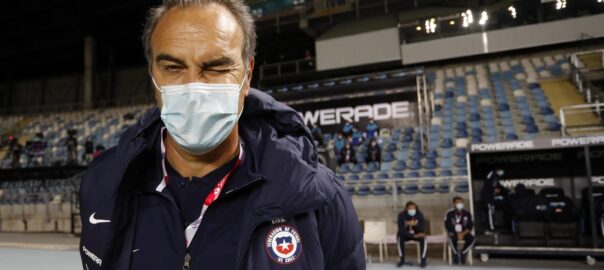
Martin Lasarte took over as Chile coach in February
The Uruguayan is in charge of a national team for the first time
He discusses the World Cup qualifiers, Copa America and his team’s objectives
Just a few days shy of his 60th birthday, the Uruguayan Martin Lasarte accepted the biggest challenge of his coaching career by taking charge of the Chilean national team, who are determined to make it back to the FIFA World Cup™ after missing out on Russia 2018.
And while this is his first stint in charge of a national team, Lasarte has ample coaching experience in South American, including in Chile, where he has managed two of the country’s top three sides: Universidad Catolica and Universidad de Chile, guiding the latter to three titles.
Known as Machete for his hard-hitting tackles as a player, Lasarte was the coach who gave Luis Suarez and Antoine Griezmann their professional debuts at Uruguay’s Nacional and Spain’s Real Sociedad respectively. On top of that, he has coached in countries as varied as Colombia, UAE and Egypt – his last stop before taking up the Roja reins.
His first official matches will be against Argentina and Bolivia as part of the qualifiers for the FIFA World Cup Qatar 2022™, where Chile currently languish outside the qualifying berths in sixth place. That campaign, as well as this year’s Copa America and the team’s objectives, were all up for discussion during an interview with FIFA.com.
Martin Lasarte, Chile coach
Chile s coach Martin Lasarte is pictured during the friendly match against Bolivia
Chile’s coach Martin Lasarte is pictured during practice. Photo: Carlos Parra/ANFP
Chile’s coach Martin Lasarte is pictured during practice. Photo: Carlos Parra/ANFP
Chile’s coach Martin Lasarte is pictured during practice. Photo: Carlos Parra/ANFP
Chile’s coach Martin Lasarte is pictured during practice. Photo: Carlos Parra/ANFP
Chile’s coach Martin Lasarte is pictured during the friendly match against Bolivia
Chile’s coach Martin Lasarte is pictured during the friendly match against Bolivia
Chile’s coach Martin Lasarte is pictured during the friendly match against Bolivia
FIFA.com: What attracted you to the Chile role at this point in your career?
Martin Lasarte: Firstly, it’s always enticing and interesting to be offered a national team job, but there was also a sense of belonging. I worked here for almost four years and it was a very good period for me, personally and professionally. I’d been shortlisted for the position before but only this year did a concrete opportunity arise. I don’t know if it was the best or worst time for it, but I’m here now. Once you accept, there’s a lot at stake… but I’m confident we can achieve the goals we’ve set.
How have you adapted to your first international coaching role, not to mention starting it in the midst of a pandemic?
Today, like everyone else, we find ourselves in a very specific situation that requires us to be inventive, to bring out the best in ourselves, and that’s where we’re at. There is a lot of deskwork: watching recordings of matches and videos, reviewing stats, talking with players and colleagues, making plans… In that regard, I feel very good. But unquestionably you miss the day-to-day routine: going to training, welcoming and chatting to the players, seeing if the weekend games reflected the work put in during the week. You just have to adapt. Ultimately, that has been one of the hallmarks of my career, adapting to different cultures and countries. I think it’s something I do without great difficulty.
How would you assess Chile’s start to the qualifiers?
In football there’s a lot of talk about how one feels [about a game], but the table doesn’t lie. On that basis, our position is somewhat compromised. That said, I feel that Chile deserve to have more points, which would have put us into the qualifying berths. Colombia got a point against us after a very stop-start game, while Uruguay beat us thanks to a long-range strike in the last minute. Even Venezuela’s winner came late in the game, so Chile had its chances. That’s useful for establishing what lies ahead and what the team can become.
What pleased you most and least about the performances in the opening four qualifiers?
What I liked least, or what worried me most, were the late goals conceded. Closing out matches is very important, even more so at this level. What pleased me most is that there’s a foundation in place, a structure that’s been there for some time and remains valid. There are players who form the cornerstone of the team and who are at a very high level, and they will be the standard-bearers driving our desire to return to a World Cup.
Could you tell us a bit more about the squad you have at your disposal?
Of course. I feel that the team is undergoing a process of renewal, just like many national teams on the continent in recent years. Chile may have been more directly affected by this, but it has a number of players who are capable of helping us achieve our goals and delivering at the World Cup, if we qualify. Then there are others who are at the stage where they can lend a hand but for whom the World Cup is probably out of reach still.
The other part of the equation is that we must continue with something [previous coach Reinaldo] Rueda started, which is to try to regenerate – a word I prefer over ‘replace’. A regeneration implies that footballers from earlier periods coexist with the new recruits in a process that should be planned and gradual and include the transfer of experience.
In this process, how important is the change of mindset achieved by the likes of Bravo, Medel, Vidal and Sanchez?
It’s of the utmost importance. It is no coincidence that they’ve been part of Chilean football’s most significant achievements They’re players who still stand out today for their sporting qualities, but also for their ability to motivate. That’s what I mean when I talk about the transfer of experience: it’s vital to have players with the ability to pass knowledge on, and Chile has them.
How do you envisage handling a dressing room with so many strong personalities without being able to work day-to-day with them like you would at a club?
I see it as just another challenge in my career. In Egypt I had to deal with the big names at Al Ahly, a huge club even if many Westerners don’t realise it, and yet it went well, despite their having a different methodology and language. Maintaining dressing room relations is crucial, as I know that, more so than tactics, group management is the hardest thing.
Speaking of tactics, can you reveal what formation you have in mind for Chile?
We’ll have to take into account the Covid situation, our opponents, etc. Argentina away is not the same as Bolivia at home, which is not to suggest we’re superior or inferior to anyone. The realities are different. Our baseline will be 4-3-3 or 4-2-3-1, the formations I’ve used the most. Over and above any numerical description, we’ll be trying to follow in the footsteps of the previous coaches from [Marcelo] Bielsa to Rueda by way of [Jorge] Sampaoli, all of whom did very well.
What do you mean by follow in their footsteps?
There are aspects of Chilean football identity from recent years that we cannot get away from, albeit with the caveat that those players are not the same today as they were 10 years ago. You don’t lose things like skill, knowhow and experience, but you can lose other things, such as physical performance. We need to look for ways that allow us to be as effective as before. For example: using a high press. We may not be able to do it all the time, but at certain times, during specific periods in a game.
What are your priorities for the upcoming Argentina and Bolivia fixtures?
We’re in a difficult situation, communicating digitally with players is very different from face to face. We try to gather information and send it in a clear and tangible way. So instead of 15 complex concepts, I prefer it to be five simple ones, based on what’s already been done, so that we can pick up from there when we meet up.
Can you make Chile a leading contender again in the limited time you have to work with the squad?
The limited working time is a reality, but the mentality of Chilean players, of Chilean football in general, has still changed for the better. It was a qualitative and real change, which maybe those of us who’d come from overseas or who’d competed against Chile in the past noticed more. We must keep the team centre stage. Chilean football has earned the right to be there and now is not the time to lose it.
At the Copa America, will you prioritise building a team for the World Cup qualifiers or for getting results at that tournament?
That’s like asking you to choose between your mum and your dad (laughs). The answer is to look at things globally. The big objective is to qualify for the World Cup. For the Copa America, as of today, we’re thinking of a mix, giving some playing time to those lads who have not yet competed for us or done so very little. That’s also because, we’ll need them very soon afterwards for the qualifiers, and if we make it, at the World Cup itself. In that sense, we see the Copa America as a solution, not a problem, and don’t think it will have a negative outcome in sporting terms.
You know how fixated on results South American fans are, and those of Chile are no exception. What would you ask of them as you embark on this project?
I’d just ask them to accompany and stick with us, and to give us their support and drive – whether it’s a little or a lot. And for them to believe in this process. I don’t wish to delegate the responsibility, which is mine, but I would like others to buy into the possibilities that unity, synergy and all pulling in the same direction can bring. That’s everyone’s responsibility. That energy ends up being significant, and I think the players would really appreciate it.
Although you’re not long in the job, is Qatar 2022 already an obsession?
More than an obsession, I see it as an obligation, albeit one you gladly undertake. A few months ago, I had to endure a worrying health issue, which fortunately has been resolved, and today I see things from a different perspective. I do what I like and work at what I love. I’m in a country where I feel like any other person, and I have the same goal as everyone else. I’ll show a lot of effort, commitment, goodwill and a little talent (laughs), along with the utmost dedication and resolve. Time will tell if that’s enough.
Rodriguez is one of the promising young talents Uruguay are banking on
Winger has three goals in nine games with LaCeleste
He talks about maturing as a player, the national team and World Cup qualifiers
In 2016 shortly after Brian Rodriguez had joined Penarol, Uruguayan legend Jose Perdomo, who had brought him to the Montevideo club, famously dubbed him locura (madness). “He was 15 years old and had a rocket in his head; he was a madman,” said the former Celeste midfielder – a Copa America champion in 1987 and participant at the 1990 FIFA World Cup Italy™.
By the time Rodriguez joined Major League Soccer (MLS) side Los Angeles FC (LAFC) for a club record fee three years later, fans were calling him Rayito (Little Lightning). While the first nickname alluded to his volatile temperament, the second focused on his electrifying play, which combines speed and dexterity, the ability to open up teams on either flank and his scoring ability.
And it was the emergence of this more mature player that convinced national team boss Oscar Tabarez to hand him his senior team debut in 2019 and then name him in his starting XI for the opening qualifiers of the FIFA World Cup Qatar 2022™.
Brian Rodriguez (Uruguay)
Uruguay s Brian Rodriguez (C) and Peru s Christian Cueva (R) fight for the ball
Penarol’s Brian Rodriguez (L) vies for the ball with Liga de Quito’s Carlos Rodriguez
Brian Rodriguez of Uruguay celebrates scoring his sides second goal during the 2019 FIFA U-20 World Cu
Brian Rodriguez of Uruguay battles for possession with Diego Palacios and Exon Vallecilla of Ecuador
Brian Rodriguez #17 of Los Angeles FC celebrates the third goal of his team
Uruguay winger Brian Rodriguez (16) passes the ball ahead of Uruguay defender Lucas Torreira (14)
Brian Rodriguez of Uruguay runs with the ball under pressure from Istvan Kovacs of Hungary
Uruguay s Brian Rodriguez (R) and Peru s Miguel Trauco fight for the ball
Christofer Gonzales and Miguel Trauco of Peru struggle for the ball with Brian Rodriguez of Uruguay
Brian Rodriguez of Uruguay fights for the ball with José Pedro Fuenzalida of Chile
Uruguay s Brian Rodriguez in action during the friendly soccer match against Peru at the National Stadium in Lima
Uruguay’s Brian Rodriguez is seen in action vs Hungary (Photo: AUF/@Uruguay)
Uruguay’s Brian Rodriguez is seen in action vs Hungary (Photo: AUF/@Uruguay)
In conversation with FIFA.com, the player explains his journey and transformation. “First of all, I found the move from Tranqueras to Montevideo quite tough. I grew up in a small town and was very restless. By five, I was already misbehaving, so a teacher suggested to my parents that I take up football to expend some energy. I was a lazy student,” says Rodriguez, who currently plays for Spanish outfit Almeria.
“Afterwards, I struggled to adapt to the rigours of professional life. When I was 17, I made my top-flight debut and joined a squad of adults, who made no mistakes. By contrast, I made a lot of them and experienced many things all at once that I couldn’t handle. Luckily, several of my club-mates talked to me and helped me mature,” adds the Uruguayan who will turn 21 on 20 May.
During that period, he was overlooked for the 2019 South American U-20 Championship, despite having represented Uruguay at youth level for several years. However, his development at Penarol, where he contributed two goals and four assists as his side claimed the Apertura title, in which he was named Best Young Player, paved the way for his inclusion in the squad for that year’s FIFA U-20 World Cup in Poland.
There, Rodriguez was one of La Celeste’s leading players, weighing in with two goals and an assist in four games, as his side reached the last 16. “The disappointment of not going to the South American Championship was offset by representing my country at a World Cup, which is incomparable and the most important event.”
Shortly after that came his move to MLS side LAFC, another big change but one he insists was less traumatic for a simple reason: “I already had a mental coach, and that helped me on a personal level to adapt to another country, to a big city like Los Angeles, to another language, and to playing with people from many other cultures.”
Despite his progress, he was still a bit shocked when Tabarez gave him his first call-up to the senior team in August 2019 for their friendlies in Costa Rica and the United States. “I’d left home for training that day and my girlfriend texted me a picture of the squad list. I didn’t know whether to laugh or cry! I remember glancing through the list but with no expectation of seeing my name. I hadn’t envisaged playing for the team at such a young age. I wasn’t long in Los Angeles and hadn’t nailed down a starting place in the national team, so I thought I’d first have to start playing and then see.”
The prospect of sharing a dressing room with many of the players he’d admired as a fan was also an experience in itself. “I arrived in Costa Rica just before lunch, went upstairs to put on the team clothes, but then I didn’t want to come down! The boss sent one of his assistants to get me and when I eventually saw him everything went a bit fuzzy. I was as nervous as I was happy.”
On the pitch, however, he looked very much at ease, starting both games and scoring his first goal in the USA fixture. The strike was a trademark Rodriguez move: powering in from the left flank, he dribbled past a defender before unleashing an unstoppable left-foot drive. “I rocked up with damp gunpowder, but it all worked out in the end.”
During the next international break that October, he scored his second goal, this time with his right foot after cutting in from the same side. Then a month later, he fulfilled another dream: getting to know Luis Suarez and Edinson Cavani, with whom he shared attacking duties in a friendly against Hungary. What’s more, the former even provided him with the assist for his third goal in five games.
“Do you know what it’s like to play with your idols? It’s easy! And off the field too – they’re like anyone else, very normal. What’s more, Suarez beat me on the PlayStation and drove me crazy. I might have to complain about him winding me up!” he jokes.
Tabarez, meanwhile, was generous in his praise of the winger. “I have a lot of faith in players who come back from difficult times, who reinvent themselves and show a new dimension. He’s seized the chance he’s been given. We didn’t have a player with that kind of pace, someone with the ability to strike the ball well with either foot who can prove decisive in the final third.”
So with his form good in Los Angeles, it was no surprise to see him start the World Cup qualifying games against Chile (2-1) and Ecuador (2-4). “They were tough games as expected. There was a time when I assumed that if we could beat Ecuador in Montevideo, then we’d beat them in Quito too. But when you go there, you realise it’s very different. A lot of things can influence these games.”
Rodriguez did not play in their win in Colombia (3-0) but came off the bench in the defeat to Brazil (0-2). With six points, Uruguay currently occupy fifth place (the play-off spot) in the ten-team group. “We’d hoped to be higher up, but it’s not bad. We beat Chile, which is hard to do, and defeated Colombia in Barranquilla. These qualifiers are fierce and are never easy for us.”
With the next qualifying rounds and the Copa America just around the corner, Rodriguez accepts the obligations they bring, but with one proviso. “We’re a small country, but very big in footballing terms. And because we’ve been doing well, there’s an expectation of good results. However, I prefer not to feel superior to anyone else.”
Ahead of those national team duties, Rodriguez is focusing fully on his club ones. His loan spell at Almeria, where he’s been since the start of the year but not had much playing time, ends in June, and he still doesn’t know if he’ll stay there, return to Los Angeles or change course. “I’m fine here and I like the project. For now, I’m just focusing on winning promotion to the Primera. We’ll see later what happens.”
For all that, he admits to dreaming of reaching Qatar 2022. “At the last World Cup, we had a lot of young players in our side, and I realise that I now have the chance to be at the next edition, which motivates me to keep working. It’s a goal I have firmly in mind and those are my plans,” he concludes.