Category Archives: Qualifiers 2026

Switzerland secure World Cup spot with unbeaten qualifying run

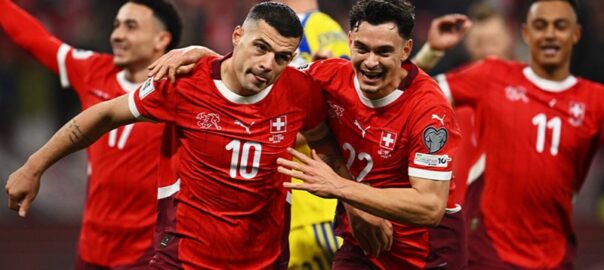
Switzerland confirmed their place at the 2026 World Cup after maintaining an unbeaten record in qualifying, managing a hard-fought 1-1 draw in Pristina against Kosovo.

The opening half lacked intensity, with few clear-cut chances for either side. The deadlock was broken shortly after the interval when Ruben Vargas exploited space behind the Kosovo defense.

Djibril Sow delivered a precise through ball that Vargas calmly converted past goalkeeper Arijanet Muric in the 47th minute. The Swiss capitalized on this moment to take the lead in a crucial encounter for automatic qualification.

Kosovo fight back late in the game

Kosovo responded strongly in the latter stages, refusing to settle for a draw at home. Florent Muslija produced a brilliant strike, curling the ball into the top right corner on 74 minutes to level the score.

The hosts increased the pressure as the match entered its final phase. Baton Zabergja and Vedat Muriqi both had opportunities to snatch a winner, but each attempt was denied by Switzerland’s goalkeeper, Gregor Kobel.

Despite Kosovo’s late surge, Switzerland’s defensive resilience ensured the visitors retained a point, enough to secure their top position in Group B.

Implications for the group and next steps

With the draw, Switzerland finished at the summit of Group B, accumulating 14 points across their qualifying campaign. Their unbeaten run guaranteed automatic entry into next year’s tournament.

Kosovo, narrowly missing out on direct qualification, ended the group with 11 points, earning second place. This result sets them up for the European play-offs scheduled in March, where they will have another opportunity to reach their first World Cup.

Switzerland’s consistent performances throughout the qualifiers underscore their status as one of the most formidable sides in the group, while Kosovo can take pride in a competitive campaign that brings them close to a historic milestone.

World Cup ticket-holders to get faster US visa appointments

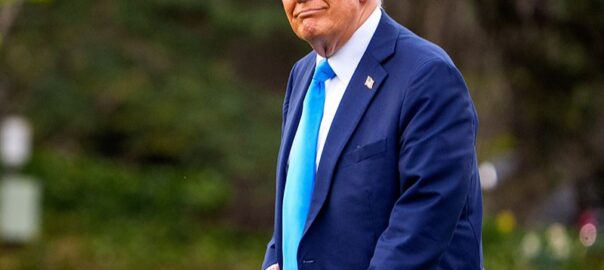
President Donald Trump has announced that US embassies will give priority to visa applicants holding tickets for the 2026 World Cup. The new FIFA Prioritized Appointment Scheduling System (Pass) is designed to help ticket holders with long waits secure interviews faster.

The system allows travelers with tickets to request a faster appointment through FIFA. However, Secretary of State Marco Rubio emphasized that having a ticket does not automatically guarantee a visa. All applicants will undergo the usual vetting procedures.

Rubio explained that ticket holders could receive an embassy or consulate interview within six to eight weeks of applying, significantly reducing the current waiting times in some countries.

Implications for international fans

The 2026 World Cup will be hosted across the United States, Mexico, and Canada, with the majority of matches in the US. FIFA President Gianni Infantino said the tournament could attract up to 10 million visitors. He highlighted that the Pass system will help legitimate football fans attend the World Cup under improved conditions, starting with easier access to visas.

Currently, visa appointment wait times vary widely. In Colombia, applicants face roughly an 11-month wait, while in Mexico City it is about nine and a half months. Residents of Toronto who are not Canadian citizens may wait as long as 14 months for a US visa interview. Without a prioritization system, fans in some countries could receive visas long after the tournament concludes.

The initiative has received praise from the US Travel Association. CEO Geoff Freeman described the process as a practical solution that maintains security while reducing wait times and improving capacity to host millions of visitors.

Visa restrictions and exemptions

The new rules do not override existing travel bans. Earlier this year, Trump issued an order restricting nationals from 12 countries from entering the US, citing security concerns. Iran, which has qualified for the World Cup, is among these countries.

While the executive order exempts athletes and coaching staff for events like the World Cup and the 2028 Olympics, fans from banned countries may still face restrictions.

Not all visitors to the US will need a visa. Citizens of countries in the US visa waiver program, including much of Europe, Japan, and Australia, can enter without a visa for up to 90 days.

At previous World Cups in Russia and Qatar, tickets came with a fan ID that allowed entry to the host country. The FIFA Pass system represents a similar effort to facilitate travel for football fans while preserving standard security checks.

Can fortune, Danish struggles and home support help Scotland?

Former Scotland forwards Billy Dodds and James McFadden reflected on Saturday’s match against Greece and looked ahead to the decisive qualifier against Denmark at Hampden Park.

Scotland needed at least a point in Piraeus to stay in contention for automatic World Cup qualification but ended up losing 3-2. Despite the setback, Belarus’ unexpected 2-2 draw with Denmark means Scotland can still top Group C with a victory over the Danes.

Dodds questioned whether Scotland’s cautious approach early in Greece was a result of calculating the points needed. “Perhaps the mindset was cautious because we thought a draw could suffice,” he suggested. By the second half, he noted, the team showed more urgency and energy, nearly turning the result around.

McFadden attributed the defeat to weak defending and nerves stemming from previous encounters with Greece. He observed poor pressing, large gaps between defense, midfield, and attack, and a lack of forward momentum from key players in the first half.

Tactical considerations and possible lineup tweaks

Both Dodds and McFadden anticipated that Scotland manager Steve Clarke might retain the same overall formation against Denmark but could make minor personnel adjustments. The striker and possibly one central defender are under consideration for change. Dodds mentioned Scott McKenna as a potential replacement for Grant Hanley to add pace.

McFadden agreed that Hanley appeared shaky against Greece and could be replaced but expects Che Adams to remain up front. Billy Gilmour’s injury and absence from training may influence Clarke’s approach, potentially prompting a shift in formation rather than relying on the 4-4-2 used against Denmark in Copenhagen. Clarke could revert to a back three or a defensive five depending on circumstances.

Denmark’s recent performance was criticized by their coach following a draw with Belarus, and a stomach bug in their squad could affect morale. Dodds believes such issues might create a negative mindset for the visitors, which Scotland can exploit.

Hampden support and mindset boost

Both former forwards emphasized the unique atmosphere Hampden can generate during critical qualifiers. McFadden recalled the deafening noise during matches against the Netherlands in 2003 and Italy in 2007, noting the electric anticipation surrounding a potential World Cup berth.

Dodds shared memories from the 1999 playoff against England, recalling the intensity of the national anthems and the unforgettable pressure moments. He advised the current squad to focus on contributing fully to the match and embracing the occasion rather than feeling overshadowed.

McFadden stressed that Denmark, while a strong team, is not among the world’s elite. He acknowledged Scotland’s recent inconsistent displays but highlighted the psychological difference: in Greece, the team focused on a draw, whereas against Denmark, a clear opportunity exists to secure the top spot.

Dodds echoed this, emphasizing that the reward at the end—the chance to qualify directly for the World Cup—will provide motivation, belief, and determination. Both ex-players suggested that with Hampden behind them and a positive mindset, Scotland could finally deliver the big performance the campaign has yet to produce.

Cardiff nights inspire Wales’ World Cup hopes

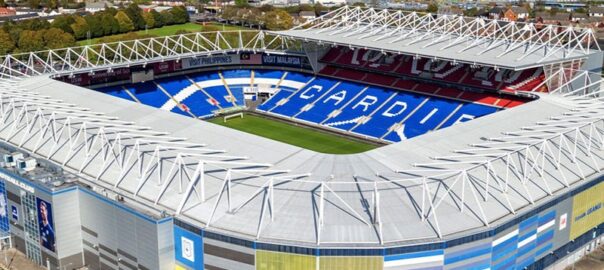
When Wales plays at Cardiff City Stadium under the floodlights, there is a unique energy that lifts both players and fans. From the a cappella rendition of the national anthem to the supporters’ passionate songs, the atmosphere has a way of pushing players to exceptional performances.

Wales will need this special spirit when they host North Macedonia on Tuesday. A victory is essential for finishing second in their World Cup qualifying group, which would secure home advantage for the playoff semi-final in March. A loss would mean an away tie against stronger teams, such as Italy, making the stakes extremely high.

Head coach Craig Bellamy emphasized the importance of the fans’ support. “Players have been in this situation so many times over the last 10 years, especially Cardiff nights,” he said. “The crowd is used to this environment and these moments.”

He added that patience will be necessary alongside fan encouragement. “We know we need to win, of course, but we have to be patient as well. Fans recognize when we need you the most, but I’m also fully conscious we have to give you something to cheer as well.”

This match presents an opportunity for the current Wales squad to add another memorable Cardiff night to the club’s history.

Historic Cardiff victories

Hungary 2019

The current squad has no members from the Euro 2016 semi-final team, with Ben Davies, Aaron Ramsey, and Danny Ward absent due to injury. Still, some of the present players were involved in the decisive Euro 2020 qualifiers.

Wales started the campaign poorly, taking only three points from their first three games under Ryan Giggs. Momentum shifted in November 2019 when Aaron Ramsey returned from injury.

Ramsey played a crucial role, scoring both goals in a 2-0 win against Hungary, securing automatic qualification. The celebrations at Cardiff City Stadium were emotional, moving Giggs to tears.

Belgium 2021

Tuesday’s fixture has parallels with Wales’ home match against Belgium in November 2021. Having missed automatic qualification, Wales needed a result to secure second place in their group.

Despite conceding first through Kevin de Bruyne, Kieffer Moore equalized, sparking jubilant scenes in Cardiff. A 1-1 draw, combined with favorable results elsewhere, ensured Wales would host their playoff semi-final, a factor that would prove decisive.

Austria 2022

The play-off semi-final against Austria in March 2022 remains one of the most iconic nights in Welsh football history. Dafydd Iwan performed his song Yma O Hyd before kickoff, with over 30,000 fans joining in, including many who did not speak Welsh.

Gareth Bale scored twice, delivering a 2-1 victory that sent Wales to the play-off final against Ukraine. Bale scored again in the final, clinching a 1-0 win that brought Wales back to the World Cup for the first time in 64 years.

Croatia 2023

By October 2023, Wales faced a critical Euro 2024 qualifying match against Croatia after poor summer results. Manager Rob Page’s position was under pressure, but Wales produced one of their best performances, beating the World Cup semi-finalists 2-1 at Cardiff.

Harry Wilson scored both goals in his 50th international appearance. Subsequent draws against Armenia and Turkey meant Wales went into the play-offs again, achieving home semi-final advantage but eventually losing on penalties in the final against Poland.

Iceland 2024

Craig Bellamy began his tenure as Wales manager with nine unbeaten matches, highlighted by the Nations League campaign. The team secured promotion to the top tier thanks to a 4-1 win over Iceland in November 2024.

Wales recovered from an early deficit with goals from Liam Cullen, Brennan Johnson, and Harry Wilson. Fans created a celebratory atmosphere at Cardiff, cheering both Wales and Montenegro, who benefited from the match results.

Bellamy is seeking his first major statement win as head coach. A victory against North Macedonia would mark the first of several important wins on the road to next year’s World Cup and could set the stage for more unforgettable Cardiff nights.
Gattuso betwist eerlijkheid kwalificatiesysteem WK

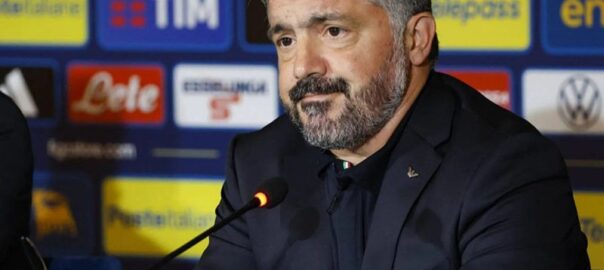
Italië coach Gennaro Gattuso was gefrustreerd nog vóór de zware 4-1 nederlaag thuis tegen Noorwegen op zondag. De nederlaag bevestigde dat Italië nu de play-off route moet bewandelen om een plaats op het WK van 2026 veilig te stellen.

Dit komt nadat Italië de vorige twee toernooien miste, waarbij ze in de play-offs verloren van Zweden in 2018 en Noord-Macedonië in 2022. Voor het aanstaande WK, dat volgende zomer plaatsvindt in Canada, Mexico en de Verenigde Staten, zal het toernooi voor het eerst 48 teams tellen.

Door als tweede te eindigen in hun kwalificatiegroep, moet het Italiaanse elftal nu twee wedstrijden spelen met één duel om hun deelname veilig te stellen. De selectie, viervoudig winnaar van het WK, had zes van de acht wedstrijden in de kwalificaties gewonnen, maar kreeg toch te maken met de onzekerheid van de play-offs vanwege hun tweede plaats.

Gattuso uitte zijn bezorgdheid over het huidige systeem en wees op wat hij ziet als een onevenwicht vergeleken met Zuid-Amerika en Afrika, waar teams meer directe kwalificatieplaatsen hebben.

Gattuso’s kritiek

Tijdens een toelichting op vrijdag merkte Gattuso op dat in zijn tijd de beste nummers twee automatisch konden kwalificeren, een situatie die niet meer bestaat. Hij dacht terug aan het sterke palmares van Italië en trok de eerlijkheid van de regels in twijfel.

Hij noemde veranderingen in de toewijzing en zei dat Afrika nu negen automatische plaatsen heeft, vergeleken met twee in eerdere decennia, en dat Zuid-Amerika zes directe kwalificatieplaatsen heeft voor tien teams, plus de kans voor een zevende team om een intercontinentale play-off te spelen.

Echter, sommige van Gattuso’s opmerkingen bevatten onjuistheden. Slechts drie Afrikaanse landen namen deel aan het WK van 1994, en het Zuid-Amerikaanse zevende team is niet gegarandeerd alleen tegen een Oceanië-land te spelen; het pad omvat meerdere fases. Bovendien kwalificeerden niet alle nummers twee zich automatisch in 1990, zoals bleek uit het feit dat Denemarken toen niet meedeed.

Ondanks deze fouten was Gattuso’s bredere zorg dat de prestaties van Italië onder de huidige regels mogelijk niet voldoende zijn om directe kwalificatie te garanderen.

Kwalificatiesystemen vergelijken

De Europese kwalificatie is complexer geworden door de toename van het aantal deelnemende landen. In 1990 deden 32 UEFA-landen mee; tegen 1994 waren dat er 39. Tegenwoordij dingen 54 teams naar 16 plaatsen. Het vergroten van de groepsgroottes om meer automatische kwalificatie te geven, wordt beperkt door de internationale kalender, die slechts tien speeldagen per jaar biedt.

De groep van Italië omvatte Noorwegen, een snel verbeterende ploeg, en het team verloor beide ontmoetingen overtuigend. Ondertussen omvat de Zuid-Amerikaanse kwalificatie minder landen, maar meer reizen en heen-en-terug wedstrijden verspreid over negen internationale breaks, wat het een fysiek veeleisend proces maakt.

Kijkend naar Afrika, het merendeel van de kwalificerende landen is gevestigd, met zes van de negen automatische gekwalificeerden in de top 50 van de ranglijst. Ter vergelijking: de 54 UEFA-landen omvatten 26 landen in de top 50, maar ook 20 landen die lager gerangschikt zijn dan Afrika’s laagste, Bolivia.

Al met al, hoewel Afrika en Zuid-Amerika een hogere proportionele vertegenwoordiging lijken te hebben, compliceren de kracht van de Europese teams en de competitieve diepgang van de UEFA-kwalificaties elke eenvoudige beoordeling van eerlijkheid. Het palmares van Italië, hoewel sterk, beschermde hen niet tegen de play-off route.

Slotbeoordeling

Bij het evalueren van de vertegenwoordiging van de confederaties in relatie tot hun kracht, is het aandeel van de UEFA in de WK-plaatsen gedaald van 54% in de jaren 90 naar 33,33% vandaag de dag, ondanks het feit dat bijna de helft van haar landen in de top 50 staat. De negen automatische plaatsen voor Afrika vertegenwoordigen een kleine oververtegenwoordiging, terwijl de toewijzing van Azië opmerkelijk ruim is in verhouding tot de ranking.

In deze context weerspiegelt Gattuso’s frustratie echte zorgen over de moeilijkheidsgraad van de Europese kwalificatie en het waargenomen onevenwicht met andere regio’s. Zijn beweringen bevatten echter enkele feitelijke onjuistheden, en het algehele systeem blijft gestructureerd om competitiviteit en speeldruk in evenwicht te brengen.