Category Archives: 2026 FIFA World Cup

Italy 28 players called up for the Northern Ireland, World Cup Playoffs

Italy 28 players called up for the Northern Ireland, World Cup Playoffs

https://www.italiansoccerseriea.com/wp-content/uploads/2019/07/Anna_Italia_bigger.jpgBy Anna Italia
Follow me on X  ,
Facebook: Anna Italia Page
Instagram: annaitalia2
Italian Soccer Serie A


🇮🇹👉    Italy’s Head Coach Gennaro Gattuso has summoned 28 players for the World Cup playoffs against Northern Ireland. The squad will gather on Sunday, March 22, 2026, at the Federazione Italiana Giuoco Calcio Technical Centre in Coverciano. They are set to compete against Northern Ireland in the playoff semifinal on Thursday, March 26, at 20:45 CET at the Stadio di Bergamo.

The stakes are high for the Azzurri; a victory over Northern Ireland would lead Italy to face the winner of the Wales vs. Bosnia and Herzegovina match for a World Cup spot on Tuesday, March 31, away from home. The two teams that lose in the semifinal of Play-Off Path A (Italy vs. Northern Ireland / Wales vs. Bosnia and Herzegovina) will instead play a friendly on March 31, which the Azzurri would also play away, either in Cardiff or Zenica.

Among the newly called-up players is Marco Palestra, a fresh addition to the squad. Palestra, a defender from Cagliari born in 2005, will make his debut with the senior national team. This call-up also marks the first for Giorgio Scalvini and Niccolò Pisilli under Gattuso, as they have been away since March and November 2024, respectively. Federico Chiesa, the 2021 European champion who has not played for the national team since EURO 2024, will return to don the Azzurri jersey.

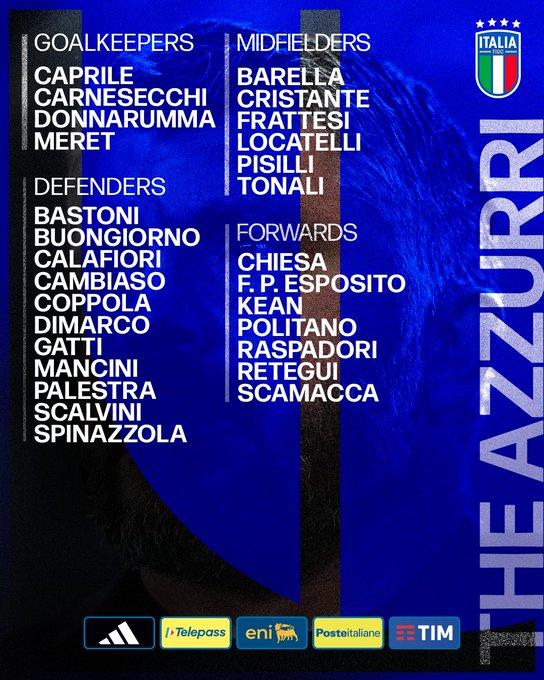
  🇮🇹    ITALY SQUAD LIST

Goalkeepers: Elia Caprile (Cagliari), Marco Carnesecchi (Atalanta), Gianluigi Donnarumma (Manchester City), Alex Meret (Napoli);

Defenders: Alessandro Bastoni (Inter), Alessandro Buongiorno (Napoli), Riccardo Calafiori (Arsenal), Andrea Cambiaso (Juventus), Diego Coppola (Paris FC), Federico Dimarco (Inter), Federico Gatti (Juventus), Gianluca Mancini (Roma), Marco Palestra (Cagliari), Giorgio Scalvini (Atalanta), Leonardo Spinazzola (Napoli);

Midfielders: Nicolò Barella (Inter), Bryan Cristante (Roma), Davide Frattesi (Inter), Manuel Locatelli (Juventus), Niccolò Pisilli (Roma), Sandro Tonali (Newcastle);

Forwards: Federico Chiesa (Liverpool), Francesco Pio Esposito (Inter), Moise Kean (Fiorentina), Matteo Politano (Napoli), Giacomo Raspadori (Atalanta), Mateo Retegui (Al-Qadsiah), Gianluca Scamacca (Atalanta).
==============================
Ticket option for the Italy National team games

Italy

==============================

Here are some facts about Northern Ireland, Italy’s rival.

Northern Ireland, currently ranked 69th in the FIFA Rankings, secured their position by finishing first in Nations League Group C. They ended up third in Qualifying Group A, trailing behind Germany and Slovakia, with a record of three wins and three losses. The two teams have faced each other eleven times, with Italy achieving seven wins, three draws, and one unfortunate defeat—a 2-1 loss on January 15, 1958, in Belfast, which prevented the Azzurri from qualifying for the World Cup. Their latest match, also held in Belfast, concluded in a 0-0 draw during the final qualifier for the Qatar 2022 World Cup, which led Italy to the play-offs.

ITALY NATIONAL TEAM STATISTICS IN BERGAMO.

Italy has maintained an unbeaten streak in Bergamo, where they will once again play in front of 23,000 fans, six months after their impressive 5-0 win against Estonia during Gennaro Gattuso’s debut as the National Team coach. The team has played four matches in this city, achieving two 5-0 victories (the other one was against Malta in January 1987) and drawing 1-1 on two occasions (once in a friendly against Turkey in November 2006 and again in the Nations League match against the Netherlands in October 2020).

Italy Away Kit

Image

Mexico World Cup hosting under threat amid cartel violence

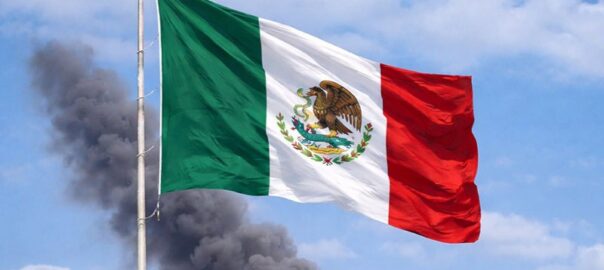
Mexico’s preparations for this summer’s FIFA World Cup face uncertainty as violence from the Jalisco New Generation (CJNG) cartel intensifies. The criminal organisation has clashed with the Mexican military, blocked roads, and set vehicles on fire following the killing of its leader, Nemesio Oseguera Cervantes, also known as ‘El Mencho’, in a military operation on Sunday.

The unrest began in Jalisco, where authorities declared a code red alert, and has now expanded to more than a dozen regions. Videos shared online show armed individuals patrolling urban areas, with smoke rising over cities. At least 25 members of the National Guard have died in a single 24-hour period.

Jalisco’s capital, Guadalajara, which will host four World Cup matches, along with Mexico City and Monterrey, where nine more matches are scheduled, is at the center of concern. Experts warn that the elimination of El Mencho could trigger a period of instability as rival factions compete for control.

Javier Eskauriatza, assistant professor of criminal law at the University of Nottingham, notes that crackdowns on cartels often provoke significant retaliation, creating a difficult security environment to manage.

Cartels’ economic interests and tourist safety

Despite the violence, experts believe cartels have incentives to maintain a degree of calm during major events. “Cartels benefit from a peaceful World Cup,” says Dr. Eskauriatza. “They invest in local businesses, hotels, and restaurants, so it is in their interest that international visitors enjoy their stay.”

The CJNG, valued at more than £10bn and with tens of thousands of members, has a history of kidnappings, massacres, and attacks on politicians since 2009. Nonetheless, some members are seen positively in local communities due to their contributions to infrastructure and facilities.

Dr. Karina Garcia-Reyes, senior lecturer in criminology at UWE Bristol, assesses the threat to tourists as moderate. She suggests that unless further military actions occur this week, authorities in the affected regions are likely to manage risks, allowing fans to travel safely if they follow official guidance.

The cartel’s violent response is seen as a necessary show of strength following the removal of its leader. Social media footage of the incidents serves to amplify their message nationally, underlining the scale and organization of their reaction.

Impact on sports and international perception

The unrest has already affected football in Mexico, with four matches – two in the top division and two in the second tier – postponed on Sunday due to security concerns. Monica Serrano Carreto, professor of international relations at El Colegio de Mexico, warns that while many hope the retaliation is temporary, there is a risk of continued unrest and unpredictability.

The weapons at the cartel’s disposal, some capable of targeting helicopters, mean that military confrontations are likely in response. The images and reports of violence have influenced international perceptions, potentially affecting travel plans for visitors attending the World Cup.

Mexico has faced heightened pressure to tackle cartel activity in the past year. Jon Benjamin, former UK ambassador to Mexico, emphasizes the seriousness of the situation, highlighting previous US designations of cartels as terrorist organisations and the extradition of cartel figures. He adds that international political factors play a key role in the current escalation.

FIFA implements 3D digital scans for every World Cup player to improve offside calls

FIFA plans to create AI-powered three-dimensional representations of every participant in the 2026 World Cup to enhance semi-automated offside technology.

This initiative will cover all 1,248 players from the 48 squads, each consisting of 26 members.

Every player will step into a scanning chamber as part of the process. FIFA says that the scan itself will take only a second and is required just once, during the players’ pre-tournament photo session.

The digital capture aims to record precise body measurements for each athlete. The governing body believes this will allow for more accurate offside rulings during matches.

Improving offside accuracy and viewer experience

FIFA expects that having detailed 3D models will help officials follow players more reliably, even during rapid or obscured movements.

The organization also notes that the final offside decisions can be displayed in a way that is both more realistic and visually appealing for fans.

Earlier this season, controversy arose in the Premier League over a Newcastle goal against Manchester City.

In that instance, the semi-automated offside display showed Ruben Dias seemingly in motion in a way that conflicted with television footage. FIFA hopes that scanning every player in advance will prevent such mismatches in future broadcasts.

Testing and additional technology

The system has already been trialed during FIFA’s Intercontinental Cup. Players from Flamengo and Pyramids FC were scanned before their December fixture.

Last month, FIFA also revealed testing of technology capable of determining whether the ball crosses out of play before a goal is scored.

Alongside that, the organization has developed real-time 3D recreations designed to help officials make line-of-sight offside calls with improved precision.

FIFA defends World Cup ticket prices amid soaring demand

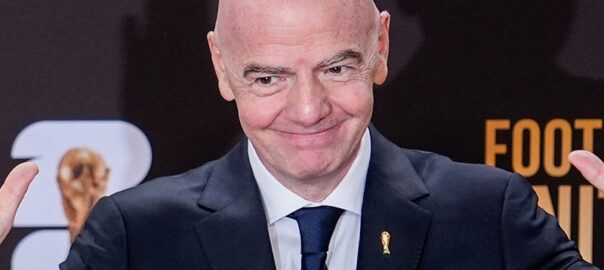
FIFA president Gianni Infantino has defended the high cost of tickets for next summer’s World Cup in the United States, Canada, and Mexico, arguing that the prices mirror an overwhelming public interest.

The tournament’s ticketing system has faced sharp criticism, with the Football Supporters’ Association (FSA) calling it “scandalous.” Group stage tickets are now up to three times more expensive than those sold for the 2022 World Cup in Qatar, while the lowest-priced final ticket in New Jersey is £3,119.

Infantino emphasized that the number of ticket requests far exceeds the available supply. Speaking at the World Sports Summit in Dubai, he revealed that six to seven million tickets were offered, yet 150 million applications were submitted within just 15 days.

“This is about 10 million requests every day, showing the World Cup’s enormous appeal,” Infantino said. He added that, historically, FIFA has sold 44 million tickets in nearly a century, meaning that in just two weeks the demand could have matched 300 years of World Cup sales.

Affordable options introduced after criticism

Following backlash over ticket costs, FIFA launched a limited selection of lower-priced £45 tickets for all 104 matches. A FIFA official involved in the process told BBC Sport that the decision was a direct response to public feedback.

Infantino explained that the new pricing tier is intended to make the tournament accessible to more fans while maintaining the overall ticketing strategy. The approach aims to balance affordability with the financial needs of hosting such a major event.

The £45 tickets are only a small proportion of the total available, reflecting FIFA’s attempt to accommodate fans who may not afford higher prices while still capitalizing on the strong demand for premium seating.

Revenue reinvested into global football

Infantino highlighted that proceeds from ticket sales are reinvested into football worldwide, though he did not disclose specific figures. He stressed that FIFA’s revenues are crucial for the development of the sport in numerous countries.

“Without FIFA, there wouldn’t be football in 150 nations,” Infantino stated. He pointed out that funds generated from the World Cup help sustain football programs globally, supporting the growth of the game beyond the tournament itself.

By linking ticket income to development projects, FIFA argues that the high prices ultimately benefit the sport on a global scale, providing resources for countries that rely on the organization to maintain and expand their football infrastructure.

World Cup hosts who fell short: the weakest campaigns ranked

Hosting the World Cup is often seen as a major sporting advantage, but history shows it doesn’t always translate into success on the pitch.

Six different hosts have celebrated lifting the trophy on their own soil, yet several others have fallen short despite their home crowds.

Below are five host teams whose campaigns were far from triumphant, measured against the general trend of hosts performing strongly.

Japan (2002)

Japan enters this list not because they collapsed, but because most home nations tend to progress far more convincingly.

Before sharing the 2002 tournament with South Korea, Japan had appeared in just three matches at previous editions and lost every one. Expectations were modest, but the Samurai Blue managed to exceed them.

A stalemate with Belgium set the tone, followed by triumphs over Russia and Tunisia, which lifted them to the knockout rounds and raised hopes of something special.

Turkey ended those dreams with a narrow 1-0 victory, halting Japan’s surprising journey before the quarter-finals could be reached.

South Africa (2010)

South Africa made unwanted history as the first home team ever to fail to escape the opening stage, though their performances were better than many anticipated.

They started with a point against Mexico and later stunned France, a result somewhat overshadowed by the chaos among the French contingent itself.

Siphiwe Tshabalala’s thunderous strike in the opening fixture became an instant classic, one of the tournament’s most memorable highlights.

Despite that moment and undeniable spirit, Bafana Bafana’s adventure ended early.

United States (1994)

FIFA’s dream of converting the U.S. into a football-first nation faced immediate obstacles on the field.

Progressing to the knockouts only as one of the higher-ranked third-place finishers, the Americans benefited from a win over Colombia—a match clouded by suspicions hovering over the South American side.

Brazil then appeared in the next round and dispatched the hosts without much difficulty, bringing the campaign to a conclusion.

Even before the matches began, the tone was set when Diana Ross dramatically failed to convert a penalty during the opening ceremony.

Spain (1982)

Spain arrived as hosts hoping to reverse their poor record since 1950, but the home advantage offered no breakthrough.

An uneasy opening phase included a defeat to Northern Ireland, a draw with Honduras, and a narrow triumph over Yugoslavia, enough to squeeze into the next stage.

In the second group round, a loss to West Germany and a goalless encounter with England ended their participation.

Supporters hoping for a deep run were left disappointed as the home tournament fizzled out.

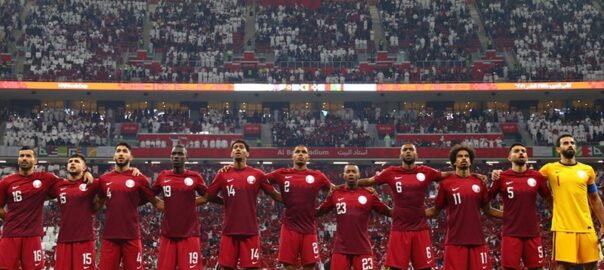
Qatar (2022)

Predictions of Qatar delivering the weakest host performance in World Cup history proved entirely accurate.

Their very first match, a 2-0 loss to Ecuador, felt fortunate to remain that close, and matters worsened from there.

Senegal won 3-1, the Netherlands added a 2-0 result, and Qatar exited with zero points, seven goals conceded, and just a single goal scored.

No other host has ever finished with an empty points tally—making Qatar’s campaign an unprecedented low.