Category Archives: 2022 FIFA World Cup

Tender processes to launch in Sub-Saharan Africa for media rights to FIFA World Cup 2022™ and FIFA Women’s World Cup 2023™

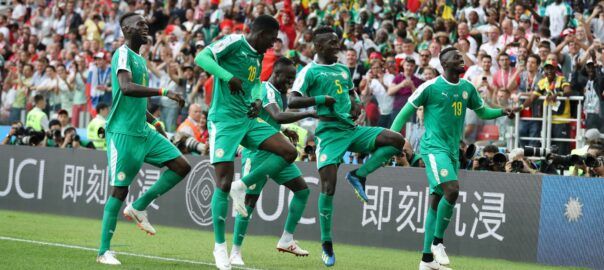
Senegal celebrate at the 2018 World Cup

FIFA is opening two invitations to tender (ITT) simultaneously for the media rights to the FIFA World Cup 2022™ and the FIFA Women’s World Cup 2023™, FIFA’s flagship competitions, in Sub-Saharan Africa . The tender processes are due to launch tomorrow, Tuesday, 26 January.

The first ITT is for the media rights to the FIFA World Cup 2022™. The second ITT is for the media rights to the FIFA Women’s World Cup 2023™.

The FIFA World Cup 2022™ will be the 22nd edition of the competition and a unique edition, as the first FIFA World Cup™ in the Middle East and the first to take place in November/December. With ultra-modern venues, optimal playing conditions and a compact event footprint, the host country will be a very special setting in which to celebrate the game and its ability to connect and inspire people around the world. The tournament will feature 32 participating teams and 64 matches, offering a highly competitive group stage followed by an exciting knockout phase.

The FIFA Women’s World Cup 2023™ will be jointly hosted by Australia and New Zealand and will be the first-ever FIFA Women’s World Cup™ to feature a 32-team format, expanded from 24 teams. Since its inception in 1991, the FIFA Women’s World Cup™ has grown exponentially to claim the crown of the most-watched single-sport event for women globally, the most recent edition – France 2019 – attracting a record audience of over 1.1 billion viewers, and smashing domestic viewing figures in many territories.

The tender processes will allow FIFA to select the media companies that are best placed to secure the required transmission commitments and to achieve FIFA’s objectives of providing broad exposure for its competitions and offering fans a high-quality viewing experience.

Media companies or organisations wishing to participate in either of the tender processes can request the ITT by email. Interested parties should contact SubSaharaMediaRights@fifa.org

Bid submissions to FIFA must be received by 10:00 CET on Tuesday, 23 February 2021.

Through the sale of media rights for its football tournaments, FIFA generates income which is essential to support and develop football around the world, for instance through the FIFA Forward Development Programme.

[1] The following territories are included in the ITTs: Angola, Benin, Botswana, Burundi, Burkina Faso, Cameroon, Cabo Verde, Central African Republic, Chad, Congo, Congo DR, Côte d’Ivoire, Equatorial Guinea, Eritrea, Eswatini, Ethiopia, Gabon, Gambia, Ghana, Guinea, Guinea-Bissau, Kenya, Lesotho, Liberia, Madagascar, Malawi, Mali, Mauritius, Mozambique, Namibia, Niger, Nigeria, Rwanda, São Tomé and Príncipe, Senegal, Seychelles, Sierra Leone, South Africa, Tanzania, Togo, Uganda, Zambia, Zimbabwe

FIFA.com
FIFA.com News

For local glory and global opportunity

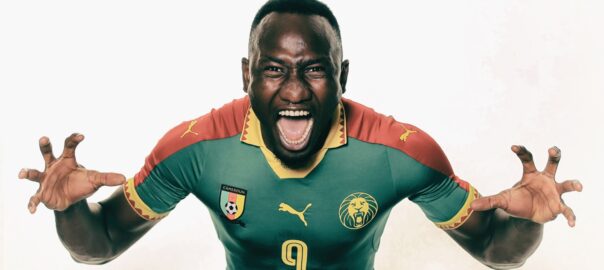
Jacques Zoua of Cameroon during a portrait shoot ahead of the FIFA Confederations Cup Russia 2017.

  • Sixth edition of the CAF African Nations Championship starts this weekend
  • Tournament reserved for African players competing in continent’s national leagues
  • For some teams, also serves as dress rehearsal before Qatar 2022 qualifiers resume

‘Out of sight, out of mind’ goes the old adage. And for African football fans, opportunities to see many of their top internationals can be rare, with a lot playing outside the continent. This could explain the enthusiasm with which fans greet each edition of the CAF African Nations Championship. This competition is reserved exclusively for players from the Mother Continent who are active in its national championships, thereby enabling fans to see players they watch week-in week-out in the domestic leagues proudly donning their national team colours.

The 2020 edition, moved to 2021 because of Covid-19 and being hosted by Cameroon, will be especially important for those called up, presenting as it does the chance for them to stake a claim for a squad place ahead of the second round of qualifying for the FIFA World Cup Qatar 2022™, in which all 16 teams are still involved. FIFA.com takes a closer look at some of the contenders on the eve of the continental showdown.

Key info

  • Dates: 16 January to 7 February 2021
  • Host nation: Cameroon (Douala, Limbe, Yaounde)
  • Defending champions: Morocco
  • Participants: – Group A: Cameroon, Zimbabwe, Mali, Burkina Faso – Group B: Libya, Niger, Congo DR, Congo – Group C: Morocco, Togo, Rwanda, Uganda – Group D: Zambia, Tanzania, Guinea, Namibia

The context

This sixth edition was originally set to take place in Ethiopia, before being switched to Cameroon and rescheduled for April 2020. After then being postponed due to the pandemic, the competition finally gets underway this week in Cameroon, which will also host the CAF Africa Cup of Nations next year. The opening game will see the host nation take on Zimbabwe on 16 January at the Ahmadou Ahidjo Stadium in Yaounde, where the final will also take place on 7 February.

Did you know?

Hosts under pressure: As they prepare for their fourth appearance at the event and the first major men’s tournament to be staged in Cameroon since the 1972 Africa Cup of Nations, the Indomitable Lions will be anxious to improve on their quarter-final exits of 2011 and 2016, and most certainly atone for finishing bottom of their group in 2018. However, the hosts failed to impress in their preparation games (two defeats and a draw), despite a forward line featuring two strikers with European experience in the shape of Jacques Zoua and Yannick Ndjeng.

A Moroccan stroll: The Atlas Lions were comfortable winners on home soil at the last edition in 2018, thanks in no small part to an unstoppable Ayoub El Kaabi. The forward picked up the top scorer and best player awards and forced his way into Herve Renard’s squad for Russia 2018. Three years on, he continues to hone his craft in his national league, currently playing for Wydad Casablanca after a short loan spell in China PR, and represents his side’s best chance of retaining the title. Former international Mustapha Hadji, assistant to senior team coach Vahid Halilhodzic, has been tasked with closely monitoring the performances of five players in Cameroon: Abdelkrim Baaddi, Yahya Jabrane, Hicham El Mejhad, Soufiane Rahimi and Abdelilah Hafidi.

Spain v Morocco:  Ayoub El Kaabi is congratulated by fans 

Another miracle for Libya? Winners in 2014 and semi-finalists four years later, Libya have worked wonders with their teams of local players during a period when the country’s national championship has regularly been cancelled. Once again this year, it seems fortune is favouring the Mediterranean Knights who, despite being eliminated by Tunisia in qualifying, nonetheless secured a place following the subsequent withdrawal of the Eagles of Carthage.

Cranes hoping for lift off: In this their fifth participation (a record they share with Congo DR and Zimbabwe), Uganda look better equipped than ever to finally get past the group stage. Coached by Northern Irishman Johnathan McKinstry, who led Rwanda in the 2016 edition, the Cranes will take confidence from their 2019 CECAFA Cup title. On the flip side, however, Patrick Kaddu, the top scorer in the qualifying phase of this African Nations Championship, later signed for Moroccan club RS Berkane and is therefore ineligible for the tournament.

Leopards back for more: Winners in 2009 and 2016, Congo DR would love a third title on their return, after missing the 2018 edition. The Leopards welcome back former coach Florent Ibenge, who had previously enjoyed success with the full national team before leaving his post in 2019 after a disappointing performance in that year’s Cup of Nations. The current squad draws heavily from the two local giants, TP Mazembe and AS Vita-Club, and has three players – Micah Mika, Ley Matampi and Ricky Tulenge – who were part of the team that won the 2016 title.

Congo DR coach Florent Ibenge

What they said

“Friendly matches are not the same as competitive ones. In competition, sometimes it’s the most determined team that wins. We have to live up to our name of Indomitable Lions by giving our all in every game. Our country has invested a great deal in hosting this tournament, so we cannot let that be for nothing. We’ll be giving everything.” – Jacques Zoua, Cameroon striker and Africa Cup of Nations winner in 2017

“If we prepare well, then things should work out for us. We have confidence in this group of players because most of those selected already took part in the 2019 CECAFA Cup.” – Johnathan McKinstry, Uganda coach and 2019 CECAFA Cup winner

“There’s still work to be done but we‘re close to being ready, given the time constraints. The [preparation] games were welcome and allowed us to see some of our shortcomings and get ready for the finals. We’re representing an entire nation so there’s no margin for error.” – Gnama Akate, Togo captain

FIFA.com
FIFA.com News

Rueda returns to Colombia for second stint

Rueda Module

  • After ending time with Chile, Rueda returns to his homeland
  • It will be his second stint at the helm of his national team
  • The objective? Qualify for the FIFA World Cup Qatar 2022™

Colombian Reinaldo Rueda has become the new head coach of his homeland’s national team, confirmed by the Colombian Football Federation (FCF) on Thursday 14 January.

“Coach Rueda will be in charge of leading our national team in qualifying for the FIFA World Cup Qatar 2022, as well as in the Copa America Argentina – Colombia 2021. We wish him and his team much success, convinced that they will do an excellent job in the task ahead,” said the FCF in its official statement.

Head coach Reinaldo Rueda of Ecuador looks on

Rueda replaces Carlos Queiroz, who left the position in December 2020 after the team’s poor start to the South American qualifiers, where Los Cafeteros find themselves seventh in the standings with four points from four games.

The news comes just a day after Rueda left the Chilean national team, which he took charge of in the second half of 2018. “The FCF thanks the Chilean Football Federation and its president, Pablo Milad, with whom in all moments there was dialogue and communication on the matter,” the association added in its announcement.

Rueda coached all of the youth teams in Colombia before assuming the leadership of the senior team back in January 2004. That first stint ended in mid-2006, after Colombia failed to qualify for the World Cup in Germany.

His next two jobs would be successful experiences: he took Honduras to the 2010 World Cup in South Africa and Ecuador to the 2014 World Cup in Brazil.

Rueda will be presented to the media on Tuesday 19 January, at which time he will give his first statements following his return to Colombia.

FIFA.com
FIFA.com News

Tender processes launched in Italy for media rights to FIFA World Cup 2022™ and FIFA Women’s World Cup 2023™

Generic TV camera

FIFA has opened two invitations to tender (ITT) simultaneously for the media rights to the FIFA World Cup 2022™ and the FIFA Women’s World Cup 2023™, FIFA’s flagship men’s and women’s competitions, in Italy.

The first ITT is for the media rights to the FIFA World Cup 2022™. The second ITT is for the media rights to the FIFA Women’s World Cup 2023™.

The FIFA World Cup 2022™ will be the 22nd edition of the competition and a unique edition, as the first FIFA World Cup™ in the Middle East and the first to take place in November/December. With ultra-modern venues, optimal playing conditions and a compact event footprint, the host country will be a very special setting in which to celebrate the game and its ability to connect and inspire people around the world. The tournament will feature 32 participating teams and 64 matches, offering a highly competitive group stage followed by an exciting knockout phase.

The FIFA Women’s World Cup 2023™ will be jointly hosted by Australia and New Zealand and will be the first-ever FIFA Women’s World Cup™ to feature a 32-team format, expanded from 24 teams. Since its inception in 1991, the FIFA Women’s World Cup™ has grown exponentially to claim the crown of the most-watched single-sport event for women globally, the most recent edition – France 2019 – attracting a record audience of over 1.1 billion viewers, and smashing domestic viewing figures in many territories.

The tender processes will allow FIFA to select the media companies that are best placed to secure the required transmission commitments and to achieve FIFA’s objectives of providing broad exposure for its competitions and offering fans a high-quality viewing experience.

Media companies or organisations wishing to participate in any of these tender processes can request the ITT by email. Interested parties should contact Italy-Media-Rights@fifa.org

Submissions to FIFA must be received by 13:00 CET on Tuesday, 16 February 2021.

Through the sale of media rights for its football tournaments, FIFA generates income which is essential to support and develop football around the world, for instance through the FIFA Forward Football Development Programme.

FIFA.com
FIFA.com News

Gunnarsson: Iceland still have the same hunger

Aron Gunnarsson of Iceland applauds fans after the 2018 FIFA World Cup Russia group D match between Iceland and Croatia at Rostov Arena on June 26, 2018 in Rostov-on-Don, Russia. 

  • Aron Gunnarsson has captained Iceland for the past eight years
  • He now plays his club football in Qatar with Al Arabi
  • Midfielder talks tattoos, wonder goals and World Cup hopes with FIFA.com

Bearded, tattooed and brimming with passion, Aron Gunnarsson is widely seen as the embodiment of Iceland’s national team. He was named captain at 23, and a famous back tattoo – based on the country’s coat of arms – reflects his pride in holding that position.

When Iceland beat England to reach the UEFA EURO 2016 quarter-finals, it was Gunnarsson who led the first player-fan rendition of the now-legendary ‘Viking Clap’. But from the moment Lars Lagerback and Heimir Hallgrimsson began moulding a team that would write football history, they had identified this all-action midfielder as the rock on which they would build.

“He’s a shining example of what we would like to stand for,” Hallgrimsson said in 2018. “What he stands for as a player… he’s our living identity. He’s a shining example off the pitch of how players should behave and how they should support each other; on the pitch he’s vital for organising the team. He knows the position of every player, and he’s demanding. And on top of that, he’s just a very good football player.”

Given this glowing tribute, it should be no surprise that one of the first calls Hallgrimsson made, after leaving Iceland to take charge of Qatari side Al Arabi, was to his former skipper. Gunnarsson, restless and ready for a change, took up the offer that followed. And it was from his new home in Qatar that the 31-year-old spoke to FIFA.com, discussing Iceland’s heartbreaking EURO qualifying failure, their FIFA World Cup™ hopes and life in the country that will host the 2022 finals.

FIFA.com: Aron, be honest: are you missing the weather of a British or Icelandic winter?
Aron Gunnarsson:
A little bit actually! [laughs] Being Icelandic, I don’t mind a bit of cold! But it’s very nice here right now – about 20 degrees – so perfect weather really, and so much better than when I arrived back in August. That’s the hottest time of the year, and I was gobsmacked. The heat was unbearable at times. We’d train in the evening but even then the humidity was just crazy.

You’ve built your career on being the kind of midfielder who covers every blade of grass. Did you need to become more economical with your movements, especially in those early days?
Yeah, there’s no way of getting around that. We all get our GPS stats and it’s clear the amount of running drops in the second half of games here. I would also cramp up towards the end of matches in those early days a lot more than I normally would. So I needed to adapt. But now the weather’s great – perfect for football – and I can play my usual game again.

Scoring goals from your own half isn’t your usual game though. Tell us about that one.
[Laughs] That’s definitely true. But I’d seen the keeper off his line a few times before and thought, ‘Next time I get the ball, I’m going to whack it’. Fortunately I hit it nice and straight. Normally I’m like I am in golf, hooking or slicing my shots! [laughs]

You’d been out to Qatar in 2018 as part of your rehab following a serious knee injury. Was that when the seeds were sown about playing there one day?
Absolutely. I came out here with my family, and at that stage it was touch and go whether I’d make the World Cup. There’s a clinic here with magnificent facilities and all the right doctors and physios, and they helped get me back in time. I said to my wife at that stage, ‘I wouldn’t mind living here, you know’. The next year, Heimir took the job with Al Arabi and, soon after that, he picked up the phone to me. I was in the last year of my contract with Cardiff and I knew straight away it was something I wanted to do. I felt like I needed a change after 11 years in the UK, so Heimir really didn’t need to do much to sell the idea to me.

I was reading that you’ve been impressed with, and pleasantly surprised by, the standard of football in Qatar.
Definitely. One of the things I’d noticed before coming here was that there were a lot of goals in the league, and it made me think that the standard of defending and the tactical side of the game wouldn’t be what I was used to in Europe. But I think people here have recognised that issue themselves and there’s been a big change over the last couple of years, with more competition in the league and a better standard of play – tactical play especially. That’s very important for the league, and for the Qatari players who’ll be involved in the World Cup.

Aron Gunnarsson of Al Arabi in action during the Emir Cup Final between Al Sadd and Al Arabi at Al Rayyan Stadium on December 18, 2020 in Doha, Qatar.

What can people expect from a World Cup in Qatar?
It’s going to be special. They’ve prepared for everything here. All the stadiums are air-conditioned, although the change to have the tournament in December is completely right in my opinion because it wouldn’t be nice for the supporters to come here in summer. As it is, they’ll get a bit of winter sunshine and be able to watch football in really perfect conditions. And everything right now is geared towards making this a fantastic World Cup because the Qataris really do want to do something extraordinary and have everyone talking positively about the country.

You’ll obviously be desperate to be involved in that World Cup but it’s been a tough time for Iceland lately. Where do you think it went wrong for Erik Hamren?
Erik was very unlucky with injuries. We were without a lot of key players during his time in charge. We nearly made it to the EURO all the same, losing in the last minute in the play-offs. That was very tough to take. But now we have new coaches in place (Arnar Vidarsson having been appointed, with Eidur Gudjohnsen as his assistant) and I think there are real possibilities in our World Cup qualifying group. Germany are there and they’ll be favourites, of course, but then it’s ourselves, Romania, North Macedonia, Armenia and Liechtenstein. So I’d be hopeful of us doing well, and the boys are definitely highly motivated to return to the World Cup. There are also quite a number of players who are in their 30s now and know this will probably be our last chance.

How do you reflect on Russia 2018 now, a couple of years on?
I really enjoyed it at the time but I didn’t enjoy the build-up. I thought I wasn’t going to make it for a long time – right up until the tournament really – because I not only had the issue with my knee, but ankle ligament damage too. But stepping out on to that pitch, at a World Cup, was a special feeling. Not being match-fit and needing to chase Messi around for 90 minutes wasn’t the easiest comeback, I can tell you! But I was so relieved to be involved and it was fantastic to come up against one of the greatest players ever.

Are the ingredients that underpinned Iceland’s success over the past few years – that hunger and team spirit – still there to the same extent?
I get asked that question quite a lot: ‘Do we still have the hunger?’ And for me it’s a definite yes. Ok, we made history by qualifying for the EURO and the World Cup. But once you’ve experienced those things it just gives you a taste for doing it again and again. It’s the best feeling ever to be representing your country in a big tournament and if experiencing that doesn’t give you the hunger to do it again, you shouldn’t be playing football at all.

Tell us about that famous back tattoo. What was the inspiration there?
Playing for Iceland means a lot to me. I think there’s something special about representing a small country; you feel like you’re the little guy who always has to fight harder than the others. With the tattoo, it was after the EURO and I wanted to do something special and meaningful. It was done by an Icelandic guy who came over to Cardiff four times, working on my back for two days each time he came. Once it was for seven hours straight. When I introduced the idea to him, he said: ‘Are you sure? Because the colour [of the flag] will be right on your spine and you’re going to be in a lot of pain.’ And I can tell you: he wasn’t lying! [laughs] But it was something I really wanted to do, and I have no regrets.

You’ve been Iceland captain since you were 23. How did it feel to be given that responsibility at such a young age?
Lars [Lagerback] was building a new team at the time and I think he maybe wanted a young guy to lead the pack. It’s a big ask at that age but I guess he must have seen some leadership qualities in me. I made some mistakes at the start, said some silly things in interviews, but I think I grew into the role. One thing I know is that, when I retire, I’ll be so, so proud to say I’ve captained an Iceland team that made some real history.

 Iceland captain Aron Gunnarsson 
FIFA.com
FIFA.com News