Category Archives: 2022 FIFA World Cup

Tite: Neymar has become a bow and arrow

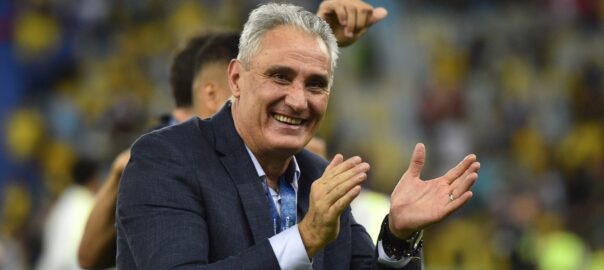
Tite head coach of Brazil celebrates after winning the Copa America Brazil 2019 Final match between Brazil and Peru at Maracana Stadium on July 07, 2019 in Rio de Janeiro, Brazil. 

  • Tite discusses taking one year off to study coaching
  • He hails Neymar, Kevin De Bruyne and Roberto Mancini’s Italy
  • He explains why facing Argentina is much more than a World Cup qualifier

“Surviving for long in a country that has 200 million Seleção coaches is impossible,” summarised Luiz Felipe Scolari of what many deem the most demanding job in football.

Surviving under the scorching scrutiny of the gluttonous Brazil fans is, indeed, akin to surviving in the Lut Desert. Winning, to Brazilians, simply isn’t enough. You need to win with immeasurable swagger.

Mario Zagallo was A Seleção’s eighth coach in the five years leading up to Mexico 1970. Carlos Alberto Parreira was their fourth appointment in little over a year in 1991. Scolari became the fourth in nine months ten years later. Only one man in history – Flavio Costa, who was in charge between 1944 and ’50 – has spent over five years in the canary-yellow chair.

A man who is not only surviving, but thriving in the proverbial poisoned chalice in set to double that statistic. Tite has won 38 and lost just four of 52 matches. He’s unbeaten in his last 21 FIFA World Cup™ preliminaries, winning 16 of them.

The 59-year-old has masterminded Brazil’s best-ever start to a World Cup qualifying campaign, eclipsing the figures Junior, Socrates, Zico and Co set in 1981. And fundamentally in a land where, to many, futebol-arte is as paramount as three points, he’s keeping the insatiable satiated.

Tite took time out from his hectic schedule – he watches and analyses matches with the regularity other Brazilians drink coffee – to chat to FIFA.com about the upcoming clashes with Colombia and Argentina, Diego Maradona, Neymar, Philippe Coutinho and Alisson, his admiration of Roberto Mancini’s Italy and Kevin De Bruyne, and why he took a year out from coaching to study the beautiful game.

FIFA.com: Tite, four games, 12 points, 12 goals for, two against. How would you evaluate Brazil’s start to World Cup qualifying?

Tite: Every game, every phase has its own story. We have to look at the bigger picture. The pandemic took something away from us, affected the quality of football. Roughly speaking, the quality we showed in three of the games was above my expectations, and against Venezuela we struggled a lot. It’s a growth process. The points reflect the team’s performance, and our total impresses me.

Now you will face Colombia and Argentina, who are unbeaten since losing to Brazil at the Copa America and who boast talents like Dybala, Correa, Messi, Martinez and Aguero…

They are two very important games. The qualifying competition is so balanced. The two games against Colombia in the last qualifiers were, technically, the best two games we played in. Both teams sought to attack, sought to create, caused problems for the opposition. They were very even games. The two games were very difficult for us. The traditional derbies – Brazil-Argentina, Brazil-Uruguay – they have a really strong historic element. And Argentina have great individuals. For me, Brazil against Argentina, as well as being a World Cup qualifier, it’s another competition in itself.

Speaking of Argentina, Diego Maradona sadly passed away recently. What did you think of him?

Let me use the account of Careca, with whom I have a good relationship. Maradona’s technical ability, capacity to improvise, creativity… Careca always had to remain extremely attentive just to overcome the ‘difficulty’ and keep up with such an exceptional player. On the pitch, Maradona was extraordinary.

Speaking of great players, what do you think of Neymar?

Neymar has matured a lot. Before, when he was at Barcelona and in my early days with the Seleção, he was a player who would be out on the wing, would score goals, had pace, would dribble, do individual plays. Now he’s expanded the area in which he plays and, as well as being a goalscorer, he creates plays for others. He’s now what we call a ‘bow and arrow’ – he can set things up and finish things off. He’s increased his arsenal.

How important is Philippe Coutinho to the Seleção?

Since I took over, the Seleção has gone through phases. The most memorable phase was in the qualifiers for the 2018 World Cup. It was the best version of the Seleção. We created a lot of chances, scored a lot of goals, conceded only a few, were consistent. And we did it playing in a really beautiful way. Coutinho, in those qualifiers, was what I call an ‘external float’. First he was out on the right, given the freedom to create. Then when Renato [Augusto] got injured, he played in the centre in a role a little similar to the one he played for Liverpool. He was also good there. He’s gone through ups and downs, but he’s a great player and he’s in great form.

Do you think Alisson is the best goalkeeper in the world?

I think to be and to be at that moment are two different things. Is he in the best three in the world? I have absolutely no doubt, 100-per-cent conviction. To say he’s the best I’d have to really look closely at all the goalkeepers to compare. But I think over the last year he was the best. Was he better than Neuer? Yes. Better than Ter Stegen? Yes. Better than Oblak? Yes.

Aside from Brazil, who do you think is the best side in the world right now?

It’s difficult to say. After the pandemic, there hasn’t been much opportunity for teams to show what they can do. Brazil, Argentina, Colombia have had very little chances. The Europeans have played eight times, four more than us. Italy have come back playing, for me, football that’s much more beautiful to watch. Mancini has done a great job. He’s installed a school of football like Arrigo Sacchi. I think they have a greater balance between defensive play – characteristically, historically what they’re renowned for – and offensive play. Belgium still have this great generation. They’re a great team, have great individual talent, and one of the most talented players in the world in De Bruyne. France are very strong too.

Who do you think are the best three players in the world today?

I would say the three I voted for [The Best FIFA Men’s Player]. Neymar first, Lewandowski second, De Bruyne third. Before he got injured Neymar was, even by his own standards, in fantastic form. Lewandowski is an incredible striker. De Bruyne is capable of doing things that others can’t. His improvisation, his determination. I love watching him play.

Can you explain your decision at the end of 2013 to take a break from coaching for a year, travel the world and study football?

I’ve always studied football and wanted to expand my knowledge, my ideas. When I left Corinthians, it was the perfect opportunity to study other coaches and teams to a greater degree, first-hand. I’d won everything I could at club level – the Campeonato Brasileiro, the Libertadores, the Club World Cup, where we beat Chelsea. I thought the next step was the Seleção and I wanted to improve myself as a coach as best as I could. I read books on Simeone, Guardiola. I studied what Bianchi achieved at Boca Juniors and Cruyff achieved at Barcelona. Football is different all over the world, each place has different things you can learn. I went to meet up with Bianchi and hear his ideas, which were very insightful. I spent time at Arsenal. I spent time with Ancelotti at Real Madrid. I studied Manchester City, the English champions, Bayern Munich, the German champions. I sought to learn everything – the stuff behind the scenes, the training, the tactics and what happens on the pitch. Everything. I watched all the matches at the 2014 World Cup, took notes, broke them down. That period was very important for my career.

Which coach have you learned the most from?

Ancelotti. The way Simeone organises his teams is remarkable. Guardiola, his offensive tactics, ability to break teams down is really impressive. Bianchi has an incredible ability to get the best out of his players in big finals. Some of Cruyff’s tactical ideas were fantastic. But I without doubt learned the most from Ancelotti. He sees the game in a different and unique way.

FIFA.com
FIFA.com News

Martinez: My dad still challenges me on coaching

Belgium coach Roberto Martinez in training.

  • Roberto Martinez speaks to FIFA.com
  • Belgium have been the world’s top-ranked team for three straight years
  • Martinez discusses mentality, World Cup highlights and his future in the job

“Don’t tell me what’s wrong. Tell me how you’d fix it.”

Roberto Martinez can see now that his life and career have been shaped by these words and the man who recited them. That challenge, to solve a problem identified on the pitch, came from his father, himself a player, coach and football obsessive. And it was posed, repeatedly, to Roberto from the age of nine.

Martinez remembers, as a boy, replying with fresh tactical systems, tweaks in positioning and personnel – “anything to impress him really”. And even now, as the 47-year-old coach and technical director of the world’s top-ranked team, he is still subjected to the same conversations-cum-interrogations from this most demanding of mentors.

The Belgium boss wouldn’t have it any other way though, and relishes the opportunity to talk football with the man who made him see the game “not just as a sport, but as a way of living”. It helps too, of course, that he can now bring to these animated father-son chats a wealth of evidence that underline his credentials as an elite coach and, yes, accomplished problem-solver.

The most recent exhibits include leading Belgium to their best-ever finish at a FIFA World Cup™ and, for the past three years, keeping them perched immovably at the summit of FIFA/Coca World Ranking. All that is left to do with the Red Devils is win a major trophy and, in this interview, the man leading their ‘golden generation’ tells FIFA.com how much he is savouring that challenge.


Welcome ceremony for the Belgian Red Devils on the Grand Place of Brussels Belgium - Brussels, Belgium - July 15, 2018. Belgian soccer team coach Roberto Martinez waves to the fans while appearing on the balcony of the city hall at the BrusselsÕ Grand Place, after taking the third place in the World Cup 2018, in Brussels, Belgium July 15, 2018. 

FIFA.com: Roberto, you’ve been in the Belgium job for almost five years now. Does it still feel fresh and challenging?

Roberto Martinez: It does. It’s fresh in part because of the nature of international football. The job of an international coach is completely different to coaching a club and, the longer I do it, the more I’ve discovered that it’s a constant avenue of opportunities in terms of ‘recruiting’ the next group of players. You can just sit back, of course, wait, look at who’s doing well at club level and call them into the national team. But I felt very early on, with Belgium a nation of just 11 million people, that we couldn’t just take that approach. And I’ve really enjoyed treating the national team almost like a club and creating a kind of recruitment system, setting certain projects in the U-19s and U-21s and giving those players a clear path into the senior set-up. Then of course there is the more obvious pleasure of working with the best generation Belgian football has ever had, and when the matches come around there is definitely huge enjoyment in that.

I heard you recently talking about your father taking you to games at a young age, asking you to think analytically. Do you think he’s more proud of the fact you’ve become a coach than he was when you became a professional player?

Quite possibly. My dad played until 43 – he was a real force of nature – and, as players, we were always competing against each other. As a coach, he advises me more… and challenges me a lot! (laughs) He’s always saying, ‘Why are you doing that when you could do it this way?’ But I will always be grateful because he gave me that special way of looking at the game. We can all see a game and think, for example, ‘They’re struggling to break the opposition down.’ But he would say: ‘Don’t tell me that. Tell me what they can do to solve the problem.’ And that is the key to coaching because, in football, there is no right or wrong: we’re all looking to get the ball in the back of the net, and how you do that comes down to your experiences and how you understand the game. From a young age, my dad made me think about that. He still does! We keep going, and I treasure our conversations. But it’s a good thing that they don’t get recorded. (laughs)

So he’ll argue with you and criticise you?

Oh, absolutely! He does it with a lot of love. But he cannot understand how the game has moved on in certain respects. Don’t ask him about zonal marking at set plays, that’s for sure! (laughs)

Roberto Martinez, Head coach of Belgium and Thibaut Courtois of Belgium celebrate after their sides third goal during the 2018 FIFA World Cup Russia Round of 16 match between Belgium and Japan at Rostov Arena on July 2, 2018.

As a player, you never made it to the national team or played in a World Cup. Was that part of the reason for taking the Belgium job and, if so, how did the experience match up to your expectations?

It’s a very good question, and I do think it was a factor. When you look back to when you’re a kid, discovering football, playing on the streets, the first thing you do is relive moments from World Cups. That’s definitely my memory – of playing in the streets in 1978, pretending to be Mario Kempes. Playing in a World Cup was the big dream. It’s always been there for me, and even when I was a manager in the Premier League, I wanted to be part of the World Cup – to follow it in situ. That was why I started working with an American channel and spent 60 days at the 2010 World Cup in South Africa, seeing how the different national teams prepared and everything that went on around the tournament. It was fascinating to me.

And yes, I think it’s definitely a big reason why I was so keen to take the challenge with Belgium. It’s been the best thing I could have done too, in terms of how it’s stretched me and tested me as a coach. And the World Cup in Russia definitely lived up to my expectations. In fact, it exceeded them. It was obviously one of the best World Cups in terms of organisation, and we managed to play seven games there, which had always been our target. I also think, in any World Cup, it makes it extra special when you face Brazil, and in our case we were fortunate enough to get a great win against them. That was an amazing experience.

You were involved in two of Russia 2018’s most memorable matches: that Brazil game you mention, and the 3-2 comeback against Japan. Which of those two wins were you most proud of?

Both. It’s impossible for me to separate the two. When we started that World Cup, we were very aware that we had the talent to compete. But there is often this false conception of the champion, and a feeling that when you look at a World Cup-winning team – Spain in South Africa, for example – that they blew teams away and just steamrolled their way to the trophy. If you look closer that’s never the case, and what you see is that talent alone doesn’t win you trophies – it’s how you face adversity, as those successful teams do. That was a question for us: ‘How will we react when we face adversity?’ And in that Japan game, 2-0 down with just over 20 minutes to go, we found the answer to that question. It wasn’t easy. That was the first time ever in the World Cup that two substitutes had come on to score, and the first time since 1966 that a team had come from two goals down to win a match in 90 minutes. That’s how significant it was, and it makes you proud.

The Brazil game was satisfying in a different way because, for 60 minutes, it was the most beautiful tactical performance that we produced. Also, when you play Brazil, you’re not just playing a phenomenal group of players – you’re playing the history. When you travel to the stadium it’s yellow everywhere, and everything reminds you: this is a team that has won five World Cups.

Clearly that kind of history is something that Belgium, like many football nations, simply don’t have. Was it a challenge to get your team, however talented they might be as individual players, to start thinking of themselves as the equals of Brazil, Germany and other teams with a greater trophy-winning pedigree?

Of course, and I think there was also the element of dealing with the expectations of being told that they are this ‘golden generation’ and should all of a sudden be reaching those heights. The players knew they were carrying the hopes and expectations of millions, and that’s not easy. The golden generation tag could have been very difficult for these players to carry, as we’ve seen in other countries. But they provided a great example of how to deal with that pressure while continuing to express themselves and enjoy their football.

You mention the golden generation tag. How have you dealt with that and, with so many of that generation now seemingly in their prime years, is there a feeling that there’s a window of opportunity in the next EURO and World Cup that no-one wants to see close without a trophy?

I felt before the World Cup that it was a very unfair tag because, for me, you become a golden generation through your achievements – not because of people’s perception of your status. I was worried that it would bring extra, unnecessary pressure. Now I don’t worry about that because, after what happened in Russia – with the way this team played, and coming home with the bronze medal – they are Belgium’s golden generation. I don’t feel that the tag carries any pressure for these players anymore. It doesn’t mean we’ll win the EURO or the next World Cup – in tournament football there are so many small details that affect who wins and who doesn’t. But it means we’ll be as good as we can be, unburdened by expectations, and ready to go there to compete together – as players, staff and fans.

The consistency and relentlessness of your team is reflected in the fact that you’ve finished top of the FIFA Ranking for the past three years. It’s not a trophy, of course, but is that a source of real pride all the same?

Absolutely. You’re right that it’s not a trophy, and not something we go around shouting or boasting about. But it’s the only way of measuring consistency, commitment and strength in depth against the world’s other football nations. It’s not easy to do what we’ve done, and what’s most pleasing is the control in our own standards that we’ve shown throughout those three years. It’s also another first for Belgian football – we’ve never had a period like this at number one in the world – and it shows not only how consistent these players have been, but what great ambassadors they are for their country.

You put a lot of store in building a team ‘culture’, but other coaches found that challenging with Belgium due to the different communities, languages and so on that exist within the country. Has being a foreign coach helped you in that respect?

Absolutely, and I would say that challenge was a big attraction in taking on the job in the first place. I had managed Romelu Lukaku, Marouane Fellaini and Kevin Mirallas at Everton and it intrigued me, seeing that these very distinct players and personalities – all so different – coming from the same national team. And you realise: that’s Belgium. This is a country that’s so full of diversity, of different qualities and attributes, and if you can bring everyone’s focus to achieving the same goal, that diversity and variety becomes an enormous strength. The dressing room we have reminds me a lot of one you would find in the Premier League, with the different cultures and mindsets – plus the three official languages – and that’s been fascinating. If you don’t pay attention to the sensitivities of that, it’s very easy for things to be dismantled and that shared goal to be lost. But it’s true that being a foreigner has definitely helped me a lot – even if it might not seemed that way initially – because the moment I started making big decisions, it was clear that the only reason I had for doing what I did was to create a better team. I don’t have an attachment to any of the individual communities, and being seen as neutral has been a key element for me in this job.

That being said, it’s the attitude of each individual player, in coming together to pursue one goal, that has made this team so successful and exciting to watch. Nothing has come easy for these players. Almost all of them had to leave Belgium at a very young age and, wherever they went, they had to fight, develop and adapt. I think that’s why none of them take playing for the national team for granted. For them, it’s almost like a celebration of all that effort, of all that hard work and overcoming the difficulties and the tears of having to leave their families. It’s wonderful to see. So often you hear of spoiled footballers where everything has come too early and too easy, and with players like that it’s so difficult to get them to appreciate the moment, be consistent and have strong values. With Belgium’s players, because of the challenges they have faced, in leaving home, adapting to new countries and new languages, they know to appreciate each moment and the significance of representing their national team.

Head coach Roberto Martinez of Belgium poses during the official FIFA World Cup 2018 portrait session at the Moscow Country Club on June 14, 2018 in Moscow, Russia. 

Finally, you have extended your contract through the 2022 World Cup. Will that be a point at which, regardless of how things go in Qatar, you’ll look to try something new? Or is there the potential for prolonging your stay further?

The answer to that probably lies in what has already happened. Initially, I came to Belgium for two years: to prepare the team for the World Cup, compete in Russia and then go back to club football. That was the idea. But over four years later, I’m still here, still enjoying my job and very excited for the next international camp. That’s why I can’t give an answer to that question now, or even an inclination, because I genuinely don’t know. I just want to make the most of today and keep doing that every day for however long I am here.

Belgium coach Roberto Martinez at Saint Petersburg Stadium in Russia on July 14, 2018.
FIFA.com
FIFA.com News

Update on upcoming Asian Qualifiers in March and June

FIFA World Cup trophy

Taking into consideration the existing travel and quarantine restrictions caused by the COVID-19 pandemic across the continent and following a process of close consultation with Asia’s Member Associations, the Asian Football Confederation (AFC) and FIFA have jointly agreed to postpone the majority of the upcoming Asian Qualifiers for the FIFA World Cup Qatar 2022™ and AFC Asian Cup China 2023™. 

The latest match schedule for match days 7 and 8 of the FIFA World Cup Qatar 2022™ and AFC Asian Cup China 2023™ Preliminary Joint Qualification Round 2, which is scheduled to take place on March 25 and 30, 2021 is as follows:

FIFA and the AFC continue to place the health and safety of players, teams, match officials and all stakeholders as the highest priority and will work together with their member associations to closely monitor the situation in the region.

As part of efforts to ensure the safe and successful completion of the Asian Qualifiers, the AFC will open the invitation to member associations to host their respective groups in a centralised format and will confirm and communicate in due course the match schedule for the June 2021 international window, where the centralised qualifying matches are scheduled to take place from 31 May to 15 June, 2021.

Potential updates on the FIFA World Cup qualifiers will be published here on FIFA.com.

FIFA.com
FIFA.com News

Qatar 2022 board meeting held at FIFA Club World Cup Qatar 2020™ 

Qatar 2022 board meeting held ahead of FIFA Club World Cup Qatar 2020™ final 

The most recent board meeting of the FIFA World Cup Qatar 2022 LLC (Q22) was held on Thursday, 11 February, prior to the FIFA Club World Cup Qatar 2020™ final between Bayern Munich and Tigres UANL at Education City Stadium.

It was held via videoconference due to the ongoing COVID-19 pandemic. The board reviewed key achievements and looked ahead to upcoming events and milestones, including the final four stadium inaugurations and the FIFA Arab Cup™, which will be held in Qatar at the end of 2021.

HE Hassan Al Thawadi, Q22 Chairman and Secretary General of the Supreme Committee for Delivery & Legacy, said: “It was a pleasure to engage with colleagues during the FIFA Club World Cup – the latest top-level football event to take place in Qatar during the pandemic. Considering the unprecedented challenges facing the world at present, we are proud of the excellent progress we have made in preparation for the first FIFA World Cup in the Middle East and Arab world – and look forward to celebrating more milestones during the next year as we edge ever closer to the biggest sporting event in our region’s history.”

Nasser Al Khater, CEO of Q22, said: “With less than two years to go until the FIFA World Cup, we are working hard to ensure we deliver an extraordinary fan experience for all in 2022. This last week, we have witnessed an excellent edition of the FIFA Club World Cup. The tournament provided another welcome opportunity to test our operational readiness, while also ensuring the health and safety of everyone involved through our innovative bubble-to-bubble system, and other stringent health and safety protocols.

With an exciting year ahead, 2021 will culminate in December with the FIFA Arab Cup, which promises to be an amazing event. It will unite the entire region and provide the world with a real sense of what Qatar has to offer visitors, players and fans in 2022.” 

Colin Smith, Managing Director of Q22, said: “The FIFA Club World Cup was the first FIFA competition to take place since the outbreak of the COVID-19 pandemic. The tournament was a confirmation of the joint efforts that FIFA and the local organisers are making to deliver to the highest standards despite challenging circumstances.

As we get closer to kick-off in November 2022, the progress that Qatar continues to show despite the unprecedented challenges faced over the last year is nothing short of remarkable. The project is well on track and 2021 promises to be another groundbreaking year of developing hosting capabilities and testing infrastructure, with events including a number of stadium launches and the FIFA Arab Cup.”

The leading 16 Arab nations will take part in the FIFA Arab Cup in December – during the same time frame as Qatar 2022. Matches will take place in World Cup stadiums, with the final being held on 18 December – Qatar National Day – exactly a year before the Qatar 2022 final takes place.

FIFA.com
FIFA.com News

Zhang aiming high with Team Dragon in Year of the Ox

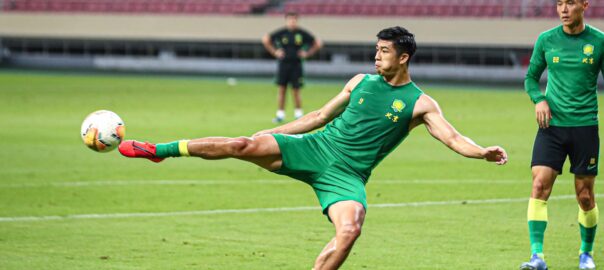
China PR and Beijing FC forward Zhang Yuning

  • Zhang has high hopes with both club and country in Year of the Ox
  • Forward excelled with Beijing FC on both domestic and Asian fronts in 2020
  • He eyes improved displays with the national team in FIFA World Cup™ qualifying

Friday marks the New Year Day or Spring Festival in the Chinese lunar calendar, which is known as Year of the Ox in the Chinese zodiac. Superstitious or not, the ox represents a lucky word in Chinese and understandably, the Year of the Ox is seen as a time to live up to expectations.

Someone who is hoping to live up to expectations with China PR and Beijing FC (previously known as Beijing Guoan) is forward Zhang Yuning.

“I am past 23 years old in the Year of the Ox, so I am beyond the U-23 policy (a policy by the Chinese Football Association that requires each club to ensure U-23 players get playing time in domestic competitions),” the 24-year-old told FIFA.com. “I have to compete for chances to play [with Beijing FC]. I will work harder in both training and playing, making solid progress and not letting a day slip in vain.”

2021 will be crucial for China PR in qualifying for the FIFA World Cup Qatar 2022™. Trailing leaders Syria by eight points, Team Dragon must rally and win as many matches as possible when the competition resumes in March if they are to progress to the next round. Despite the daunting tasks facing them, Zhang is confident that they can complete the mission under new coach Li Tie. 

“Each of the remaining [four] matches will be crucial for us,” he said. “There will be pressure. But I believe we are capable of good performances and we can achieve the results we want. Of course, the past lessons will be learned and we will spare nothing to do our job well.”

China PR and Beijing FC forward Zhang Yuning

Emergence on birth year

There is a 12-year cycle in the Chinese lunar calendar with each year represented by an animal. As a result, people have their birth year return every 12 years. It isn’t, however, seen as a time to celebrate as the birth year is believed to bring about challenges to overcome. 

Born in January 1997, Zhang embraced his birth year in 2020, which was the Year of the Rat. While COVID-19 did cause formidable challenges for all footballers including him, Zhang did his best in turning the year into a fruitful one. 

He scored six times and provided four assists as Beijing finished runners-up in last season’s C-League in Group B. On the continental front, he was twice on target, helping his side reach the quarter-finals of the 2020 AFC Champions League and putting in performances that established his place as one of the hottest prospects in China PR.

“Last season, both the C-League and AFC Champions League employed centralised formats due to the pandemic. It was a pity that we had to play in empty stadiums missing the fans’ support but because the team stayed together throughout the competitions, our teamwork improved and the consistency of our performances was better.

“Besides, Beijing has star players like national team veteran Yu Dabao and Brazilian international Renato Augusto. I have learned a lot by training and playing with them.”

China PR and Beijing FC forward Zhang Yuning

Inspired by Kaka

In a sense, last year saw Zhang realised some of his early promise. A local product from Hangzhou Greentown, he emerged as a standout among his peers and he was made captain of both the national U-17 and U-20 teams. 

In 2015, the then teenager began a four-season overseas adventure across Europe, plying his trade with the likes of Vitesse, West Bromwich Albion and Werder Bremen before returning home to join Beijing in 2019. 

“My time in Europe helped me a lot in my development,” he said. “I have improved both technically and physically. Particularly, I got tougher mentally. I have learned how to cope with setbacks and adjust myself properly.” 

At the national team level, he broke into the senior side in 2016. He made a dream start in his international debut, scoring twice and providing an assist as China PR defeated Trinidad and Tobago 4-2 in a friendly. He went on to start as the lone striker in a qualifier for Russia 2018 against IR Iran, with his performance earning the nod by the then Team Melli manager Carlos Queiroz. However, Zhang has yet to break his duck in a major international competition, an added motivation for him.

“I hope I can become an all-round centre forward. I hope I can not only score goals but also become a fulcrum for the team by surging forward and making passes. Last year was a good one in terms of consistency in displays. But a breakthrough is still to come.”

When asked about the goals for the future, Zhang stated that he is always striving to become a better player each day, inspired by his childhood idol Kaka.

“When I was a ten-year-old kid, I watched Kaka earn that year’s FIFA Player of the Year award on TV. He always impressed me through his wonderful displays on the pitch. A great player like him, Kaka shows great personality off the pitch. He is the role model for all young footballers, including me.”

As today is the Spring Festival, FIFA.com would like to take this opportunity to wish all of our Chinese readers a prosperous and successful year in the coming Year of the Ox.

FIFA.com
FIFA.com News