Category Archives: 2022 FIFA World Cup

Marcelo: I want to give the Bolivian people World Cup euphoria

Marcelo Martins celebrates scoring for Bolivia

  • Marcelo Martins relives becoming Bolivia’s all-time top scorer
  • The former Brazil U-20 striker believes they can qualify for Qatar 2022
  • He discusses selling hamburgers and arguing with Lionel Messi

Marcelo Martins flopped on to his hotel bed and removed from his pocket a mobile phone that had been beeping as relentlessly as Sputnik 1. “I felt like I was living in another world,” he recalled.

The hulking striker’s emotions were stratospheric as he watched the video messages in his family’s WhatsApp group. He felt immeasurable pride. He felt incontrovertible justification.

Every hamburger Marcelo had sold as a kid to afford his bus fare to training had been worth it. The decision he had made as a 19-year-old to ignore his Brazilian, Seleção-mad dad – Marcelo was the No9 for Brazil’s U-20s at the time – and pursue a senior international career with Bolivia had been vindicated.

A third goal in as many FIFA World Cup Qatar 2022™ qualifiers had made the 33-year-old his country’s all-time leading marksman. He was, and still is, ecstatic at that piece of history. He will not, however, be satisfied until he makes another.

Marcelo desperately wants to play at the World Cup, and he believes Bolivia will be there next year. Ahead of La Verde’s clashes with Venezuela and Chile, the Cruzeiro player chats to FIFA.com about choosing between Bolivia and Brazil, the former’s start to Qatar 2022 qualifying, his belief they can reach the global finals, his spat with Lionel Messi and breaking the aforementioned record.

FIFA.com: You turned seven one day after Bolivia’s first World Cup game since 1950. Do you remember anything from their USA 1994 campaign?

Marcelo Martins: I don’t remember too much, but I remember some of the games. There was a huge buzz in Bolivia at the time. ‘El Diablo’ Etcheverry, ‘Platini’ Sanchez, Carlos Trucco, they were players who took Bolivia to the World Cup, legends in my country. Even today people still go on about ‘94. It’s crazy when you mention the World Cup. We haven’t managed to quality again since ’94, so we really want it to happen again. The Bolivian people always call for another qualification. I think it would be absolutely wonderful because so much bad stuff happens in our country and it would give so much happiness to be able to participate in a World Cup again.

Your father is a football-mad Brazilian, but you were born and brought up in Bolivia. Did you support A Seleção or La Verde?

I was always split, because my father is Brazilian and my mother is Bolivian. When Brazil played, I supported Brazil. When Bolivia played, I supported Bolivia. In Brazil I used to idolise Ronaldo ‘Fenômeno’, who has always been an example for me. In Bolivia, ‘El Diablo’ Etcheverry. He was always a benchmark in Bolivian football, and I always loved watching his football. I always wanted the best for both sides. But after I made my Bolivia debut, things changed a lot.

As a kid, you worked at a football stadium…

I had a really difficult upbringing. I had to grab whatever work I could from an early age. When I was 13 I joined a local football club and needed the money for the bus fare to get to training. There was an opportunity to work at the stadium, selling hamburgers, pasties, Coca-Cola. That’s when I really fell in love with football. I was selling things to be able to do what I most loved, which was to play football. And at the same time I fell I love with being at the stadium, the atmosphere, [watching] football. The only problem was that I also loved hamburgers and sometimes I couldn’t resist eating one, which I’d have to pay for! (laughs) It was funny because I was only in the youth ranks for a year-and-a-half and then, at 15 years old, I turned professional.

And you first salary almost didn’t last long, right?

(laughs) I’m very lucky to have a father who has always been a great example. My father has always supported me greatly with football. Since I was ten he was always encouraging me to become a footballer. I went to Vitoria in Bahia and my father went with me.

At first I didn’t have a contract, but then one day I suddenly received 500 reais (around $200 at the time). I went to the mall with my father and I saw these wonderful Diesel jeans. I fell in love with them. I can recall them to this day. Beautiful. They cost exactly 500 reais. I was desperate to buy them, but my father said, ‘Mate, listen to me. Forget about these jeans and focus on training, dedicating yourself to football. Because if you make it as a footballer, you’ll be able to spend 100 dollars like it is ten reais, you’ll be able to buy all the jeans you want.’ I reluctantly left the mall without the jeans, but guess what? My dad was right. I now have a wardrobe with over 200 pairs of jeans! (laughs)

You played for Brazil at U-18 and U-20 level. How was that experience?

I cannot even describe how proud it made me. For me, a Bolivian, to be in the Brazilian youth national team, was an unbelievable feeling. My dad was exceptionally proud. Brazil has so, so many players. To wear the canary-yellow shirt, the No9 like Ronaldo, was an extraordinary feeling. I was top scorer in two competitions, but then the senior Bolivian national team came calling and God had a plan for me – to make history with Bolivia.

You were only 19 when you decided to represent Bolivia. How difficult a decision was that?

It was one of the toughest decisions I’ve ever had to make. My dad was urging me to stick with Brazil, to keep working hard and my chance would come with the senior Seleção. And the entire rest of my family was saying, ‘You have to come and play for Bolivia, you will be able to get Bolivia to the World Cup. You will be a benchmark for future generations. Kids will want to follow In your footsteps.’ That was a huge motivating factor – to be an example for future generations – but it was still really tough to let go of the dream of playing for the [senior] Seleção.

Moving on to Qatar 2022 qualifying, you missed the first game, but Bolivia gave Argentina and Ecuador really close games in narrow defeats, and drew 2-2 in Paraguay. How would you evaluate Bolivia’s start to Qatar 2022 qualifying?

We could have won the last three games. We were leading in all three games. We didn’t keep our concentration and keep playing the way we were. It’s difficult [for opponents] to play at altitude – we didn’t take advantage of this against Argentina and Ecuador. It’s frustrating because I feel like we’ve thrown seven points away. But we still have it all to play for. We have two huge games now – if we win we’re in a strong position in the race to qualify for the World Cup.

Despite the results, the performances against three teams all in the top four in the standings must give the team confidence?

Without doubt. We’ve watched the games together and seen that we were playing well against and beating high-level opposition. That shows us what we can do. We’re analysing the attention lapses and mistakes to make sure we don’t repeat them.

What do you think of forthcoming opponents Venezuela and Bolivia?

I’ve never played against a [CONMEBOL] national team that has been easy or that I thought was going to be easy. I think Venezuela have a really good, competitive team. They’re really quick once they win back the ball, so we’ve have to be really aware of this. Chile have made their own history, they’ve come on so much in recent years. But they’re also undergoing a generational change. It’s never easy when you change from one set of players who know each other to another. So I think we have to take advantage of certain situations in the game to emerge victorious. Getting to a World Cup is really difficult, but if we beat Venezuela it will fill us with confidence going into the Chile game. We’ll give it our everything because the World Cup is the dream of myself and all my team-mates.

Do you believe Bolivia can qualify for Qatar 2022?

I firmly believe in it. We have a wonderful chance this time round. I will give it everything until the very end. I want to go down in the history of football in my country. It’s a huge dream to take Bolivia to the World Cup, to give the people of my country the euphoria that would bring. And it would be a dream to play in the World Cup.

Pele, Messi, Luis Suarez, Alexis Sanchez, Paolo Guerrero, Falcao, Roque Santa Cruz, Agustin Delgado and Enner Valencia, Salomon Rondon, Marcelo Moreno… how did it feel to become Bolivia’s all-time leading marksman and join an elite bracket of players to be top scorer for a South American country?

I’m very, very proud. I’ve worked hard for 13 years to be able to be the top goalscorer for my country. It’s not easy, and it will never be easy, to score goals. It’s the most difficult thing in football. So to be in this group – strikers who were lethal in world football – it’s an immense honour. And I plan scoring a lot more. I’m young and I have a lot more years in me. I’m physically fit and I have great hunger. You can be sure that I have a lot of goals left in me.

How did you feel after the game the night you broke the record in Asuncion?

I couldn’t believe what was happening in the dressing room. My phone was going off. My WhatsApp was flooded with messages, everyone congratulating me. My family were sending me videos. It was a feeling of inexplicable pride, of reaping the reward for everything I had worked hard for throughout my career. It was a unique moment, a moment to thank God. I was so happy. My team-mates were also so happy for me, and I have to thank them greatly because it’s because of them that I managed to become my country’s all-time leading goalscorer.

When I got back to my hotel room, I finally had the calm to go through and read the messages and videos on my WhatsApp. I have a WhatsApp group with my family. I remember watching their video messages over and over and being so emotional. I felt like I was living in another world. The feeling I had in the hotel that night is one that I will remember for the rest of my life.

Can you tell us about the little altercation you had with Lionel Messi?

(laughs) In football, sometimes things happen on the pitch that the media doesn’t see – an insult, a dirty challenge, or you’re defending a team-mate. Messi’s a phenomenon. I have huge admiration for all he’s achieved at Barcelona, for everything he represents for the Argentinian national team. But in these moments it doesn’t matter if it’s Messi, Cristiano Ronaldo, Ronaldo ‘Fenômeno’ – you’re defending the colours of your country and you’re agitated. There was a misunderstanding in the heat of the moment, but it was no big deal – these things happen all the time.

Speaking of legendary players, who’s the best player you’ve seen in your lifetime?

‘Fenômeno’. ‘Fenômeno’ and Cristiano Ronaldo. I was also a big fan of Gabriel Batistuta. The way he scored goals was something else.

Finally, who do you think will win Qatar 2022?

Brazil are always the favourites. They’re lethal. It’s so difficult to play against them. They have players who are feared. They have so many players who can beat their marker. And everybody knows they’re the five-time world champions – that carries huge weight. I think this Belgium team could do it and Argentina are always dangerous. At the moment, I’d say it’s between those three teams.

FIFA.com
FIFA.com News
No time to lose for World Cup hopefuls

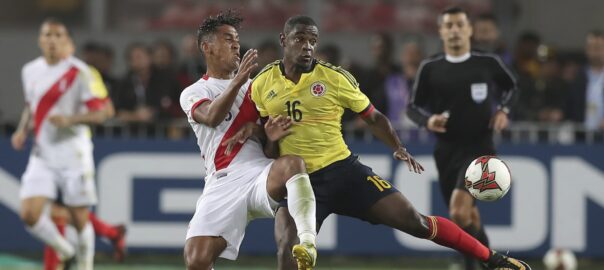
Renato Tapia of Peru fights for the ball with Duvan Zapata of Colombia

After the postponement of matchdays 5 and 6 of the South American qualifiers for the FIFA World Cup Qatar 2022™, matchday 7 features five high-stakes games across the continent. FIFA.com previews all the action.

Matchday 7 schedule (all times local)

3 June

Bolivia – Venezuela (17:00)

Uruguay – Paraguay (19:00)

Argentina – Chile (21:00)

Peru – Colombia (23:00)

4 June

Brazil – Ecuador (21:30)

The big match

Peru – Colombia, Estadio Nacional (Lima)

After taking just one point from a possible 12, Ricardo Gareca’s Peru (9th) need to make up lost ground and quickly. And what better way to start than against “a direct rival”, as their goalkeeper Pedro Gallese told FIFA.com. The nucleus of the team remains unchanged, led as always by Paolo Guerrero.

Reinaldo Rueda, who started the qualifiers in charge of Chile, is back for his second spell at the helm of his native Colombia (7th). The loss of James Rodriguez is a major blow for Los Cafeteros, who will nonetheless be able to count on big names like David Ospina, Yerry Mina, Juan Cuadrado and Luis Muriel.

The stat: Colombia have gone eight games without losing to Peru in the qualifiers (six wins and two draws). La Blanquirroja’s last victory was in 2001 (1-0 away), while their last home win was all of 40 years ago (2-0 in 1981).

Elsewhere

The only fixture involving teams currently in the direct qualifying berths takes place in Porto Alegre and sees Brazil, leaders with maximum points, and Ecuador, third with three wins from four, go head to head. With Neymar and Dani Alves set to star, Tite’s side will be trying to extend their unbeaten run in the preliminaries to 22 games (16 wins and 5 draws). La Tri have failed to win any of their last four meetings with the Auriverde and have managed just two wins (2001 and 2004) over their opponents in ten attempts, both on home soil.

In Montevideo, Uruguay (5th) and undefeated Paraguay (4th) will do battle to end the day in the qualifying places. Oscar Tabarez will not have Edinson Cavani after his sending off against Brazil but can count on Luis Suarez and Fabian Muslera, who returns from injury. For his part, Paraguay coach Eduardo Berizzo can also welcome back two of his key players in Andres Cubas and Miguel Almiron. In terms of the head-to-head record in the qualifiers, La Celeste are second best, though they have now gone five games without losing to La Albirroja (three wins and two draws). The latter’s last victory dates back to 2007 (1-0), while they have not won in Uruguay since 2001 (1-0).

Dani Alves of Brazil battles a ball with Carlos Gruezo of Ecuador 

Another undefeated side Argentina (2nd) welcome Chile (6th) to Santiago del Estero. With Lionel Messi at the helm, Lionel Scaloni’s revamped Albiceleste will be hoping for their fifth qualifying win in a row against La Roja, who have just one victory over their neighbours in this competition (1-0 at home in 2008). The fixture will mark the official debut of new Roja coach Martin Lasarte, who will be without top-scorer Arturo Vidal. “We must keep the team centre stage. Chilean football has earned the right to be there and now is not the time to lose it,” Lasarte recently told FIFA.com.

After picking up their first three points at home on matchday 4, Venezuela (8th) will be keen to add to their tally in La Paz against a Bolivia (10th) side still in search of their first win of the campaign. Although Jose Peseiro is hampered by injuries to key players such as Salomon Rondon and Yangel Herrera, there is good news in the return of Josef Martinez. His Bolivian counterpart Cesar Farias continues his bid to revitalise the team but will still be calling on a few key veterans led by Marcelo Martins. La Vinotinto have only ever won once in Bolivia – a 1-0 triumph in 2009 – losing seven and drawing one of their other eight games there.

Player to watch

Angel Romero (Paraguay)

The 27-year-old winger has been in scintillating form so far in these qualifiers. While he shares top spot in the scorers’ charts alongside Arturo Vidal and Luis Suarez on four goals, he has a better goals-per-minute average than the other two, with 1 every 55.7 minutes compared to 1 every 62.25 for Suarez and 90 for Vidal.

Angel Romero celebrates giving Paraguay the lead from the spot

On social media

FIFA.com
FIFA.com News

Qatar 2022 Magazine – Episode 5

FIFA.com Welcome to the fifth episode of the FIFA World Cup Qatar 2022 Magazine Show, coming to YouTube every month.

In this month’s show, we look ahead to the FIFA World Cup qualifiers taking place in Asia – featuring the likes of Korea Republic, Japan, Australia, Saudi Arabia, IR Iran and more.

We take a closer look at the FIFA Arab Cup, scheduled to take place in Qatar this December.

We relive Italy winning the FIFA World Cup through the eyes of a famous Italian chef.

And we catch up with Argentinian defender Gabriel Mercado, who relives his goal against France at Russia 2018 and his country’s triumph at the 2007 FIFA U-20 World Cup.

New report outlines sustainable waste management practices at Qatar 2022 stadiums

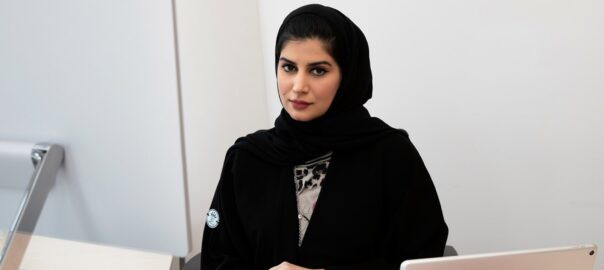
Engineer Bodour Al Meer

The Supreme Committee for Delivery & Legacy (SC) and Gulf Organisation for Research & Development (GORD) have released a new report which outlines the sustainable waste management practices implemented at FIFA World Cup Qatar 2022™ stadium construction sites.

Titled ‘Waste Management Best Practices for Construction Sites: Case Studies from FIFA World Cup Qatar 2022™ Stadiums’, the report aims to inform local contractors – and the wider construction industry – about efficient waste management strategies.

The practices described in the report outline Qatar’s commitment to environmental sustainability and its plans to host the first carbon-neutral FIFA World Cup™. They also highlight Qatar’s ambition to achieve sustainability certification under the Global Sustainability Assessment System (GSAS), which aims to improve a project’s environmental performance and promotes the reuse of waste at construction sites, recycling wherever possible and responsible disposal at authorised landfill facilities.

Dr Yousef Alhorr

Engineer Bodour Al Meer (pictured at the top of this article), the SC’s Sustainability Director, said: “Minimising waste and increasing recycling is a key strategic objective of the Qatar 2022 Sustainability Strategy and we are proud of our achievements in this area.

“This report on waste management serves to document some of our best practices and share what we have learned so that other construction sites can be operated in similar ways and ideally achieve even higher rates of recycling.”

The Founding Chairman of GORD, Dr. Yousef Alhorr (pictured above), said: “All World Cup projects in Qatar have adopted unconventional measures to manage site waste and limit their carbon footprint during the construction phase. Guided by the GSAS framework, we have documented these best construction waste management practices. Through this report, we hope to benefit and support the entire construction community in its quest towards developing a sustainably built environment.”

Al Horr continued: “Embracing green practices on site presents a range of opportunities beyond the obvious benefit of preserving our ecosystem. Reusing and recycling construction materials, for instance, not only diverts waste from landfill but also cuts down the cost of new materials required for future use.”

The report follows the principles of the circular economy by outlining best practices linked with reducing, reusing and recycling. Starting with waste segregation, the document guides professionals through a hierarchy of various steps and aspects of the waste management cycle with field evidence collected from their implementation on stadium sites.

Qatar 2022 stadiums have implemented world-class waste management practices by ensuring proper waste segregation, sorting and storing; through facilities available on site, and by outsourcing authorised licensed waste subcontractors to handle and transfer different types of recyclable wastes from construction sites to their correct destinations.

The stadium sites collectively diverted 79% of solid waste from landfill through reuse and recycling practices. Ninety per cent of the waste generated at Al Janoub Stadium and 84% generated at Ahmad Bin Ali Stadium was either reused or recycled. For the ongoing Ras Abu Aboud Stadium project, the share of waste diverted so far is around 95%. The diverted waste from the four other stadiums ranges between 72% and 80%.

The report estimates the amount of waste generated at each site, with the data assisting in planning the required setup for waste management and reduction. Some of these calculations include the generated waste per gross floor area, daily generated food waste per worker and percentage of different waste streams.

The report also outlines the various challenges of waste management in relation to major construction projects, including the requirement to allocate ample space, labour and machinery to the project. In addition, the report outlines the importance of awareness programmes and implementing waste documentation tracking systems.

This is the latest report published by the SC and GORD. The two organisations previously teamed up to produce the Dust Management Best Practices for Construction Sites report, which also focused on Qatar 2022 stadiums.

FIFA.com
FIFA.com News

Sarachat: My ultimate goal is to help Thailand qualify for the World Cup

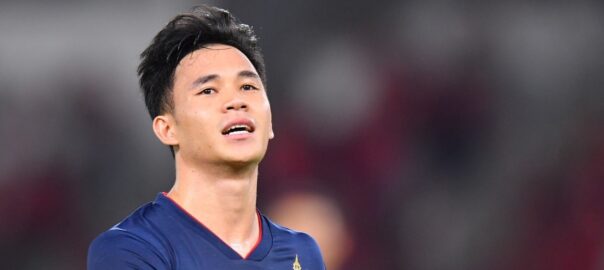
Thailand midfielder Supachok Sarachat looks on

  • Supachok Sarachat is a rising star for both Buriram United and Thailand
  • Young attacker has so far excelled during Qatar 2022 qualifiers
  • Aims to fire War Elephants to maiden FIFA World Cup qualification

Asia’s postponed qualifying campaign for 2022 FIFA World Cup Qatar™ is set to reach its conclusion over the coming fortnight with Group G arguably the most intriguing. Southeast Asian heavyweights Thailand, who are hopeful of overhauling leaders Vietnam, resume with a meeting against group strugglers Indonesia on Thursday. There is little margin for error for Akira Nishino’s War Elephants ahead of remaining matches against centralised hosts United Arab Emirates and Malaysia in Dubai. 

Thailand will undoubtedly be looking to young attacker Supachok Sarachat to emulate his heroics in the two sides’ previous meeting. Nearly two years ago now, the Buriram United midfielder stole the show in Jakarta, scoring twice and setting up another to help his side to a resounding 3-0 victory against the Indonesians.

Fledgling international star

“The goals [against Indonesia] were important for me,” Sarachat, who turned 23 last month, told FIFA.com in a recent exclusive interview. “It felt like a huge weight lifted off my chest, because in our opening goalless draw against Vietnam, I missed the target. So the victory took the pressure off me and put ourselves back into contention.” 

Sarachat went on to start in their next three outings where Thailand obtained a victory and a draw to sit in third, three points adrift of surprise packets Vietnam. Through his excellent performances, the youngster has become a breakout star for the War Elephants. 

“I would like to thank coach Nishino for the trust he has placed in me,” he said. “Since he took charge of our team, I have been given more chances so I can showcase what I am capable of.”

Supachok Sarachart (#10) and Suphanat Mueanta (#17) of Thailand celebrate victory over Bahrain

Fruitful year amid challenges

As if to prove that his showings for the national team were not a one-off, Sarachat continued his eye-catching form on the domestic stage during the 2020 season managing to score 12 times in all competitions with Buriram United.

“I am very pleased with my performances and [it has been] my highest scoring tally in a single season thus far. We had gone through a hard period due to the outbreak of Covid-19. The league was postponed for a long time but we were working hard throughout. And it proved a memorable year for me as I scored quite a few goals, including managing a hat-trick.”

At international level, meanwhile, Sarachat figured prominently for Thailand in the 2020 AFC U-23 Championship. He completed a brace in their 5-0 rout of Bahrain and helped Thailand to the last eight only to lose to 1-0 eventual finalists Saudi Arabia.

“It has to be one of the proudest moments in my career. We made history by reaching the quarter-final stage. The tournament also gave me the experience to play against some of the continent biggest footballing nations, and also an opportunity to play against some of the brightest youth stars in Asian football.”

Sibling attacking partnership

Sarachat isn’t alone in impressing for Buriram United with his brother Suphanat Mueanta – who is four years younger – also a lethal weapon upfront for the club. In fact, the siblings form part of the Thai League’s most formidable frontlines in concert with Supachai Jaided, another promising star for club and country. With both Mueanta and Jaided also featuring in Thailand’s squad for this month’s World Cup qualifying matches, Sarachat is hoping the trio can translate their club form to the international front. 

“Playing alongside Suphanat and Supachai is a joy because we are all youngsters,” he said. “As team-mates, we have the same goal and great understanding between each other. Being of almost the same age really helps us to communicate smoothly. Our relationship on and off the pitch also helps us to understand each other and that directly impact our plays on the field when representing club and country.”

Thailand have never qualified for a World Cup but with the team hopeful of progressing to the next round, Sarachat voiced his hopes of realising the nation’s footballing dream. “My ultimate goals are to win the AFC Champions League with my club,” he said. “But when it comes to the national team, it will have to be helping Thailand to the World Cup. If Thailand qualify to the 2022 FIFA World Cup in Qatar it will undoubtedly go down as my greatest achievement as a footballer and I will do my best to achieve this goal.”

Notable facts

2011: Joined the Buriram United academy at the age of 13 years old
2015: Debuted for Buriram United’s senior team two months past his seventeenth birthday
2017: Youngest hat-trick scorer in the Thai League, aged 18 years old and 9 months
2017: Named FA Thailand Young Player of the Year

Thailand's Supachok Sarachat (M) plays the ball forward
FIFA.com
FIFA.com News