Category Archives: 2022 FIFA World Cup

International stakeholder group to support ensuring an inclusive FIFA World Cup launched

FIFA World Cup

  • First meeting of the Core Stakeholder Group on Inclusion and Anti-Discrimination held this week
  • Tournament organisers reiterated commitment to diversity to leading organisations in this field
  • The participants cover key areas such as gender and race equality, LGBTIQ+ and disability inclusion

A meeting on Monday between the FIFA World Cup Qatar 2022™ organisers and leading organisations in the diversity field laid the foundation for a structured engagement process on inclusion and anti-discrimination, which is intended to inform and further strengthen the steps taken by the tournament organisers to ensure a fully inclusive tournament.

During this first meeting, the Core Stakeholder Group on Inclusion and Anti-Discrimination was provided with an overview of the event’s Sustainability Strategy and on the series of initiatives implemented, and the members of the group shared their initial reflections and recommendations in that respect.

Among the initiatives discussed were anti-discrimination training of personnel involved in the tournament delivery, the implementation of in-stadium measures to detect and address discriminatory incidents, steps taken to ensure an accessible tournament experience, and the establishment and delivery of human rights grievance mechanisms.

“The FIFA World Cup is welcoming and inclusive for everyone – to people of all races, cultures, religions, gender, sexual orientation, disability and other diverse groups. We know that we can only succeed in our mission of ensuring a fully inclusive tournament if we listen to and work with key stakeholders that represent the diverse communities who will benefit from these measures and by integrating their perspectives and expertise into our work,” said Joyce Cook, FIFA’s Chief Social Responsibility & Education Officer. “This meeting was a key step in that respect, and we greatly appreciate the commitment of the group to accompany us on this journey.”

The participants of the group cover key areas such as gender and race equality, LGBTIQ+ and disability inclusion, and involved organisations such as the Fare network, Football Supporters Europe (FSE), ILGA World, the Centre for Sport and Human Rights, and Centre for Access to Football in Europe (CAFE), among others. Through an umbrella process, FIFA, in collaboration with its joint venture subsidiary and local partners, will provide those key stakeholders with regular updates and promote exchanges, as well as address issues raised by the experts and their constituents.

This meeting follows another exchange held last week by FIFA with a wide group of LGBTIQ+-led and ally organisations from many countries and operating at the local, regional and international levels and gathered by the Fare network

FIFA.com
FIFA.com News

Friendlies provide lessons and questions for African giants

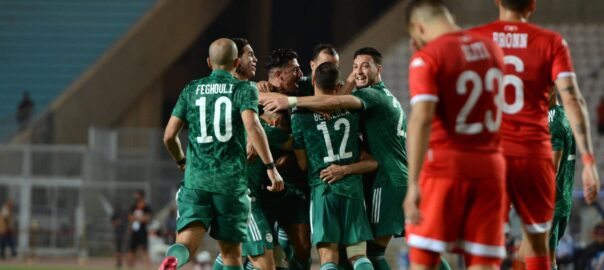
Riyad Mahrez(7) of Algeria celebrates his goal against Tunisia

  • Africa’s top team sets new record for games unbeaten
  • Algeria shine, Morocco with work to do, Tunisia seeking dynamism
  • Aforementioned trio preparing for Qatar 2022 qualifiers and the FIFA Arab Cup

The second half of 2021 promises to be a busy one for many teams from the Arab world, with the qualifiers for the FIFA World Cup Qatar 2022™ in Asia and Africa, as well as the inaugural edition of the FIFA Arab Cup to be held in Qatar at the end of the year.

Indeed, with a qualifying round for this new tournament taking place in the coming days, and AFC teams engaged in Qatar 2022 qualifying, several Arab teams without either of those obligations took advantage of the international window to play friendlies. This was the case for the likes of Algeria, Morocco and Tunisia, who all had useful lessons ahead of their forthcoming challenges.

A record and confidence boost for Les Fennecs

Undefeated since November 2018, current CAN Africa Cup of Nations champions, and the highest placed African side in the FIFA/Coca-Cola World Ranking, Algeria already seem well equipped for the challenges ahead.

But coach Djamel Belmadi is not one to rest on his laurels and impressed on his squad the importance of their games against Mauritania, Mali and Tunisia. “These friendlies are far from being insignificant for me, since they’ll be decisive for the next FIFA Ranking. Our goal is to maintain our position among the continent’s top five, so as to have home advantage for the return leg of a potential [third round] play-off for the 2022 World Cup,” he announced.

Mission accomplished so for Belmadi’s charges, who strung together three straight wins: 4-1 against Mauritania, 1-0 against Mali, and – most significantly – 2-1 in Tunisia, their nearest continental rivals in the FIFA Ranking. The sequence also enabled Algeria to set a new record (27) for games unbeaten by an African team, surpassing that of Côte d’Ivoire (26). Better still, victory in the Maghreb derby, allowed Les Fennecs to move ahead of their neighbours in their head-to-head, with a 16th victory in 44 meetings compared to 15 for Tunisia and 13 draws.

“This unbeaten run means a lot, principally because it shows how consistent we’ve been since being crowned African champions in 2019 and how we got right back to work on delivering big performances. The credit must go to the players, who’ve worked hard to beat this record,” said their coach after the victory in Rades. “Of course, it won’t be easy to keep the run going, especially as everyone is waiting to take us down.”

The three games also allowed Belmadi to experiment with his squad, giving opportunities to central defenders Ahmed Touba and Abdelkader Bedrane, who showed that they could fill in for regulars Djamel Benlamri and Aissa Mandi. Ramiz Zerrouki and Haris Belkebla also impressed, while Riyad Mahrez showed once again how important his skill and experience are in big moments. The Manchester City striker, absent against Mauritania, grabbed the only goal of the game against Mali, and his side’s second against Tunisia after Baghdad Bounedjah opened the scoring.

Ramiz Zerrouki (L) of Algeria in action against Mali

Carthage Eagles still hopeful despite setback

For their part, Tunisia confirmed their standing as a force in African and Arab football with two wins – over Congo DR (1-0) and Mali (1-0) – from their three friendlies, cementing their place as the second-best African team in the FIFA Ranking. Without influential midfielders Youssef Msakni and Ferjani Sassi, the team struggled a good deal in the face of Algeria’s pressing and dynamism, unsurprisingly going down despite a committed and tenacious response in the second half.

And while this strength of character was not enough to turn around a Maghreb derby, it did help Mondher Kebaier’s men triumph over Congo DR a few days earlier, thanks to a solitary goal from Naim Sliti on the stroke of half time, and to do the same against Mali yesterday courtesy of an Anis Ben Slimane strike on 90 minutes.

Among the positives to take from those fixtures is the solid start in a Tunisia shirt for Manchester United forward Hannibal Mejbri. The 18-year-old provides an additional attacking option for a team who have been lacking a bit in that department despite the best efforts of Wahbi Khazri.

Atlas Lions effective if unspectacular

Last but not least, Morocco had only two matches during the international window, but both were tough opponents. Against Ghana (1-0) and then Burkina Faso (1-0), Vahid Halilhodzic’s men did what was required with two wins without dazzling particularly.

The Atlas Lions were grateful to some of their leading lights, namely a composed and dependable Yacine Bounou in goal, and influential attacking midfielder Hakim Ziyech, who lit up proceedings after coming on against the Black Stars and set up the winner for Jawad El Yamiq. Also decisive was Ashraf Hakimi, who scored the only goal of the match against the Stallions with a free-kick.

The team’s Bosnian coach will have been please to see two solid performances from his side despite many changes, with only Adel Taarabt, Romain Saiss, Hakimi and Youssef En-Nesyri making the starting XI for both fixtures. “Between now and September, we have to become much more efficient and determined for our qualifying games,” warned the coach after their second match, despite the two victories.

CAF’s qualification groups for Qatar 2022

Preliminary qualifying draw (CAF)
FIFA.com
FIFA.com News

Vietnam make history as last-12 finalised in Asia

Vietnam vs Indonesia, FIFA World Cup Qatar 2022 qualifying

  • Asia’s last 12 line-up complete on the road to Qatar 2022
  • Vietnam seal maiden progression to Round 3, Uzbekistan suffer surprise exit
  • IR Iran, UAE and China PR stage late comebacks to progress

The curtain finally came down on Asia’s second round of qualifying for the 2022 FIFA World Cup Qatar™ with the last 12 line-up complete after the closing matchday. Eight teams shored up passage on Tuesday – Saudi Arabia, United Arab Emirates, IR Iran, Iraq, Oman, Lebanon, China PR and Vietnam – to join the already-qualified Japan, Australia, Syria and Korea Republic in the third round.

These teams will be divided into two groups of six with the draw taking place on 1 July. The sides will battle against each other across seven months from 2 September 2021 – 29 March 2022 with the top two in each group qualifying for Qatar 2022, while the two third-placed teams will advance to the fourth round play-off.

Vietnam proved the biggest surprise packages by sealing maiden progression to the third round. Uzbekistan, conversely, were eliminated in unexpected fashion after losing to Saudi Arabia on the final matchday. Meanwhile, Iran, China and UAE all overcame erratic form early in this campaign with a strong finish to progress.

Join FIFA.com as we take a closer look.

12 qualified teams

Group winners: Syria, Japan, Australia, Korea Republic, Saudi Arabia, Iran, UAE,

Best runners-up: Oman, China, Lebanon, Iraq, Vietnam


2022 FIFA World Cup Asia Qualifiers: 15 June 2021

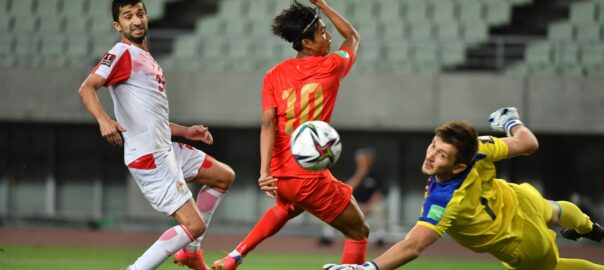
TAJIKISTAN v MYANMAR

TAJIKISTAN v MYANMAR

TAJIKISTAN v MYANMAR

Australia vs Jordan, FIFA World Cup Qatar 2022 qualifying

Australia vs Jordan, FIFA World Cup Qatar 2022 qualifying

Iraq walk out ahead of the match against IR Iran

IR Iran walk out onto the pitch ahead of the match against Iraq

Mirlan Murzaev of Kyrgyz Republic and Shinnosuke Nakatani of Japan compete for the ball 

Ado Onaiwu (2nd R) of Japan celebrates scoring his side’s first goal with his team mates 

Mirlan Murzaev of Kyrgyz Republic converts the penalty to score 

Takuma Asano of Japan takes on Kairat Zhyrgalbek Uulu of Kyrgyz Republic

Afghanistan captain Farshad Noor walks out onto the pitch

Faysal Shayesteh of Afghanistan dribbles against India 

Muhammed Ashique Kuruniyan of India dribbles against Haroon Amiri of Afghanistan in FIFA World Cup Qatar 2022 qualifying

Wu Lei of China PR dribbles against Syria

Mirlan Murzaev (L) of Kyrgyz Republic reacts after scoring his side’s first goal with his team mate Aizar Akmatov 

Saudi Arabia vs Uzbekistan, FIFA World Cup Qatar 2022 qualifying

Saudi Arabia vs Uzbekistan, FIFA World Cup Qatar 2022 qualifying

Salman Alfaraj of Saudi Arabia smiles

Memorable moments

Early progression
Japan became the first side to secure a place in the third round, with a 10-0 drubbing of Myanmar sending them through with two games to spare. Joining them as second qualified team were an impressive Syria, who advanced by beating Guam 3-0 in the penultimate match. Australia sealed early progression with seven straight victories, including a 3-0 defeat of Nepal in the penultimate matchday, while a 2-1 narrow win against Lebanon in the closing match saw Korea Republic advance as group winners.

Powerful comeback
While eight qualified teams left it late, three of those nations impressed by sealing qualification with four wins on the trot. In the process, both Iran and United Arab Emirates rallied to stage powerful comeback and win their respective groups despite floundering early in this campaign. China, under new boss Li Tie, emerged unstoppable including defeating group winners Syria 3-1 in the closing match to progress as one of the best runners-up.

Return to the elite
Both Oman and Lebanon sealed their return to the third round after missing out on the decisive stage on the road to Russia 2018. Despite losing to group winners Qatar in the return match, the Omanis claimed three straight wins to secure their place among the five best second-place finishers to progress. Lebanon, who finishing second in their group just a point clear of Turkmenistan, only saw their progression confirmed after both Jordan and Uzbekistan lost in the closing matchday.

Breakthrough for Vietnam
This campaign saw the emergence of Vietnam, who made history by sealing maiden progression into the third round. Having reached the last eight in the 2019 AFC Asian Cup, the team continued to make progress on the continental stage under coach Park Hangseo. Entering the back-end of the campaign as group leaders, the Vietnamese registered back-to-back victories against Indonesia and Malaysia and advanced as one of the best second placed finishers, despite narrowly losing to hosts UAE 3-2 in the concluder.

Heart-breaking near-miss
It proved a painful night for Uzbekistan, whose hopes of a first FIFA World Cup were shattered after losing to Saudi Arabia 3-0 in the closing matchday. It is the first time that the Central Asians have suffered an exit at this stage since joining AFC in 1994, having reached the final qualifying round in each of the past six World Cups.

The players

A host of players announced stepped into the spotlight to help their respective teams through. Notable among them was 23-year-old striker Nguyen Tien Linh, who struck four times, including scoring the match-winning goal in the first-leg meeting against UAE, to help his side achieve breakthrough progress.

Korea Republic’s young forward Song Minkyu showed no stage fright in his international debut, providing an assist in their 5-0 rout of Turkmenistan before opening the scoring in the crucial win against Lebanon. At the other end of the spectrum, experienced China striker Wu Lei proved instrumental throughout, scoring seven times to fire into Round 3.

Did you know?

Australia and Japan maintained an unblemished record during their second round campaign, winning eight from eight and conceding just two goals each.

FIFA.com
FIFA.com News

Mancini: We wanted to do something really different with Italy

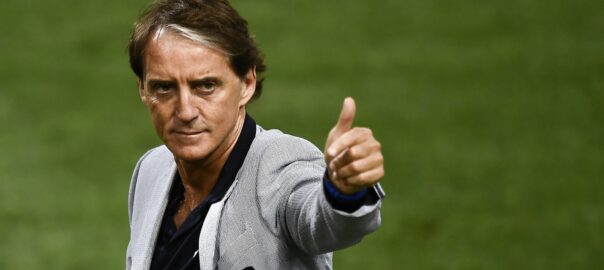
Italy coach Roberto Mancini.

  • Roberto Mancini has led a remarkable turnaround in Italy’s fortunes
  • Almost three years have passed since his Azzurri side last tasted defeat
  • Mancini tells us about his attacking revolution and special World Cup motivation

With Roberto Mancini, the numbers rarely tell the full story.

A perfect example would be his tally of zero FIFA World Cup™ appearances as a player. Those who never saw him in action might conclude from this figure that, as a footballer, Mancini was unremarkable. Nothing, of course, could be further from the truth.

Sven-Goran Eriksson, his coach at Sampdoria and Lazio, is among several to laud this supreme trequartista as “an artist” and “a genius”. “He saw things on the pitch quicker than anybody else,” enthused the Swede. “His vision was incredible.”

Mancini himself laments as “absurd” his underwhelming international career – a long, painful story of ill luck, the emergence of Roberto Baggio and two costly fallouts with coaches.

Becoming Italy boss himself equated, he said, to “being given a second chance”. And the 56-year-old has grasped that opportunity decisively. A team decried as Italy’s worst of all time – the first in six decades to miss out on a World Cup – has been transformed into a side that is unbeaten in 28 matches and has won its last nine by an aggregate score of 28-0.

Again, though, those numbers – impressive as they are – only tell part of the story. Just as notable has been the radical shift in style that Mancini has overseen, with those wins and goals built on an adventurous, attacking approach that owes little to Italian tradition.

There was plenty to unpick, therefore, as Mancini spoke to FIFA.com in the wake of a 3-0 win over Turkey that has sent his team soaring up the list of UEFA EURO 2020 favourites.

Roberto Mancini Signs a Contract Renewal as Italy Coach

FIFA.com: Roberto, you signed a new five-year contract recently. The length of that deal is unusual, particularly in modern-day football. Does it signify how much you are enjoying the job?

Roberto Mancini: We’re committed together to try to win a World Cup, and that’s why [the length of contract] made sense as it reflects this is a long-term project. At this point, given where we started three years ago, things are going smoothly – and that’s thanks to the young and talented players we have on board. I believe that those years we have ahead will be fruitful for Italy.

When you became a coach, and having represented the national team as a player, was coaching Italy always a dream?

Yes. I started my international career when I was just a teenager, and although I played in extremely strong national teams blessed with many talented players, I was never lucky with results. If you go back to Italy’s World Cup in 1990 for instance, we didn’t lose a single game throughout the competition, but ended up finishing third with six wins and a draw. It’s crazy! I hope we will get our own back for all those chances that were missed in the past.

Roberto Mancini in action for Italy in 1994.

Despite your talent and wonderful playing career at club level, you were never given the chance to shine at a World Cup (remaining an unused squad member in 1990). How much of a regret was that, and has it made making a mark on the tournament as a coach a priority for you?

Given that I started my international career very young, I could potentially have played for Italy in four World Cups and four European Championships. And I wish I had! For many reasons though, I didn’t achieve the success I wanted – except for winning a European title at U-16 level. So, yes, I hope that all I missed as a player might be achieved as a coach.

Sven-Goran Eriksson was speaking about coaching you recently, saying how much he loved you as a player and person, but also how incredibly demanding and intense you were. Would Mancini the coach enjoy the challenge of working with Mancini the player?

I would like working with that kind of talented, technical and inspired player! I see those attributes as positive. Sven was a master for me – a great coach who taught me a lot of things. I have to thank him again. He’s a great man.

Sven Goran Eriksson of Lazio with Roberto Mancini. 

How do you deal with the pressure of carrying the hopes of a football-crazy nation? Is it possible to escape from?

No! That’s Italy! Our country has 60 million coaches and it’s impossible to slip away from them. But at the same time it speaks for how deeply involved Italians are with their national team, especially when it comes to final competitions. Italians love football so much, and that’s fantastic.

How have you found the experience of coaching through the pandemic, from playing in empty stadiums to the logistical issues and, of course, even contracting COVID yourself at one stage. Has dealing with all that been one of your biggest challenges as a coach?

There’s no doubt it’s been a difficult challenge individually, albeit amid a very tough time for people everywhere. No-one had ever experienced these kind of things before, and you can only hope that they will never experience them again in the future. Families lost loved ones, people were deprived of their freedom. For everyone, it was the worst thing that could have happened. Those of us involved in sport were no different, and we simply had to adapt to what was going on around us.

In a recent interview with us, Brazil coach Tite singled you out for high praise, not only for your results with Italy but for the way you have changed the team’s style. Is that kind of recognition, from a peer and fellow top-level international coach, satisfying to hear?

Tite is a great coach and he comes from the most inspired, creative nation in the football world – a country where you may be considered disrespectful if you don’t adopt an offensive style. We are very glad to read of Italy being singled out in this way. At the same time though, it’s worth bearing in mind that our nation’s past successes, winning four World Cups and one European Championship, were achieved by adopting a pretty defensive approach. Each nation has its own style of play and that defensive quality in Italy still makes the difference even today. To become a good team, you need to establish the perfect balance between attack and defensive knowledge.

Was it always in your mind when you took the job to tweak that balance to make Italy more adventurous?

I took the helm in a very difficult moment, but we wanted to do something really different with respect to what had been done previously. Then we brought in lots of young, talented players we considered well suited to adopting a different style of playing – more offensive than in the past. In every team I coached before, I’ve always tried to bring that kind of approach. Sometimes you succeed in that, sometimes you don’t. But in this case it was the right time to give our fans an attractive national team to watch and enjoy.

It’s said you have achieved playing in a more attractive way, and the run of great results over the past three years, despite lacking the global stars of past Italian generations. What do you say to that?

It’s true there were moments in the past when Italian football had more of these masterful, world-class players. It’s difficult to say why those huge talents are missing nowadays. At the same time, a new generation of excellent players is rising in Italy, and these youngers are skilled enough to perform on the international stage and one day become those kind of global stars. It’s just a matter of time. Our hope is to guide them to victory and help them realise their aims.

You were appointed after the failure to reach the last World Cup. How much of a national trauma was watching Russia 2018 from the outside, and has it been a source of motivation in the time since?

It wasn’t easy for anyone, myself included, as I am in my fifties and have always seen my national team compete at the World Cup. But the unexpected is the real, fascinating essence of sport, even if we suffered for it in this case. Our hope is that it won’t happen again and, to ensure that it doesn’t, we need to work hard to perform well because we’re playing in an era in which many national sides have become competitive.

Do you feel you’re well positioned to go the distance at the EURO, and which other sides do you see as strong title contenders?

Many teams, such as the world champions (France) and the European champions (Portugal), are stronger than us at the moment. So too are the teams that have been playing at a high level for the last five years – they can call upon many more experienced players than we can. We started this project just three years ago and are only now reaching that kind of level. But as we said before, unpredictability is always the essence of football.

Head coach Italy Roberto Mancini looks on during the international friendly match between Italy and Czech Republic at on June 04, 2021 in Bologna, Italy.
FIFA.com
FIFA.com News